
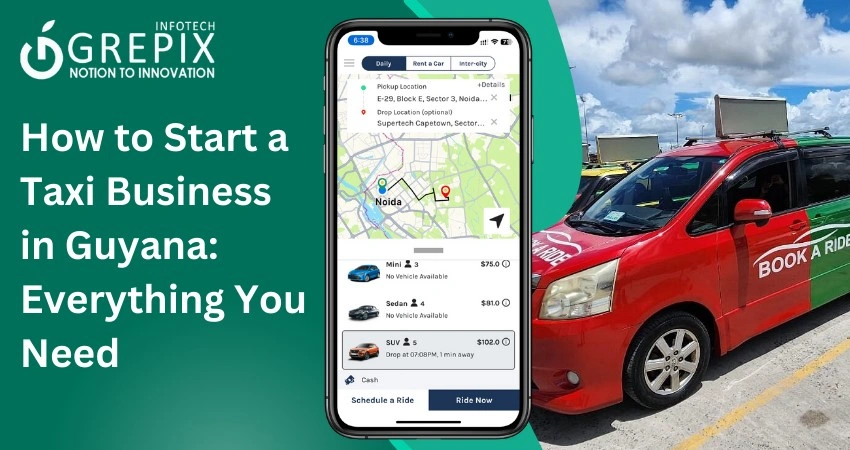
How to Start a Taxi Business in Guyana: Everything You Need
Starting a taxi business in Guyana has become one of the most promising transportation opportunities for entrepreneurs. With the growing demand for ride hailing services and taxi booking apps, businesses that leverage modern taxi app development solutions can scale faster and compete effectively.
In today's rapidly evolving digital era, traditional industries are being reinvented by state-of-the-art technology. Guyana, a country rich in culture and emerging markets, presents an exciting opportunity for entrepreneurs looking to launch a modern taxi business. With bustling urban centers like Georgetown and expanding regional markets, the demand for reliable and efficient transportation is growing steadily. However, success in this competitive industry requires more than just vehicles and drivers it requires the strategic integration of advanced digital tools that streamline operations, boost customer satisfaction, and drive profitability
We cover every critical component from understanding the local market dynamics and executing extensive market research to crafting a robust business plan, navigating legal requirements, managing your fleet, recruiting and training professional drivers, and leveraging powerful digital solutions. Central to this guide is the transformative role of modern technology, such as taxi app development, customizable white label taxi app platforms, and efficient on demand apps that automate ride management and secure digital payments.
Additionally, we explore how Grepix Infotech's cutting-edge software solutions empower entrepreneurs to expedite the taxi launch and maintain a competitive edge in Guyana's dynamic transportation market.
Starting a taxi business in Guyana presents a lucrative opportunity due to the increasing demand for reliable transportation services. Entrepreneurs must first register their business, obtain the necessary taxi permits, and ensure compliance with local safety and regulatory standards. A well-maintained fleet and competitive pricing are essential for success.Leveraging technology can significantly enhance business operations. A taxi booking app improves efficiency, automates dispatch, and enhances customer convenience. Grepix Infotech, a leading taxi app development company, offers advanced digital solutions, including real-time tracking, secure payment integration, and AI-powered route optimization, helping businesses streamline their operations.To remain competitive, taxi businesses in Guyana should focus on marketing strategies, excellent customer service, and maintaining affordable fares. Overcoming challenges such as fuel costs and regulatory hurdles is crucial for long-term profitability. With the right strategy and technology partner, launching a successful taxi business in Guyana can be a rewarding venture.
1Overview of the Current Transportation Landscape in Guyana
Guyana, located on the northeastern coast of South America, is one of the fastest-growing economies in the world, largely driven by its offshore oil boom following ExxonMobil's 2015 discovery. With GDP growth rates exceeding 50% in recent years, the country is experiencing rapid urban expansion, rising disposable incomes, and a surge in infrastructure investment-all of which create exceptional demand for organized, app-based transportation services.
Georgetown, the capital city, is the commercial and population hub where the majority of taxi demand is concentrated. Beyond Georgetown, secondary cities like Linden, New Amsterdam, and Bartica are growing steadily. However, the transportation sector remains largely informal-cash-based, unregulated, and driven by personal contacts and minibus routes. This is precisely the gap a modern taxi business with a white label taxi app can fill.
Unlike markets where Uber and DiDi already dominate, Guyana has no major international ride-hailing player operating at scale. This gives local entrepreneurs a rare first-mover advantage to build a trusted, technology-driven taxi brand before the market becomes crowded.
2Growing Demand for App-Based Taxi Services in Guyana
Smartphone penetration in Guyana has been rising rapidly, especially among the working-age population in Georgetown. Guyanese riders increasingly expect the convenience of on demand apps-instant booking, upfront pricing, driver tracking, and cashless payment. Yet the current taxi ecosystem offers none of this reliably.
App-based taxi services are especially in demand among:
- Oil sector workers and expats – High-income professionals who expect Uber-like reliability and are willing to pay a premium.
- Business travelers – Visiting Georgetown for commerce, banking, and government meetings who need corporate-grade transport.
- Students and young professionals – Tech-savvy users in Georgetown who prefer app booking over flagging minibuses.
- Tourists – Eco-tourists visiting Kaieteur Falls, Rupununi savannahs, and coastal areas who need safe, trackable rides.
The opportunity is clear: build a locally-branded, app-powered taxi service that Guyanese riders can trust, and you will be solving a real, daily pain point in a market with virtually no serious competition.
3Market Research & Planning
1. Target Cities and Regional Opportunities
The success of any taxi business starts with choosing the right location. In Guyana, your best bets are:
- Georgetown – The capital and primary business hub. Highest ride volume; ideal for your launch city.
- Linden – Guyana's second-largest town with growing mining activity and limited public transport options.
- New Amsterdam – The main city of Berbice region; underserved by organized taxi services.
- Bartica – A gold-mining hub with high demand from workers and visitors needing reliable transport.
Conduct localized research for each target city. Look at:
- Population density
- Availability of public transport
- Tourist influx
- Road infrastructure
- Presence of universities, offices, and hospitals
These factors influence the volume and frequency of rides, and can help you decide whether to begin with a single-city focus or aim for a multi-city rollout.
2. Competitor Analysis & Identifying Gaps
Before diving in, you need to understand who your competitors are and what they're doing wrong. Ask yourself:
- What are users complaining about in current services?
- Are wait times too long?
- Are fares unpredictable?
- Are drivers untrained or vehicles outdated?
Go through Google Reviews, app ratings, and even take a few test rides to experience it for yourself. Many existing services lack:
- Real-time tracking
- In-app payments
- Bilingual support or clear English communication for expat and tourist riders
- Reliable customer service
If you can solve these pain points, you're not just entering the market-you're redefining it.
3. Cost Projections and Revenue Modeling
A clear financial model will guide your decision-making and help you secure funding if needed. Your primary startup costs will include:
- Business registration and licensing
- Vehicle purchase or lease
- App development (or white-label solution)
- Insurance
- Marketing
- Driver training and onboarding
A rough estimate to launch a small fleet (5–10 cars) with a basic app platform in Guyana can range between $20,000 to $45,000 USD, depending on vehicle type, whether you lease or buy, and your chosen app solution. Revenue will depend on:
- Fare per ride
- Daily ride volume
- Driver commission model>
- Optional services (parcel delivery, corporate accounts)
Using Grepix's ready-made platform, many startups break even in under 6 months due to lower tech investment and faster go-to-market.
4Choosing a Business Model
1. Owner-Operator vs. Aggregator
There are two primary ways to operate a taxi business:
- Owner-Operator Model: You own the vehicles and hire drivers.
- Aggregator Model: Independent drivers use your app and brand to operate.
Owner-Operator Pros:
- Full control over fleet and quality>
- Easier to maintain brand consistency
- Suitable for premium or executive service
Aggregator Pros:
- Lower capital investment
- Faster to scale
- Easier driver onboarding
Many successful startups begin with a hybrid model-owning a few core vehicles while allowing independent drivers to join the network. Grepix software supports both with separate management dashboards.
2. Franchise, Partnership, or Independent Brand?
Here's how each option works in Guyana:
- Franchise: Join an established brand and operate under their name.
- Partnership:Collaborate with local stakeholders (e.g., hotel chains, car dealerships).
- Independent:Build your own brand from scratch.
Going independent gives you full control, while partnerships help with market penetration and capital. Franchising might reduce marketing needs but often limits innovation.
3. Monetization Options: Commissions, Flat Fees, Subscriptions
Your revenue model can vary:
- Commission-Based: Take a % of each ride fare. (Most common)
- Flat Monthly Fees: Drivers pay to use the platform.
- Subscription Plans: Passengers pay a monthly fee for discounted rides.
Grepix allows you to integrate multiple monetization models into your app. In Guyana's cash-heavy market, starting commission-based and gradually introducing digital payment incentives is the most practical strategy.
5Legal Structure & Registration
1. Company Formation in Guyana
Before you hit the road, you'll need to officially register your business with Guyana's relevant authorities. Steps include:
- Register your business with the Deeds Registry under the Companies Act of Guyana
- Obtain a Taxpayer Identification Number (TIN) from the Guyana Revenue Authority (GRA)
- Register with the National Insurance Scheme (NIS) if you will be employing drivers
- Register your business trade name and apply for a business licence from your local municipality
Depending on your business model, you may also need:
- A transport operator licence from the Guyana Revenue Authority
- Import permits if you're bringing in vehicles from outside Guyana
Consulting a local attorney or business registration agent in Georgetown is highly recommended to navigate Guyana's regulatory environment efficiently.
2. Getting a Taxi Licence and Vehicle Registration
In Guyana, public passenger vehicle (PPV) permits are issued through the Guyana Revenue Authority (GRA) and the Ministry of Public Works. Common requirements include:
- Valid PPV (Public Passenger Vehicle) licence for each vehicle in your fleet
- Vehicle fitness certificate issued by the Guyana Revenue Authority
- A valid driver's licence with a professional driving endorsement for each driver
- Third-party motor insurance (mandatory under Guyana's Motor Vehicles and Road Traffic Act)
- Vehicle must meet roadworthiness standards set by the Ministry of Public Works
- Vehicles should ideally be not older than 5–7 years for passenger comfort and reliability
Vehicle registration is handled through the Guyana Revenue Authority's Licence Revenue Office. Unlike some markets, Guyana does not currently cap PPV licences strictly, giving new operators an easier entry point than many comparable countries.
3. Compliance with Local and National Laws
Taxi operators must comply with:
- National transit laws
- Municipal transport policies
- Taxation and employment regulations
- Digital platform standards (for app-based services)
Failure to meet these requirements can lead to fines, vehicle impoundment, or licence cancellation by Guyana's traffic enforcement agencies. The good news? Grepix's platform is fully adaptable to Guyana's regulatory environment, helping you manage driver documents and compliance from one central admin panel.
6Insurance and Safety Regulations
1. Compulsory Insurance Requirements
In Guyana, operating a taxi legally requires motor vehicle insurance at a minimum. Under the Motor Vehicles and Road Traffic Act, all commercial passenger vehicles must carry third-party liability insurance covering injuries to passengers and third parties in case of accidents.
But that's just the start. For a robust taxi business, you should consider:
- Comprehensive Vehicle Insurance – Covers damages, theft, fire, and vandalism.
- Passenger Liability Insurance –Protects against legal claims from injured riders.
- Driver Health and Accident Insurance – Especially if you employ drivers under contract.
Insurance costs vary based on the type, number, and age of vehicles. Make sure to choose insurers experienced with commercial taxi operations. Some insurers offer bulk deals or fleet coverage at a discount. Having the right insurance in place is not just a legal requirement-it's a competitive edge. Riders are more confident booking with operators who guarantee safety and responsibility.
2. Passenger Safety Regulations
Guyana's transport authorities and the Guyana Police Force Traffic Department enforce passenger safety regulations. While formal mandates are still evolving with the growth of app-based services, the following are considered best practices and increasingly expected by passengers and regulators:
- Panic Button – Must be easily accessible by drivers and linked to emergency services.
- GPS Tracking – For real-time monitoring and route history.
- Security Cameras – Front-facing and interior cameras are strongly recommended and increasingly expected by passengers in Georgetown and other urban areas.
- Fare Display System – Transparent pricing visible to passengers.
When building your fleet, make sure all safety protocols are installed and functioning. Grepix's taxi software integrates panic button alerts and real-time GPS tracking, offering an additional layer of digital safety for both drivers and passengers.
3. Accident Protocols and Legal Liabilities
If a passenger is injured during a ride, the driver and the company may both be liable, depending on the cause and contractual status.
Here's what to do:
- Call emergency services immediately
- Log the incident in your app system
- Provide passenger and driver with legal and insurance contact info
- Notify your insurer within 24 hours
You should also maintain digital logs via your app. Grepix's admin dashboard allows you to store trip data, driver logs, and GPS trails for legal evidence. This documentation is critical if any disputes or claims arise.
7Technology Integration
1. Importance of Taxi Booking Apps
Guyanese consumers, particularly in Georgetown and among the oil sector workforce, are rapidly shifting expectations. Expats and business travelers already accustomed to Uber and Bolt abroad are frustrated by the informal, cash-only taxi experience in Guyana. A modern taxi booking app immediately differentiates your service. A robust app solution:
- Increases ride volume with 24/7 booking
- Reduces missed calls and manual errors
- Provides transparent fare calculations
- Offers convenience for both locals and tourists
Taxi apps aren't a luxury anymore-they're essential infrastructure. In Guyana's emerging market, launching with an app immediately signals professionalism and positions you as the go-to taxi service for the growing urban and oil-sector clientele. This is where a white label taxi app from Grepix becomes your strongest competitive asset.
2. Must-Have Features for Driver and Rider Apps
An effective taxi app must deliver a seamless experience to both users and drivers. Grepix's solution includes:
- Live Ride Tracking – Real-time map updates.
- Multi-Payment Options – Cash, card, mobile wallets.
- Promo Codes & Referrals – For user acquisition.
- Multilingual Interface – Spanish and English to cater to locals and tourists.
- SOS Alerts – Integrated emergency buttons for in-ride safety.
- In-App Chat – Smooth communication between driver and rider.
The driver app must include:
- Trip history
- Earnings summary
- Ride alerts
- Route optimization
- Performance metrics
These features don't just improve operations-they build trust and brand loyalty.
3. Admin Dashboard and Dispatch Panel Overview
Behind the scenes, your admin panel is the heartbeat of your taxi business. Grepix offers a sleek, powerful dashboard that allows you to:
- View and manage all active bookings
- Track vehicle locations in real-time
- Onboard drivers and approve documents
- Generate financial and performance reports
- Manage refunds, complaints, and feedback
- Send push notifications and promo messages
If you're operating across multiple cities, you can manage everything from one unified interface-adjusting pricing, availability, and language settings as needed. Grepix's panel also supports heat maps and demand prediction, helping you plan peak-time strategies and driver placements.
8Partnering with Grepix for Taxi App Development
1. Why Grepix is Ideal for Guyanese Entrepreneurs
Grepix Infotech has helped launch dozens of successful taxi apps across emerging markets in Asia, Africa, the Caribbean, and South America. Their platform is built for entrepreneurs entering markets like Guyana where speed, cost-efficiency, and local customization are critical. Their white-label solution is pre-coded and can be configured for Guyana's specific needs-Guyanese dollar (GYD) pricing, local payment methods, and English-language interface-within days, not months.
Whether you're a solo founder or backed by a larger investment team, Grepix provides scalable solutions that grow with your business. What makes them stand out:
- Experience launching taxi apps in cash-heavy, emerging markets similar to Guyana
- English-language interface perfectly suited for Guyana's market
- GYD (Guyanese Dollar) currency support built-in
- Fast deployment (under 10 days)
- Affordable pricing with no hidden fees
2. Customization, Localization, and White-Label Solutions
Unlike generic software companies, Grepix offers end-to-end branding:
- Your logo
- Your color scheme
- Local currency (Guyanese Dollar – GYD)
- English-language interface optimized for Guyana's market
- Local payment gateway integrations
This gives your taxi app the look and feel of a native product-not a foreign clone. Plus, users are more likely to trust a local brand that speaks their language and understands their preferences. You also get full ownership of the codebase, which is rare in white-label products.
3. Cost-Effective and Fast Time-to-Market
Launching a custom app from scratch can cost $50,000+ and take 4–6 months. Grepix brings that cost down by more than 70%-with a ready-to-launch product that's deployable within 7 to 10 days. In Guyana's wide-open market, this speed is critical. The entrepreneur who launches first with a reliable, app-based taxi service in Georgetown will be the brand that riders default to for years to come. Grepix's ongoing support and maintenance plans ensure your platform stays competitive as Guyana's digital economy matures.
9Hiring and Managing Drivers
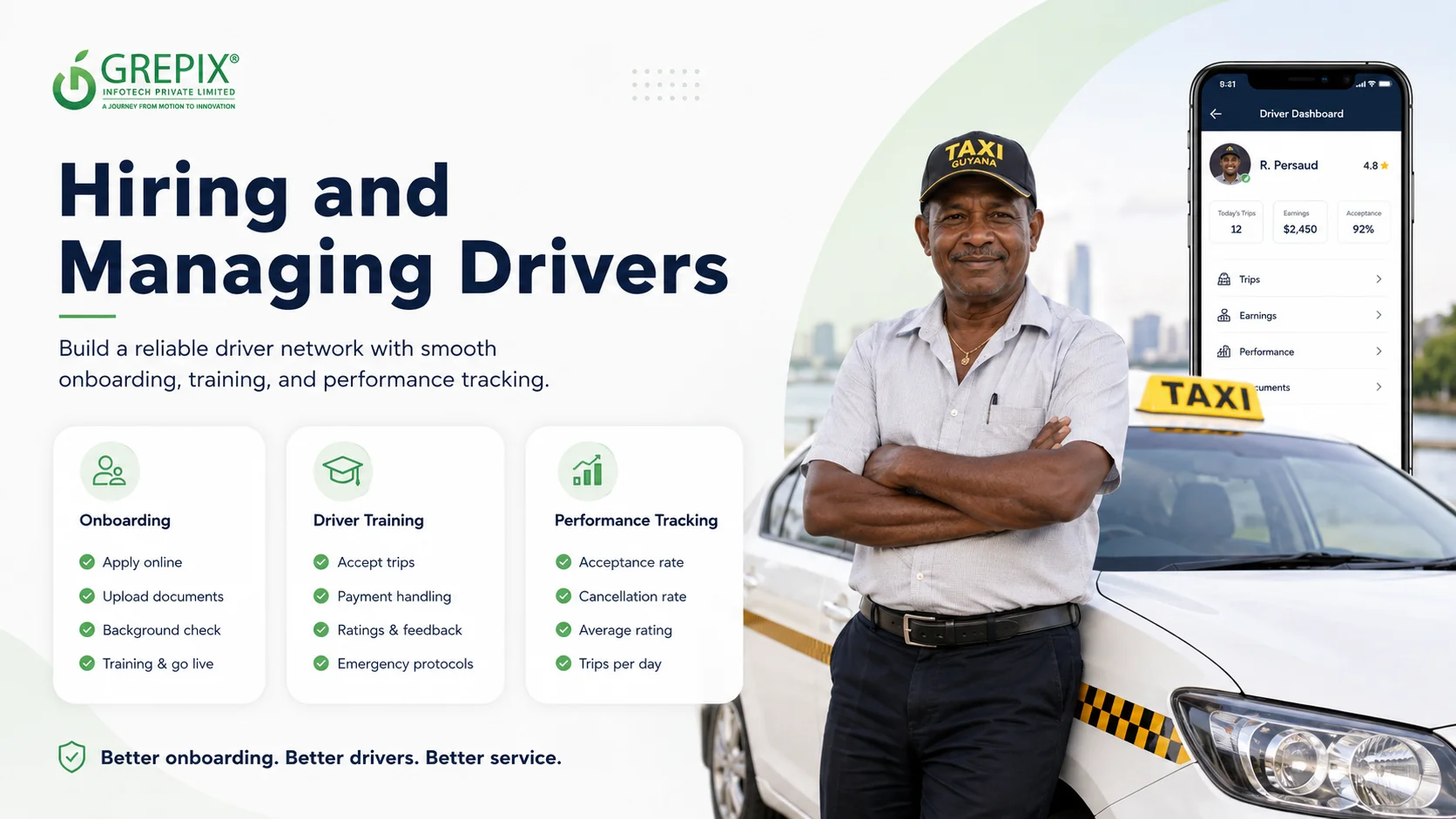
1. Onboarding Process and Requirements
Your drivers are your brand ambassadors. Getting the right ones-and managing them well-is key to long-term success. Here's how a typical onboarding process should look:
- Online application via app or website>
- Document submission (ID, driving license, insurance)
- Background check and vehicle inspection
- Approval and training session
- Account activation and first ride
Grepix's system supports automated onboarding with in-app document upload, making the process smooth for both you and the drivers.
2. Driver Training and App Usage
Even the best software is useless if drivers don't know how to use it. Offer hands-on training or video tutorials covering:
- How to accept and complete trips
- Payment handling
- Rating and feedback systems
- Emergency protocols
Encourage professionalism-drivers should wear ID badges, maintain clean vehicles, and follow service protocols. First impressions matter, especially for new passengers. Training also reduces app-related errors and improves customer reviews.
3. Performance Tracking and Incentive Systems
Once your drivers are on the road, it's essential to monitor their performance. Grepix's backend tracks:
- Acceptance rate
- Cancellation rate
- Average rating
- Response time
- Number of trips per day
Use this data to reward top performers with bonuses or perks. Consider:
- Weekly bonuses for completing X trips
- Referral rewards for bringing in other drivers
- Monthly "Driver of the Month" recognition
Transparent metrics and fair rewards lead to higher driver retention-a must in this competitive market.
10Marketing and Promotion
1. Launch Strategy and Go-to-Market Plan
A successful taxi business isn't just about operations-it's also about building awareness and excitement. You need a strong launch strategy to create buzz and drive initial downloads. Start with a soft launch in one neighborhood or city zone. Test the app, gather feedback, and resolve bugs. Then, proceed with a full-scale launch, which includes:
- Press releases in local media
- Community events with free ride coupons
- Partnerships with local cafes or shopping centers
- Special launch-day promotions (e.g., 50% off first 5 rides)
Timing matters. Launching around Guyana's Mashramani celebrations (Republic Day, February), Carifesta, or the peak tourist season for eco-tourism (October–March) can boost initial exposure and trial rates significantly.
2. Social Media, SEO, and App Store Optimization
Your taxi service needs a strong online presence. People will look for you on Google, Instagram, and the App Store-so make sure you're ready. Start by creating pages on:
- Instagram, Facebook, Twitter – Post daily updates, promotions, and stories from drivers/riders.
- Google My Business – Add your business with location, phone, app download links.
- YouTube – Upload short how-to videos or customer testimonials.
Next, focus on App Store Optimization (ASO):
- Use clear, keyword-rich app titles
- Add screenshots and demo videos
- Write app descriptions in Spanish and English
- Collect positive reviews from early users
Lastly, work on SEO for your website. Target keywords like:
- "Taxi app Georgetown Guyana"
- "Book a ride Georgetown"
- "Safe airport taxi Cheddi Jagan International"
- "Taxi service Guyana oil sector"
A well-optimized digital strategy increases your discoverability and drives organic downloads.
3. Referral Systems and Promo Campaigns
Referral programs are one of the cheapest and most effective growth hacks. Word-of-mouth spreads especially fast in Guyana's tight-knit communities, where personal trust is a major factor in choosing a service provider. Set up a double-sided referral model:
- Rider A shares a code with Rider B.
- Rider B gets a free or discounted ride.
- Rider A earns ride credits or cashback when B completes a trip.
Grepix apps come with built-in referral engines, so launching these promotions is easy. You can also run seasonal campaigns:
- "Mashramani Special – Free First Ride"
- "Oil Sector Worker Monthly Pass"
- "Holiday Giveaway with Free Rides"
- "Cheddi Jagan Airport Pick-up Deal"
These not only grow your user base but also keep your brand relevant and engaging.
11Customer Service and User Experience
1. In-App Help, Feedback, and Ratings
Providing outstanding customer support sets your brand apart. Riders need to know they can reach you instantly if something goes wrong. Grepix offers a fully integrated support system, including:
- In-app FAQs
- Live chat (bot or agent)
- Ticket generation system
- Email and SMS alerts
Ratings and reviews are critical too. After each ride, the app should prompt:
- A 5-star rating
- Optional feedback comments
- Driver-specific questions (cleanliness, politeness
Monitor reviews regularly and use them to identify both great and underperforming drivers. Reach out to riders who leave poor reviews to resolve issues-it builds long-term loyalty.
2. Handling Complaints and Service Issues
No matter how polished your app or drivers are, issues will arise. Complaints might include:
- Overcharging
- Rude behavior
- Unsafe driving
- Missed pickups
Set up a complaints dashboard in your admin panel. Grepix's platform allows sorting by type, severity, and timestamp. Create SOPs (standard operating procedures) for:
- Response time (within 2 hours)
- Refund rules
- Driver suspension/retraining
- Follow-up calls or emails
By handling problems swiftly and fairly, you turn frustrated users into lifelong customers.
3. Building Long-Term Passenger Loyalty
Acquiring a user is one thing retaining them is another. Loyal riders are more profitable and often act as brand advocates. Here are some strategies:
- Loyalty Points: Earn credits for every ride. Redeem after a threshold.
- VIP Rides: Offer luxury cars or priority bookings to regular users.
- Email Newsletters: Send updates, offers, and ride stats monthly.
- Feedback Loops: Ask for improvement suggestions and actually implement them.
Every user interaction-whether a ride, support ticket, or app update-is a chance to reinforce your brand's value and reliability.
12Scaling Your Taxi Business
1. Expanding to Other Cities in Guyana
Once you've established a stronghold in Georgetown, it's time to scale smartly. Don't expand too fast without stabilizing operations. Next-best cities after Georgetown:
- Linden – Guyana's second city; strong mining workforce with growing transport needs.
- New Amsterdam – The Berbice region hub; underserved by organized, app-based taxi services.
- Bartica – Gold-mining town with high-income transient workers who need reliable transport.
Before launching in new zones:
- Research local taxi laws
- Adjust pricing based on demand and income levels
- Partner with local influencers for marketing
Grepix's multi-city platform lets you manage different areas with unique pricing, language, and promotional settings-all from one admin panel.
2. Adding Fleet Options (Bike Taxis, Luxury Rides, Airport Transfers)
As your user base grows, diversify your fleet to meet varied needs:
- Bike Taxis: Great for short distances in dense areas.
- Luxury Rides: Executive cars for business travelers.
- Airport Transfers: Fixed-rate bookings with luggage space.
Each fleet type targets a specific user segment. You can also upsell these options through in-app banners and loyalty programs. By expanding your service offerings, you increase daily ride volume and capture more market share.
3. Partnering with Hotels, Corporates, and Travel Platforms
Building strategic partnerships can unlock bulk bookings and recurring revenue. Reach out to:
- Hotels: Offer fixed-rate airport pickups or tourist rides.
- Corporates: Provide transport for employees with monthly billing.
- Tour agencies: Bundle rides into travel packages.
Grepix's system supports B2B modules where you can manage corporate accounts separately, automate invoicing, and track employee rides. In Guyana, the oil and gas sector is a particularly high-value B2B client base-companies like ExxonMobil, Hess, and their subcontractors need reliable, trackable transport for staff daily. The more embedded you are in Guyana's growing business ecosystem, the more sustainable and profitable your taxi business becomes.
13Unique Challenges of Operating a Taxi Business in Guyana
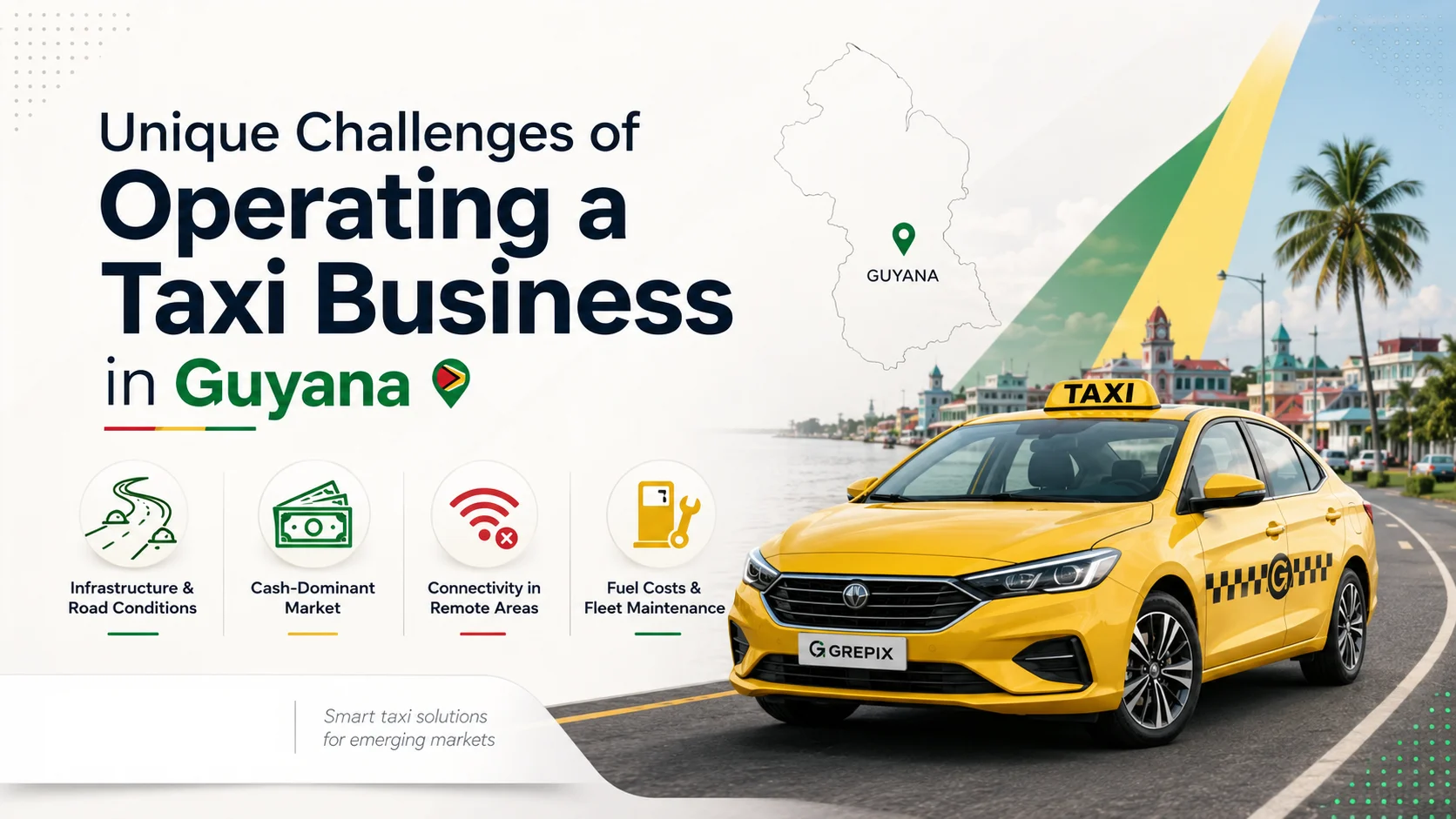
1. Infrastructure and Road Conditions
While Georgetown and coastal areas have relatively good road infrastructure, interior regions like the Rupununi and parts of Region 8 and 9 present significant road challenges. If you plan to expand beyond Georgetown, factor in vehicle durability-SUVs and 4WDs are preferable to sedans for hinterland operations. Your Grepix-powered app can handle zone-based pricing to reflect these operational realities.
2. Cash-Dominant Market
Digital payment adoption in Guyana, while growing, is still limited compared to markets like the UK or Singapore. The majority of transactions remain cash-based. Your on demand taxi app should support cash payments alongside digital options, and you should incentivize digital payment adoption through discounts and promotions rather than mandating it from day one.
3. Connectivity in Remote Areas
Internet connectivity outside Georgetown can be unreliable. Ensure your taxi app has an offline or low-connectivity mode so drivers can continue completing rides even with intermittent data. Grepix's platform includes features designed for emerging markets where connectivity is not guaranteed.
4. Fuel Costs and Fleet Maintenance
Guyana's fuel prices have fluctuated with the oil boom, and vehicle maintenance costs are a significant operational expense. Build fuel cost buffers into your fare structure from the beginning. Dynamic surge pricing during peak hours-a feature built into Grepix's platform-can help offset higher operational costs on busy days.
14Why Now Is the Best Time to Launch a Taxi Business in Guyana
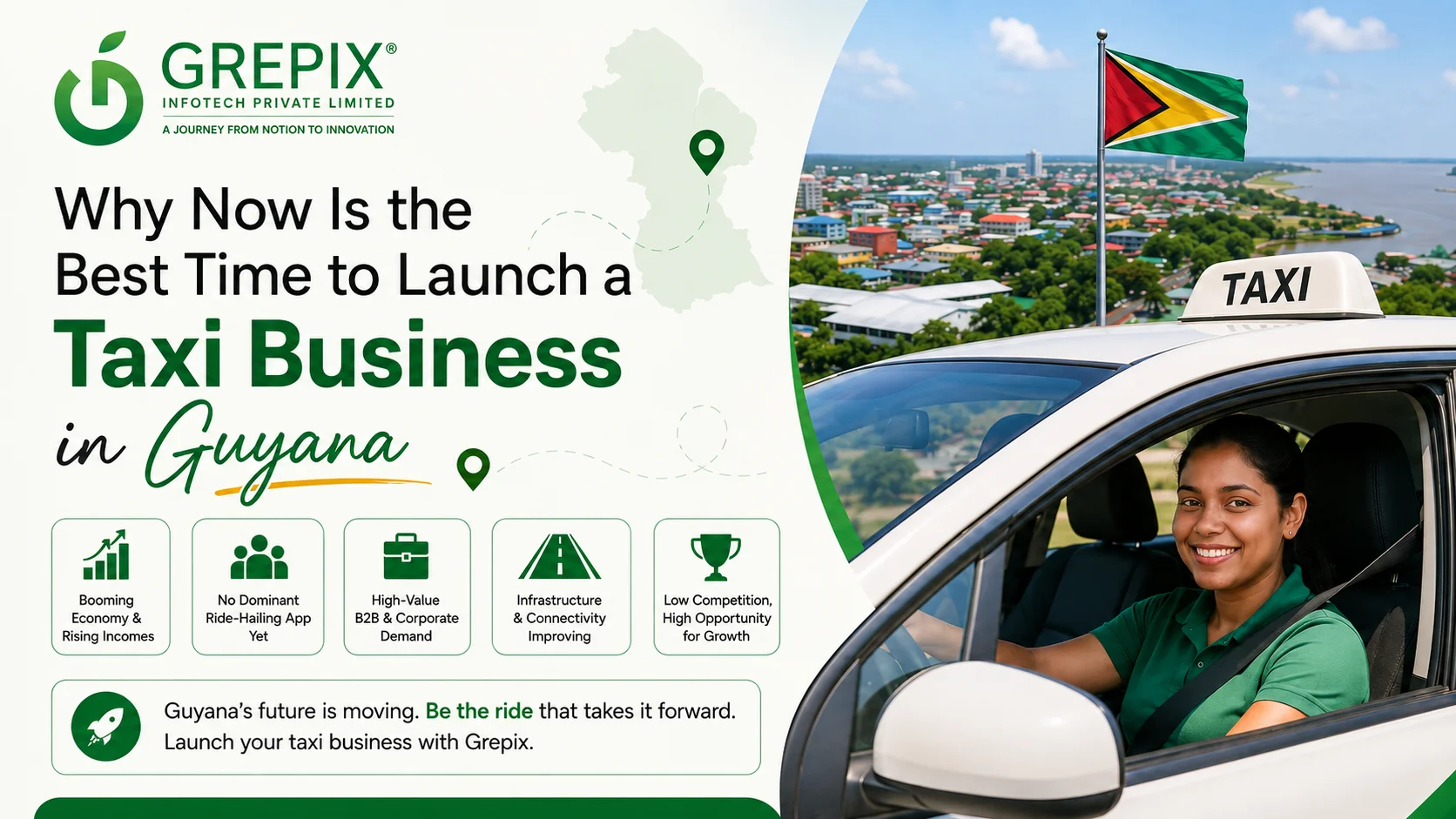
Guyana is at an economic inflection point. The oil boom has triggered a construction and services surge-new hotels, corporate offices, and government infrastructure projects are creating sustained demand for reliable transport. Foreign investment is flowing in, and with it, thousands of expat workers and business visitors who need professional taxi services.
- No dominant ride-hailing app operating at scale in Guyana yet - first-mover advantage is real.
- Rising incomes mean Guyanese consumers are increasingly willing to pay for quality and convenience.
- Oil sector B2B demand creates a reliable, high-value corporate client base from day one.
- Government infrastructure investment is improving roads and connectivity across the country.
- Low competition from organized, app-based operators compared to saturated markets like London or Lagos.
With the right taxi app development partner, a clear business plan, and a commitment to service quality, launching a taxi business in Guyana in 2025–2026 is one of the most well-timed entrepreneurial moves available in the Caribbean and South American region.
Conclusion
Starting a taxi business in Guyana offers a promising opportunity for entrepreneurs looking to enter the transportation industry. Success requires careful planning, obtaining the necessary permits, maintaining a reliable fleet, and delivering exceptional customer service. Additionally, embracing modern technology can significantly enhance operational efficiency and competitiveness.
Grepix Infotech, a leading taxi app development company, provides cutting-edge digital solutions to help taxi businesses thrive. Their white-label taxi app includes features like real-time tracking, automated dispatch, secure payment processing, and AI-powered route optimization, ensuring a seamless experience for both drivers and passengers.
By leveraging Grepix Infotech's innovative technology, taxi business owners in Guyana can streamline operations, improve customer satisfaction, and stay ahead of the competition. With the right approach and a strong technology partner, launching and managing a profitable taxi business in Guyana becomes a straightforward and rewarding endeavor.
FAQs
1. What permits are required to start a taxi business in Guyana?
You need a business registration, taxi license, and vehicle insurance to operate legally.
2. How much does it cost to start a taxi business?
Costs depend on fleet size, licensing fees, insurance, and investment in a taxi booking app.
3. Is a taxi booking app necessary for my business?
While not mandatory, a taxi app improves efficiency, customer convenience, and business growth.
4. How can I attract more customers?
Offer competitive fares, excellent service, digital booking options, and promotions.
5. What challenges might I face when starting a taxi business?
Common challenges include competition, regulatory compliance, fuel costs, and vehicle maintenance.
6. Do I need a smartphone for every driver in my Guyana taxi fleet?
Yes, each driver needs a smartphone to use the driver app. Android devices work well and are affordable in Guyana. Grepix's driver app is optimized for mid-range Android phones, so you don't need expensive hardware to get started.
7. Can I handle cash payments through the taxi app?
Yes. Grepix's white label taxi app supports cash payment as a ride option alongside digital payments. This is critical for Guyana's cash-dominant market, where many riders will prefer to pay in GYD cash, at least initially.
8. Can I operate in interior regions like Linden or Bartica?
Yes, the app supports multi-zone and multi-city operations. You can configure separate pricing zones for Georgetown, Linden, Bartica, and other regions, accounting for different road conditions and fuel costs. The driver app also includes offline functionality for areas with poor internet connectivity.
9. How do I get my first customers in Georgetown?
Start with a referral campaign targeting Georgetown's professional and expat community via Facebook and WhatsApp groups. Partner with hotels near the Cheddi Jagan International Airport and corporate offices in the city centre. Offering the first 3–5 rides free or at 50% off is a proven strategy to drive downloads and first-ride conversions in emerging markets.
10. How long does it take to launch a taxi app for my Guyana business?
With Grepix's white label taxi app solution, you can be live in as little as 7 to 10 days. This includes your branding, GYD currency configuration, driver and rider apps, and admin panel. Custom-built apps from scratch can take 4–6 months and cost significantly more.
Looking out to start your own venture like Uber? Try out our HireMe Taxi Uber Clone, the easiest way to kick-start your taxi business.