
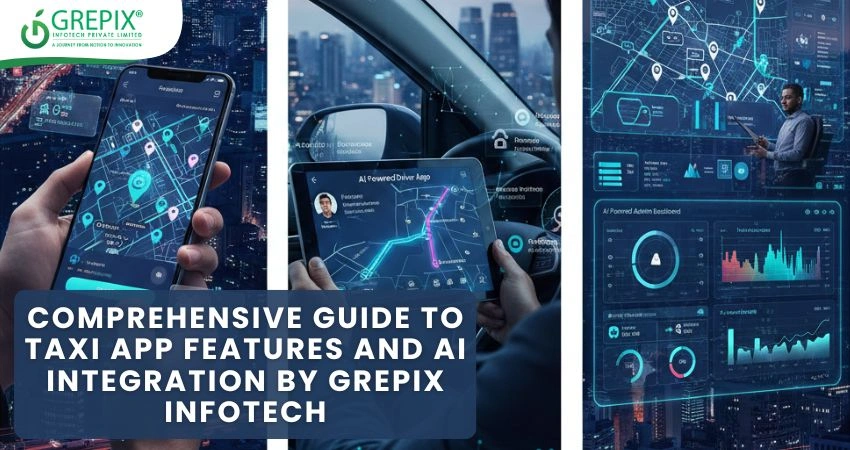
Comprehensive Guide to Taxi App Features and AI Integration by Grepix Infotech
The modern taxi industry thrives on technology, data, and user-centric innovation. This comprehensive guide explores the essential and advanced features that define today’s taxi apps, from real-time GPS tracking and seamless payments to dynamic pricing and driver analytics. It also highlights how Artificial Intelligence (AI) is transforming ride-hailing platforms through predictive demand forecasting, smart dispatching, and personalized user experiences. With these intelligent systems, operators can optimize efficiency, enhance safety, and deliver superior customer satisfaction. Developed by Grepix Infotech, a leader in taxi app development, this article unveils how AI-powered mobility solutions are shaping the future of transportation making urban commuting faster, safer, and smarter than ever before.
Comprehensive Guide to Taxi App Features and AI Integration by Grepix Infotech
In an era where convenience and speed define customer expectations, the taxi industry has undergone a monumental transformation. Gone are the days of hailing a cab on a busy street or calling a dispatcher for a ride. Today, everything unfolds at the touch of a screen thanks to the evolution of mobile technology and innovative ride-hailing platforms.
At the forefront of this transformation are companies like Grepix Infotech, a leading name in custom taxi app development. With years of expertise in crafting scalable and intelligent mobility solutions, Grepix Infotech has played a vital role in redefining how people commute and how taxi businesses operate.
This comprehensive guide explores the essential features that make taxi apps indispensable, the advanced capabilities that give businesses a competitive edge, and how Artificial Intelligence (AI) is revolutionizing the future of on-demand transportation.
The Evolution of Taxi Apps
Taxi services have evolved from traditional phone-based dispatch systems to sophisticated, data-driven mobile applications. Early taxi operations relied heavily on manual coordination dispatchers connected drivers and passengers over radio calls, and cash transactions dominated the market.
With the proliferation of smartphones, the introduction of GPS technology, and the rise of mobile payment systems, a new wave of innovation reshaped urban mobility. Platforms like Uber and Lyft demonstrated the potential of tech-driven ride-hailing services, and soon, local taxi businesses began investing in their own branded applications to compete effectively.
Taxi app development today revolves around three key goals: user convenience, operational efficiency, and real-time intelligence. These objectives are realized through a combination of essential and advanced features supported by AI-driven automation.
Core Taxi App Features
Every successful taxi booking app shares a set of foundational features designed to simplify the user experience and streamline daily operations. These form the backbone of any taxi app ecosystem typically divided among three panels: Rider App, Driver App, and Admin Dashboard.
User Registration and Profile Management
The user journey begins with effortless onboarding. A taxi app should allow multiple sign-up options — via email, mobile number, or social media integration. Once registered, users can manage their profile, save home and work addresses, view ride history, and update preferences.
From a business perspective, this data helps create a personalized user experience and supports marketing campaigns tailored to rider behavior.
Real-Time GPS Tracking
Accurate GPS navigation is the heart of a taxi app. Real-time location tracking ensures users can view nearby cabs, monitor the driver’s route, and receive precise arrival times. For drivers, GPS helps identify the fastest, least congested routes, reducing travel time and fuel consumption.
This feature enhances transparency, boosts rider confidence, and allows businesses to track fleet performance seamlessly.
Ride Booking and Scheduling
The booking interface should be intuitive and responsive. Riders should be able to request an immediate ride or schedule one in advance with a few taps. The app must display driver details, estimated fare, and expected arrival time instantly.
Scheduled rides are particularly valuable for airport transfers, corporate travel, and planned commutes — ensuring users never have to worry about last-minute availability.
Fare Estimation and Secure Payments
Transparency in pricing builds trust. Integrated fare estimation systems calculate trip costs using parameters such as distance, time, base fare, and surge rates.
A robust payment gateway enables multiple payment methods credit/debit cards, digital wallets, or in-app wallets. Secure encryption protocols ensure that user data and transactions remain protected at all times.
Push Notifications and Alerts
Real-time notifications keep users and drivers informed about every step of the journey booking confirmations, driver arrivals, trip start and completion, and payment receipts.
Beyond transactional alerts, push notifications also serve as an effective marketing tool. Businesses can send promotions, referral bonuses, and seasonal offers to boost engagement.
Ratings and Reviews
Customer feedback is critical to maintaining service quality. Post-ride ratings and reviews allow users to share their experiences, helping businesses identify top-performing drivers and address complaints promptly.
Similarly, enabling drivers to rate passengers encourages mutual respect and safety within the platform.
Also Read: Accelerating Your Fortune: Becoming a Billionaire in South Africa's Taxi Industry
Advanced Taxi App Features
While core functionalities ensure a taxi app operates smoothly, advanced features differentiate an average platform from an exceptional one. These enhancements improve efficiency, safety, and user engagement giving businesses a strong competitive advantage.
In-App Chat and Calling
Direct communication between passengers and drivers minimizes confusion regarding pickup points and drop-off locations. In-app chat or VoIP-based masked calling preserves privacy while ensuring secure interaction.
This not only streamlines coordination but also eliminates the need for external communication apps, keeping the entire experience contained within the platform.
Ride History and Trip Insights
Comprehensive trip history allows riders to access details of previous rides, fare breakdowns, and driver information. For administrators, this data serves as a goldmine for analytics — helping monitor trip volumes, revenue trends, and service patterns.
Insightful reporting tools assist businesses in making informed decisions regarding fleet allocation, pricing strategy, and customer retention programs.
Heat Maps and Surge Pricing
Heat maps visually represent areas of high ride demand, enabling drivers to position themselves strategically for maximum earning potential.
When demand exceeds available supply, the app can automatically apply surge pricing temporarily increasing fares to balance the market. This dynamic pricing model benefits both the business and the drivers while ensuring that service remains consistently available.
Multi-Language and Currency Support
Global taxi operators must cater to a diverse audience. Offering multiple languages and currencies ensures that users feel comfortable navigating the app in their preferred format.
Localization isn’t limited to translation; it also involves cultural adaptation from interface design to payment methods — making the app inclusive and globally scalable.
SOS and Emergency Assistance
Passenger safety is paramount. An integrated SOS button allows users to instantly alert emergency contacts or local authorities during distress.
Advanced implementations also share live ride details, driver identity, and real-time GPS coordinates with the designated contacts, ensuring immediate action in critical situations.
Driver Performance Dashboard
Drivers are the backbone of any ride-hailing platform. A performance dashboard enables them to view trip statistics, daily earnings, ratings, and customer feedback.
This feature not only motivates drivers but also fosters transparency and self-improvement. Businesses can use these insights to reward top performers or schedule training sessions for underperforming drivers.
Admin Analytics and Control Panel
The admin panel functions as the central management system for the entire operation. It enables administrators to monitor ongoing rides, manage drivers and users, process payments, and oversee customer support.
Advanced analytics modules visualize key performance metrics revenue reports, trip frequencies, and regional demand patterns empowering businesses to make data-backed strategic decisions.
AI Integration in Taxi Apps
Artificial Intelligence (AI) has revolutionized nearly every sector and mobility is no exception. For taxi apps, AI brings predictive power, automation, and deep insights, turning static systems into dynamic, self-optimizing platforms.
Grepix Infotech has been at the forefront of embedding AI-driven intelligence into taxi solutions. By combining machine learning, predictive analytics, and real-time data processing, AI transforms how rides are managed, priced, and delivered.
Smart Ride Matching Algorithms
AI-powered algorithms analyze multiple factors including location proximity, driver ratings, traffic congestion, and ride history to assign the most suitable driver for each booking.
This ensures reduced waiting times, optimized driver utilization, and a smoother overall experience. For high-volume cities, this automation significantly improves dispatch accuracy and fleet performance.
Predictive Demand Forecasting
Using historical trip data, weather patterns, and event schedules, AI predicts when and where demand will peak. This enables businesses to strategically deploy drivers, balance workloads, and minimize idle time.
For instance, the system might forecast a surge near a concert venue or during morning rush hours, allowing operators to proactively adjust driver availability and pricing models.
Dynamic Pricing Optimization
AI-driven dynamic pricing models analyze demand fluctuations in real time. They automatically adjust fares based on parameters like driver availability, trip distance, time of day, and local traffic density.
This approach ensures fairness and efficiency passengers get reliable service even during high-demand hours, while drivers are rewarded for operating under challenging conditions.
Fraud Detection and Security Monitoring
AI plays a crucial role in identifying and mitigating fraudulent activities. It continuously monitors user behavior and transaction patterns to detect anomalies such as fake bookings, duplicate accounts, or payment irregularities.
By automating fraud detection, businesses can reduce operational risks and maintain platform integrity, protecting both riders and drivers.
AI-Powered Chatbots and Voice Support
AI-driven chatbots streamline customer support by handling frequent inquiries such as fare estimates, booking confirmations, or refund requests.
Natural Language Processing (NLP) enables these bots to understand user intent and respond conversationally. For hands-free assistance, voice-enabled chatbots integrate seamlessly with virtual assistants like Google Assistant or Alexa.
Driver Behavior Analysis
Using telematics and smartphone sensors, AI can evaluate driver performance based on speed patterns, braking behavior, and route adherence. Unsafe driving triggers alerts or training suggestions, ensuring consistent safety standards.
Fleet managers can leverage this data to encourage safer driving habits, reduce accidents, and lower insurance costs.
Personalized User Experience
AI excels in personalization. By analyzing user data including trip history, preferred routes, and spending patterns the system delivers tailored recommendations, exclusive offers, and adaptive interface layouts.
This personalization enhances user loyalty and drives repeat engagement, setting the platform apart from competitors offering generic experiences.
The Future of Taxi Apps with AI
The integration of AI in taxi apps is only the beginning. Emerging technologies like Internet of Things (IoT), blockchain, and autonomous vehicles are poised to reshape the industry even further.
Imagine self-learning dispatch systems that adjust routes in real time, voice-controlled booking experiences, or blockchain-enabled payment transparency. Grepix Infotech is actively exploring these innovations to ensure its taxi solutions remain future-ready.
As sustainability becomes a global priority, AI can also help optimize electric vehicle usage, predict maintenance needs, and reduce carbon footprints aligning with smart city goals.
Why Partner with Grepix Infotech
Grepix Infotech stands as a pioneer in custom taxi app development, offering feature-rich, scalable, and AI-powered mobility solutions for startups and enterprises alike. The company’s expertise spans across:
- End-to-end taxi app development (Rider, Driver, and Admin panels)
- Integration of AI and machine learning for predictive analytics
- White-label solutions that allow rapid market deployment
- Robust data security and compliance with international standards
- 24/7 post-launch technical support and maintenance
By collaborating with Grepix Infotech, businesses gain access to a technology partner that understands the nuances of urban mobility, digital innovation, and user experience design.
Conclusion
The evolution of taxi apps represents more than technological progress it signifies a cultural shift in how people perceive and experience transportation. Foundational features build the base, advanced functionalities enhance service quality, and AI integration propels the ecosystem into an intelligent, self-optimizing future.
In a competitive and fast-evolving market, taxi businesses must leverage innovation to stay relevant. With expertise from Grepix Infotech, operators can transform traditional taxi operations into smart, data-driven mobility platforms that deliver seamless experiences, operational excellence, and sustained profitability.
FAQs
1. What core features should a taxi booking app have?
A taxi app should include user registration, live GPS tracking, fare estimation, ride scheduling, secure payment options, driver profiles, ratings & reviews, push notifications, and customer support. These form the foundation of a smooth ride-booking experience for riders and drivers.
2. How does AI enhance taxi app performance?
AI improves route optimization, demand prediction, surge pricing automation, driver allocation accuracy, passenger safety insights, and fraud detection. It enables faster response times, reduces wait periods, and improves overall operational efficiency.
3. What is the role of real-time GPS tracking in taxi apps?
Real-time GPS tracking allows passengers to see the driver’s live location and ETA. For fleet operators, it provides visibility of active vehicles, routes, fuel usage, and idle time, leading to smarter dispatch and reduced operational costs.
4. Can taxi apps work offline or in low network areas?
Yes. Modern taxi apps can use offline map caching, SMS-based OTP flows, and fallback GPS signals. However, certain actions like booking confirmation and live tracking still require data connectivity.
5. What payment methods can be integrated into a taxi app?
Taxi apps can integrate local and global payment gateways, wallets, credit/debit cards, cash payments, UPI, split-fare options, and driver payout automation. Grepix Infotech supports region-specific gateways for global markets.