
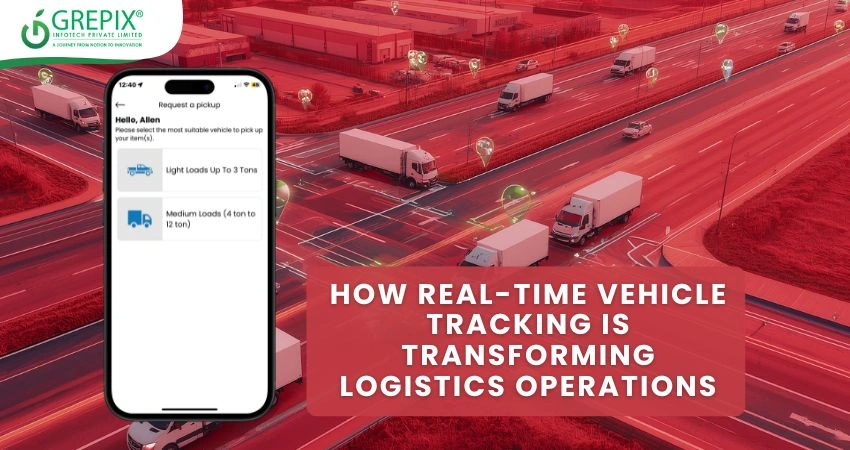
How Real-Time Vehicle Tracking is Transforming Logistics Operations”
Until recently, traditional logistics systems heavily depended on manual updates, paperwork, and periodic phone checks to track shipments and vehicles. Delays, lack of visibility, and inefficient fleet utilization were common problems that added costs and eroded customer confidence. With the rise of e-commerce and instant delivery mindsets, customers, drivers, and logistics administrators all need live, reliable information to make faster decisions.
Real-time vehicle tracking has revolutionized the industry, making it possible for everyone customers awaiting orders, drivers on tight schedules, and fleet managers overseeing dozens or thousands of vehicles to see what’s happening as it happens. Using a logistics tracking app connected to a powerful back-end, companies can instantly access live locations, historical movement, and key alerts on one screen. It’s the new standard for transparency, efficiency, and competitive edge.
Logistics has moved beyond outdated, guesswork-based tracking. Real-time vehicle tracking powered by GPS and cutting-edge logistics tracking apps has made live fleet visibility not only possible but essential. This technology provides instant access to vehicle locations, predictive ETAs, route optimization, and smarter resource allocation. Companies worldwide are gaining significant advantages by boosting customer satisfaction, reducing costs, and tightening controls over every mile. This article explores how live GPS monitoring, advanced delivery tracking systems, and integrated fleet tracking software solutions, like those from Grepix, are revolutionizing supply chains from driver apps to admin dashboards all while supporting secure, timely, and scalable growth in logistics.
What is Real-Time Vehicle Tracking?
Real-time vehicle tracking is the continuous, automated monitoring of fleet assets, using GPS, telematics, and fleet tracking software synced across web and mobile apps. Every vehicle is equipped with a GPS-enabled device that transmits its position, speed, and route data to a centralized logistics platform. Here’s how it works across the logistics ecosystem:
- Live GPS Fleet Monitoring: Each vehicle shares its real-time position, movement, and usage statistics through an in-vehicle device or driver app.
- Logistics Tracking App Integration: Admins, drivers, and customers can access maps, routes, and statuses instantly on their dashboards.
- Delivery Tracking System: Each delivery is associated with tracking updates, geo-fencing, site arrival, unloading times, and proof-of-delivery uploads.
- Fleet Tracking Software: Advanced analytics monitor not just where a truck is, but how the fleet is performing, fuel usage, route adherence, and schedule compliance.
- Route Optimization Logistics: Data-driven algorithms suggest optimal routes, bypassing traffic, road closures, or other disruptions automatically.
From a customer’s perspective, tracking an order or shipment happens in a few clicks. For drivers, route information, schedule changes, and instant communication keep them productive and safe. For company admins, every asset can be accounted for, rerouted, or acted upon in real time.
Key Benefits of Real-Time Vehicle Tracking
Harnessing real-time vehicle tracking through GPS and smart logistics software delivers tangible gains for every stakeholder. Here’s what makes it essential:
Instant Location Visibility
Gone are the days of “Where’s my truck?” phone calls. Admins and support teams access live vehicle locations, current routes, and historic trip logs in one screen.
- Track hundreds of vehicles simultaneously, reducing information silos
- Visualize all assets on a single, color-coded map
- Monitor speed, stops, and delays in real time
Predictive ETAs for Customers
Customer experience is now defined by real-time, transparent communication. Live GPS integration empowers delivery tracking systems to provide reliable estimated times of arrival—and communicate changes instantly.
- Customers receive SMS or app notifications as vehicles approach, arrive, or face delays
- ETAs are recalculated based on traffic, weather, or service stops
- Confidence and satisfaction increase when customers feel informed at every step
Route Optimization for Drivers
Efficient logistics rest on smart, real-time route management. Fleet tracking software leverages historical and live data to reduce fuel costs, maximize driver productivity, and circumvent obstacles:
- Dynamic rerouting for accidents, road closures, or high-traffic zones
- Fewer miles traveled—translating into fuel and maintenance savings
- Improved daily trip counts and on-time delivery rates
Better Fleet Utilization for Admins
Real-time vehicle tracking apps let managers spot underused vehicles, streamline job assignments, and measure performance through digital dashboards:
- Idle assets can be instantly reassigned to new pick-ups
- Utilization reports help reduce empty miles and boost revenue per km
- Historical analytics flag driver behavior issues, maintenance needs, and route bottlenecks
Automated Alerts & Smart Notifications
Manual tracking means costly errors and late interventions. Modern delivery tracking systems notify stakeholders proactively:
- Instant alerts if a vehicle deviates from its assigned route or enters unsafe zones
- Real-time notifications for delays, unauthorized stops, or maintenance needs
- Automated reminders for compliance paperwork, insurance renewals, and driver log-ins
Enhanced Security & Compliance
Continuous GPS fleet monitoring isn’t just about efficiency it’s critical for safety and regulatory assurance:
- Geo-fencing prevents theft and unauthorized use; alerts trigger for boundary breaches
- Time-stamped logs and digital proof-of-delivery speed up claims and dispute resolution
- Complete records help during audits, legal evaluations, and insurance settlements
Real-Life Examples and Case Studies
Construction Major Boosts Fleet Efficiency
A large construction materials supplier adopted GPS fleet monitoring but initially failed to leverage all benefits. By migrating to a smarter logistics tracking app, they:
- Improved asset utilization with dynamic dashboards
- Reduced downtime using trip-level reporting and instant digital documentation
- Enhanced stakeholder visibility, ensuring smoother supply chain and ERP integration
Global Telecom Logistics
Sterlite Technologies used GPS tracking to oversee outbound logistics for high-value shipments. Key results included:
- Elimination of manual status calls and timely alerts for shipment status
- 15% reduction in detention charges at destinations
- Precise tracking enabled better warehouse loading/unloading schedules
E-Commerce Delivery Expansion
A South Asian e-commerce brand rolled out a live GPS fleet monitoring system during rapid scale-up. Benefits included:
- Reduced failed deliveries due to real-time rerouting around traffic
- Increased return-customer rate after introducing live tracking links via SMS
- Internal support team workload decreased by 25% due to fewer “Where’s my order?” queries
Supporting Statistics
IoT-based GPS tracking has demonstrated up to 25% fleet cost reduction and 40% efficiency gains for logistics operators in recent implementation studies.
Real-time route optimization leads to direct cuts in fuel costs by minimizing zig-zag routes or idling, which can amount to 10–18% savings in mature fleets.
Also Read: Accelerating Your Fortune: Becoming a Billionaire in South Africa's Taxi Industry
How Grepix Implements Real-Time Vehicle Tracking
Grepix stands at the forefront of logistics optimization through its comprehensive vehicle tracking system, designed with transparency, control, and user experience in mind. Here’s how Grepix delivers unmatched value:
Live Tracking Dashboards for Admin Panels
Admins get a panoramic, interactive dashboard that shows:
- Live GPS locations of all vehicles across geographies
- Color-coded trip stages (en route, loading, unloading, delayed, idle)
- Real-time health updates for vehicle condition, driver activity, and schedule compliance
Driver Mobile Apps with GPS Sync
Grepix’s fleet tracking software includes feature-rich mobile apps for drivers:
- GPS integration for exact route compliance and trip progress
- Seamless trip acceptance, navigation, and one-tap proof-of-delivery uploads
- Instant messaging with dispatch for quick issue resolution
Smart Alerts for Delays, Idle Time, and Route Deviations
Stakeholders across the chain are empowered with smart notifications:
- Immediate flagging of route deviations, unplanned stops, or driver overspeeding
- Alerts for potential compliance risks, maintenance, and insurance needs
- Predictive alerts leveraging route optimization logistics data, like expected slowdowns or accident-prone zones
Seamless Customer Experience
Customers receive precise delivery tracking through SMS, email, or app reducing anxiety, improving perception, and converting one-time users into loyal brand advocates.
Why Real-Time Tracking is a Must-Have for Logistics Growth
Real-time vehicle tracking with integrated logistics tracking apps and advanced fleet tracking software is no longer a future-facing luxury it's a current necessity. Here’s why:
- Customer Expectations: Transparent, predictable deliveries are table stakes for business relationships today.
- Driver Productivity: Real-time communication and route optimization logistics help drivers avoid delays and maximize on-road efficiency.
- Security and Safety: Live GPS fleet monitoring curtails theft, improper use, and undocumented detours.
- Business Intelligence: Fleets generate vast operational data turning insights into lower costs and higher margins.
Whether you manage a small start-up fleet or a multinational supply chain, embracing real-time vehicle tracking can drive a step change in reliability, responsiveness, and competitive differentiation.
Conclusion
Real-time vehicle tracking is rewriting the rules of logistics with every milestone, delivery, and issue visible as it happens, companies can delight customers, empower teams, and stay ahead of competitors. The transformation is clear: streamlined operations, transparent communication, lower costs, and stronger brand trust. Grepix leads the way, offering end-to-end live tracking, predictive route optimization, and awesome support across apps and platforms.
FAQs
1. How does real-time vehicle tracking improve delivery timeliness?
Tracking reveals exact vehicle locations and traffic conditions instantly, allowing dispatchers to reroute drivers and accurately predict ETAs, drastically reducing late arrivals and failed deliveries.
2. Can a logistics tracking app integrate with existing ERP systems?
Yes, modern fleet tracking software can integrate seamlessly with ERP and WMS platforms, delivering synced data, two-way communication, and streamlined compliance tracking.
3. What types of alerts can be configured in a live GPS fleet monitoring system?
Smart alerts include route deviations, unexpected stops, excessive idling, speeding, maintenance due, insurance expiration, and geo-fence breaches for tighter control and risk management.
4. How is driver performance measured in a delivery tracking system?
Driver performance is tracked via real-time location data, route compliance, delivery punctuality, fuel efficiency, and safety KPIs like speed and handling, all summarized in digital dashboards.
5. Does real-time vehicle tracking help with customer satisfaction?
Absolutely! Customers get live delivery status, trackable ETAs, proactive delay notifications, and proof of delivery all boosting trust, reducing uncertainty, and improving overall satisfaction.