
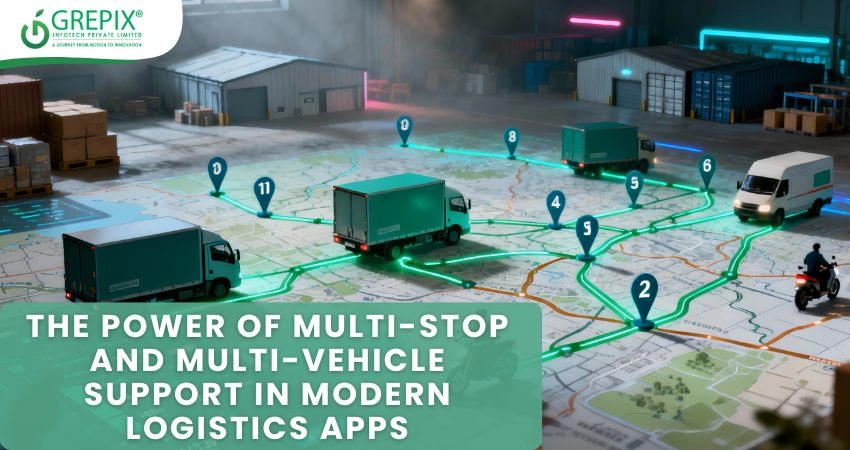
The Power of Multi-Stop and Multi-Vehicle Support in Modern Logistics Apps
Logistics businesses frequently grapple with the challenge of coordinating multiple pickups, drop-offs, and routes. Managing numerous stops and vehicles efficiently is essential for scalability and profitability in today’s fast paced delivery environment. Multi-stop logistics apps and multi-vehicle dispatch software are revolutionizing the way logistics companies operate by enabling smarter route planning and fleet management.
Multi-stop and multi-vehicle systems provide the backbone for efficient delivery fleet management. They allow drivers to complete multiple deliveries in a single run while enabling administrators to allocate vehicles dynamically based on demand. This scalability and flexibility are critical to meeting customer expectations and reducing operational costs.
This article explores the transformative power of multi-stop logistics apps and multi-vehicle dispatch software in modern logistics. Learn how route optimization apps and split delivery systems enhance delivery fleet management by reducing fuel costs, increasing delivery density, and enabling real-time route adjustments. Discover how Grepix’s advanced logistics automation software supports scalability and efficiency with integrated routing and dynamic vehicle allocation. Real-life case studies highlight significant improvements in delivery times and cost savings, making this approach essential for logistics businesses aiming to thrive in competitive markets.
Understanding Multi-Stop and Multi-Vehicle Logistics
Multi-Stop Route Management
A multi-stop logistics app empowers drivers to manage several deliveries per route. Drivers follow optimized routes generated by the app, which considers traffic data, delivery priorities, and time windows to reduce total travel distance. This route optimization app functionality enables drivers to maximize delivery density per trip while minimizing fuel consumption.
Multi-Vehicle Dispatch
Multi-vehicle dispatch software allows administrators to allocate several vehicles to bulk orders or geographic zones, dynamically splitting deliveries across the fleet. This split delivery system ensures timely deliveries for high-volume demand by balancing workloads and avoiding bottlenecks.
Real-Time Adjustments
Advanced logistics automation software incorporates live traffic updates and route recalculations, enabling real-time adjustments to routes or vehicle assignments. This responsiveness guarantees on-time arrivals even amidst unpredictable road conditions or last-minute order changes.
Advantages of Multi-Stop and Multi-Vehicle Support
Reduced Fuel Costs and Time
By optimizing routes and enabling multiple stops, delivery vehicles avoid unnecessary miles. This translates to significantly lower fuel consumption and reduced delivery time per order.
Increased Delivery Density Per Trip
With multi-stop capabilities, drivers can carry and deliver more packages per trip, boosting overall fleet productivity. This improves efficiency without requiring additional vehicles or staff.
Enhanced Fleet Efficiency
Multi-vehicle dispatch software improves coordination across the fleet, reducing idle time and maximizing vehicle utilization. The split delivery system dynamically distributes deliveries to avoid overloading any single vehicle.
Scalability and Flexibility
As delivery volumes grow, logistics businesses can scale operations by adding more vehicles and stops seamlessly with automation software assisting in managing complexity. The real-time routing logic ensures optimal allocation for any fleet size.
Also Read: Road to Riches: How to Build a Billion-Dollar Taxi Business in Saudi Arabia
How Grepix Supports Multi-Stop and Multi-Vehicle Logistics
Grepix’s innovative logistics software solution is designed to tackle the complexities of multi-stop and multi-vehicle operations with key features:
- Integrated Routing Logic: Grepix’s route optimization app generates efficient multi-stop plans that minimize travel time and fuel costs, supporting split delivery systems that handle bulk orders effectively.
- Dynamic Allocation Engine: The software dynamically assigns and reassigns drivers and vehicles based on real-time conditions and demand, ensuring balanced workloads and consistent delivery speeds.
By combining these capabilities, Grepix helps logistics businesses deliver faster, smarter, and more efficiently while maintaining customer satisfaction and operational control.
Real-Life Case Study Example
A leading e-commerce company implemented Grepix’s multi-vehicle dispatch software integrated with a multi-stop logistics app to manage its high-volume urban deliveries. The company experienced:
- 20% reduction in fuel costs within six months.
- 30% increase in on-time deliveries,
- 25% higher average deliveries per driver shift.
This success was driven by precise route optimizations and the ability to adjust vehicle assignments dynamically as demand fluctuated during peak seasons.
Conclusion
Deliver faster, smarter, and more efficiently with Grepix’s multi-stop and multi-vehicle support system. Harness the power of logistics automation software, multi-stop logistics apps, and multi-vehicle dispatch software to optimize your delivery fleet management and cut costs while enhancing customer satisfaction.
FAQs
1. What is a multi-stop logistics app?
A multi-stop logistics app helps drivers manage multiple deliveries on a single route by optimizing stops based on distance, priorities, and traffic.
2. How does multi-vehicle dispatch software improve fleet management?
It dynamically assigns deliveries across multiple vehicles, balancing workloads and optimizing route efficiency for the whole fleet.
3. What are the benefits of route optimization apps?
Route optimization apps reduce travel time, fuel costs, and improve on-time delivery by planning the most efficient routes in real-time.
4. What is a split delivery system?
A split delivery system divides bulk orders among multiple vehicles or stops to maximize fleet efficiency and meet delivery deadlines.
5. How does logistics automation software help with delivery fleet management?
It automates route planning, vehicle allocation, and real-time adjustments, improving operational efficiency and scalability.