
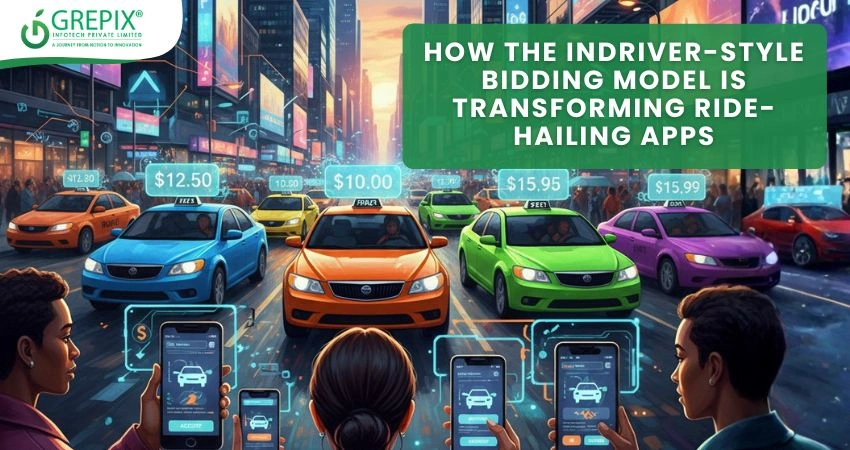
How the InDriver-Style Bidding Model is Transforming Ride-Hailing Apps
The traditional taxi app fare model is simple choose a ride, get a fixed price based on distance and time. But what if riders could set their own price? Enter the inDriver clone app and bid-based ride-hailing feature. Popularized in emerging markets, this approach empowers users to decide what’s fair, while drivers compete to accept or counter the offer.
Across Africa, Asia, and LATAM, rider-set pricing is transforming how people hail taxis. The transparent taxi app concept appeals to millions who want control and flexibility, especially in price-sensitive economies. The result: more bookings, greater choice, and healthy competition among drivers.
The inDriver-style bidding model is redefining the ride-hailing industry. Unlike static pricing models, this system lets riders propose their own fares, sparking competitive bidding among drivers. The result? A more transparent taxi app, improved rider savings, and higher driver autonomy. Popular across Africa, Asia, and LATAM, bid-based ride-hailing models empower both riders and drivers while boosting bookings in traditionally low-demand periods. This guide explores how the inDriver clone app works, why rider-set pricing dominates price-sensitive markets, and what startups gain by implementing these features. Real-world examples and statistics highlight how Grepix’s dynamic matching algorithm makes the rider experience fair, transparent, and future-proof. Dive deep into the technology and benefits to see why the inDriver-style taxi app is revolutionizing global mobility.
How the InDriver Clone App Ride Bidding System Works
Let’s break down the InDriver-style bidding process step-by-step:
Riders Post Their Trip and Proposed Fare
Riders open a transparent taxi app and enter trip details pickup, drop-off, and their proposed price. No algorithm decides the fare; users suggest what they're willing to pay, creating a rider-set pricing ecosystem.
Drivers Review, Accept, Reject, or Counter-Bid
Drivers nearby receive the request and proposed fare. Each chooses to:
- Accept the offer and confirm the ride
- Reject it if the fare is too low
- Counter-bid with a higher price, negotiating with the rider directly
The ride bidding system ensures drivers can compete or walk away, fostering fairness.
Mutual Agreement and Trip Confirmation
Once a rider and driver mutually agree, the trip is confirmed at the agreed price. All details including fare, driver rating, and car info are displayed transparently. This is the heart of the InDriver-style taxi app experience
Key Features of an InDriver Clone App
Startups can adopt these bid-based ride-hailing features for increased engagement:
- Custom fare negotiation: Riders and drivers can chat and negotiate within the app.
- Real-time matching: Algorithms instantly pair requests and offers for speed and fairness.
- Driver selection by multiple factors: Riders can choose based on fare, car, ratings, or estimated arrival time.
- Surge-free experience: Unlike static or surge-pricing models, prices reflect real-time negotiation, not automated multipliers.
- Secure chat and payment interface: Keeps all deals transparent and recorded.
- Parcel delivery options: Some inDriver clone apps bundle parcel services with ride bidding, expanding revenue opportunities.
Why the InDriver-Style Taxi App Model Is Booming in Emerging Markets
CThe success of bid-based ride-hailing apps is fueled by local market conditions:
Price Sensitivity
Riders in many regions actively seek lower fares, especially during off-peak hours or long trips. Negotiable pricing appeals to cost-conscious users desperate to avoid fixed or surge-priced platforms.
Driver Empowerment
Drivers decide which fares to accept, enabling them to maximize earnings and avoid unprofitable journeys.
Demand Flexibility
Since both sides negotiate, ride volume increases in low-demand periods, filling more downtime slots and boosting overall bookings.
Trust and Transparency
The transparent taxi app model builds trust. All pricing agreements happen in the open, with full visibility on ride history and payment flows.
Also Read: Accelerating Your Fortune: Becoming a Billionaire in South Africa's Taxi Industry
Advantages for Startups Implementing Bid-Based Ride-Hailing
The inDriver-style taxi app model offers distinctive benefits:
- Differentiation: Stand out with unique rider-set pricing, attracting riders from traditional apps.
- Higher engagement: Users interact more often, comparing drivers and fares.
- Scalable vision: Adapt quickly to local preferences as you enter new markets.
- Reduced cancellations: Negotiated prices reduce rider-driver misunderstandings and cancellations.
- Improved driver retention: Drivers gain autonomy and protect their margins, reducing turnover.
Case Study: Bid-Based Ride-Hailing in Practice
Appicial’s Bid N Ride Platform
A leading inDriver clone app provider, Appicial’s Bid N Ride launched in multiple countries. Their model:
- Let riders set their own price
- Drivers accepted, rejected, or counter-bid via secure messaging
- Implemented a transparent ride bidding system for both taxi rides and parcel delivery
Results:
Platforms saw a 34% increase in daily rides after launch, with driver satisfaction up by 22%. Low-demand periods filled with negotiated bookings, and customer complaints about unfair pricing dropped by half.
Grepix’s Implementation
Grepix leverages dynamic pricing modules, real-time backend matching, encrypted negotiation chats, and driver analytics. Their inDriver clone app was adopted by startups in Asia and LATAM, fueling rapid growth through rider-set pricing and transparent operations.
How Grepix Implements the InDriver-Style Bidding Module
Real-Time Matching Algorithm
Grepix’s ride bidding system instantly connects riders and drivers for quicker negotiations, minimizing wait times.
Secure Chat System for Negotiation
Encrypted messaging enables confidential fare discussions, with all agreements locked to the trip record.
Dynamic Pricing Module
The platform supports flexible negotiations and logs every fare, empowering both parties to reach consensus.
Driver Analytics Dashboard
Drivers view offers, counter-bid trends, earnings statistics, and personalized ride recommendations to improve profits
Why Rider-Set Pricing Is the Future of Ride-Hailing
User Demand for Control
Market studies show 57% of riders in high-growth cities want to influence the fare, not just accept what’s given.
Healthy Competition
Bid-based ride-hailing increases trip completion by matching rider budgets with driver preferences, balancing supply and demand with precision.
Boosts Startup Success in Competitive Markets
Entrepreneurs leveraging the InDriver clone app and transparent taxi app models can disrupt legacy markets, build loyal user bases, and accelerate revenue growth.
Conclusion
The rise of bid-based ride-hailing app is transforming the global taxi industry, making fare negotiations the new standard. InDriver-style taxi app models empower both riders and drivers: users set their price, drivers choose what to accept or counter-bid, and everyone gains full transparency. For startups, adopting an inDriver clone app with a robust ride bidding system is more than a trend it’s a proven strategy for market entry, rapid growth, and sustainable engagement.
As mobility evolves, rider-set pricing and dynamic negotiations set your platform apart. These models are especially vital in price-sensitive regions, providing choice, fairness, and trust where they matter most. Grepix’s turnkey solution delivers secure, scalable, and feature-rich bid-based ride-hailing technology.
FAQs
1. What is the ride bidding system in an inDriver clone app?
It’s a feature where riders propose a fare and nearby drivers compete to accept, reject, or counter-bid, ensuring full pricing transparency.
2. How do rider-set pricing and bid-based ride-hailing benefit users?
Users gain control over fares, avoid surge pricing, and typically pay less compared to static pricing taxi apps.
3. Is it safe for riders and drivers to negotiate fares?
Yes. The transparent taxi app safeguards discussions via secure chats and records all agreements, minimizing disputes and maximizing trust.
4. Can startups quickly launch an inDriver-style taxi app?
Modern white-label solutions like Grepix’s allow rapid deployment with robust bidding modules and admin dashboards for easy scaling
5. Does the inDriver clone app support parcel delivery?
Many platforms bundle ride bidding for parcels, letting users set their delivery price and negotiate with local drivers.