
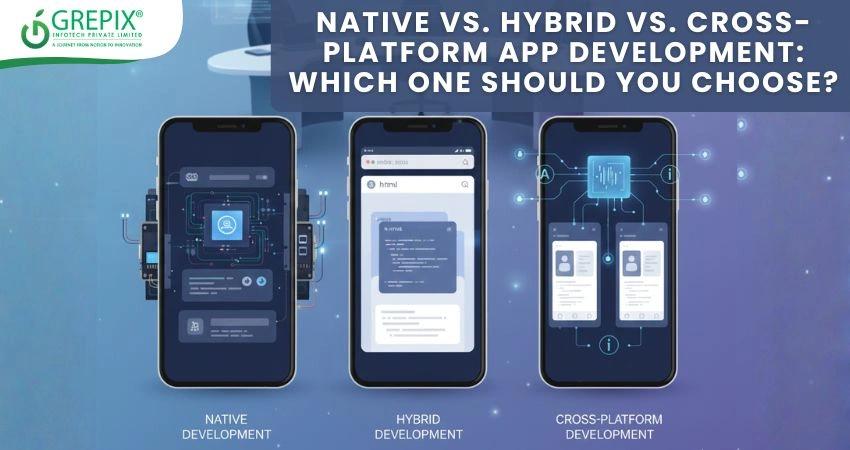
native-vs-hybrid-vs-cross-platform-app-development-which-one-should-you-choose
Mobile apps have become an integral part of everyday life for billions of users worldwide. For businesses, selecting the right mobile app development approach is critical to delivering engaging, high-performing, and cost-effective solutions. In 2025, the major development strategies available include:
- Native app development: building separate apps optimized for each mobile operating system.
- Hybrid app development: combining web technologies inside a native container for cross-platform reach.
- Cross-platform app development: using frameworks that enable shared codebases with near-native performance.
Each approach offers distinct advantages and trade-offs. This article breaks down the key differences and guides you on which method is best suited for your project.
Choosing the right mobile app development approach is crucial for the success of your app project. Native, hybrid, and cross-platform app development each come with their unique pros and cons related to performance, cost, development time, and user experience. This comprehensive guide from Grepix Infotech, a leading mobile app development company, explores these three methods in detail to help you make an informed decision tailored to your business needs and goals.
Native App Development
What is Native App Development?
Native app development involves creating apps specifically for a single platform, such as iOS or Android, using platform-specific programming languages (Swift/Objective-C for iOS, Java/Kotlin for Android). These apps leverage the complete suite of APIs and device capabilities offered by the operating system.
Advantages of Native Apps
- Superior Performance: Native apps deliver fast, smooth, and responsive experiences optimized for each platform.
- Best User Experience (UX): They adhere strictly to platform-specific interface guidelines, resulting in highly intuitive designs.
- Full Access to Device Features: Native apps can directly use GPS, camera, sensors, Bluetooth, and other hardware without restrictions.
- Robust Security: They allow advanced security implementations native to the platform.
- Offline Functionality: Native apps typically work flawlessly offline due to local data storage.
Challenges of Native Apps
- Higher Development Cost: Separate codebases and teams are required for each platform, increasing cost and complexity.
- Longer Development Time: Developing and maintaining multiple apps takes more time.
- Maintenance Overheads: Updates, bug fixes, and feature additions must be replicated across platforms.
When to Choose Native Development?
- Your app demands high-performance graphics, smooth animations, and real-time processing (e.g., gaming, augmented reality).
- You need tight integration with hardware and platform-specific features.
- UX is a critical differentiator, especially for consumer-facing apps.
- Budget and timelines allow for platform-specific teams and development cycles.
Hybrid App Development
What is Hybrid App Development?
Hybrid apps leverage web technologies like HTML, CSS, and JavaScript wrapped inside a native container. They run in a web view and access device features using plugins. Hybrid apps aim to offer one app that can run across multiple platforms.
Advantages of Hybrid Apps
- Single Codebase: Developers write one codebase for iOS, Android, and other platforms.
- Faster Time to Market: Streamlined development accelerates launch.
- Cost-Effective: Lower development and maintenance costs make it ideal for startups and small businesses.
- Offline Capabilities: Some hybrid apps support offline usage via caching.
- Easy Maintenance and Updates: Updates deploy across all platforms simultaneously.
Challenges of Hybrid Apps
- Performance Limitations: Hybrid apps may lag behind native in speed and responsiveness, especially for graphics-heavy apps.
- Inconsistent User Experience: UI may not feel “native” due to reliance on web views, potentially leading to frustration.
- Limited Access to Native Features: Plugin ecosystems may not cover all device capabilities or need custom development.
- Security Concerns: Web-based components can be more vulnerable to security threats.
When to Choose Hybrid Development?
- You need to build an app for multiple platforms with limited budget and time.
- The app has simpler functionality and UI needs (content-driven, informational apps).
- You want to test a market or MVP before investing in true native or cross-platform options.
- Your app needs rapid updates or frequent content changes with less concern for smooth animations or advanced hardware features.
Also Read: Accelerating Your Fortune: Becoming a Billionaire in South Africa's Taxi Industry
Cross-Platform App Development
What is Cross-Platform App Development?
Cross-platform development uses specialized frameworks (such as React Native, Flutter, Xamarin) that enable developers to write a shared codebase in a single language which compiles to native code on multiple platforms. It aims to offer near-native performance with code reuse.
Advantages of Cross-Platform Apps
- Near-Native Performance: Frameworks like Flutter and React Native deliver smooth animations and responsive UI very close to native apps.
- Single Codebase for Multiple Platforms: Dramatically reduces development effort while reaching a wide audience.
- Consistent User Interface:Provides a unified UX across iOS and Android.
- Faster Development and Maintenance: Streamlined codebase accelerates feature additions and bug fixes.
- Access to Device Features: Through plugins and native modules, most hardware features are accessible.
Challenges of Cross-Platform Apps
- Platform-Specific Adjustments: Some tweaking or custom native code is often necessary for perfect compatibility.
- Lag Behind OS Updates: Framework updates may delay adoption of the newest platform features.
- Dependency on Framework Stability: Bugs or limitations in the framework can affect the app.
- Debugging Complexity: Errors may appear differently on different platforms, complicating debugging.
When to Choose Cross-Platform Development?
- You aim to target multiple platforms with high-quality UX at a moderate budget.
- The app requires access to several hardware features but not ultra-specialized integrations.
- Your timeline requires faster development compared to fully native apps.
- You want the benefits of native performance without maintaining multiple codebases.
Detailed Comparison Table
| Feature / Criteria | Native App Development | Hybrid App Development | Cross-Platform App Development |
|---|---|---|---|
| Codebase | Separate for each platform | Single codebase for all platforms | Single shared codebase, with some native adjustments |
| Development Time | Longer due to multiple codebases | Shorter due to single codebase | Moderate to short with shared codebase |
| Performance | Best - optimized per platform | Moderate - runs in web view | Near-native - close to native performance |
| UI/UX | Best platform-specific experience | Less consistent, web-based UI | Consistent, near-native look and feel |
| Access to Device Features | Full, direct access | Limited, via plugins | Almost full, with native module integration |
| Maintenance | Complex and costly | Easier and cost-effective | Easier than native, but may need platform-specific tweaks |
| Cost | Highest | Lowest | Moderate |
| Ideal Use Cases | Performance-critical, UX-driven apps | Content apps, MVPs, startups | Scalable apps needing balanced speed and UX |
How to Choose the Right Approach for Your Project?
Choosing between native, hybrid, and cross-platform app development depends on multiple factors:
- Project Requirements: Assess your app’s performance needs, complexity, and required hardware features.
- Budget Constraints: Native development costs more; hybrid is the cheapest; cross-platform balances both.
- Target Audience & Platforms: Number of platforms and user expectations influence cost and approach.
- Development Timeline: Need for speed to market may favor hybrid or cross-platform.
- Maintenance Strategy: Consider long-term cost and ease of updates.
- User Experience Priority: For premium UX, native often leads.
Grepix Infotech, as a trusted mobile app development company, offers expert consultancy to evaluate your project and recommend the best strategy that fits your business goals and budget.
Conclusion
In 2025, the choice between native, hybrid, and cross-platform app development hinges on your project’s unique needs, budget, and timeline. Native app development remains the gold standard for performance and user experience but comes with higher costs and longer development cycles. Hybrid development offers a budget-friendly, fast path to market with some limitations in performance and UX. Cross-platform development has evolved into a powerful middle ground, delivering near-native apps faster and more affordably than fully native solutions.
Grepix Infotech, a reputed mobile app development company, is equipped with expertise in all these approaches. Whether you aim for high-performance native apps, rapid hybrid builds, or versatile cross-platform solutions, Grepix Infotech can guide you through choosing and executing the optimal strategy, ensuring your app stands out in the competitive mobile landscape.
FAQs
1. What is the main difference between native, hybrid, and cross-platform app development?
Native apps are built specifically for each platform with platform-specific languages, providing the best performance and UX. Hybrid apps use web technologies inside a native shell, allowing a single codebase but with some performance compromises. Cross-platform apps use frameworks like React Native or Flutter to share code across platforms while delivering near-native performance.
2. Which app development approach is the most cost-effective?
Hybrid app development is generally the most cost-effective because you build one codebase for all platforms. Cross-platform offers a moderate cost with better performance, while native apps require separate development for each platform, increasing costs.
3. Can hybrid and cross-platform apps access all device features?
Hybrid apps have limited access to device hardware and often rely on plugins, which may not cover all features. Cross-platform apps provide broader access using native modules but might still lag behind native apps in supporting the latest platform-specific features.
4. Which method offers the best user experience?
Native app development typically delivers the best, most intuitive and smooth user experience as it is fully optimized for each platform’s design guidelines and performance capabilities.
5. How long does it take to develop apps using these approaches?
Native development takes the longest due to maintaining separate codebases. Hybrid development is the fastest, while cross-platform development offers a balance with shared codebase and high performance.