
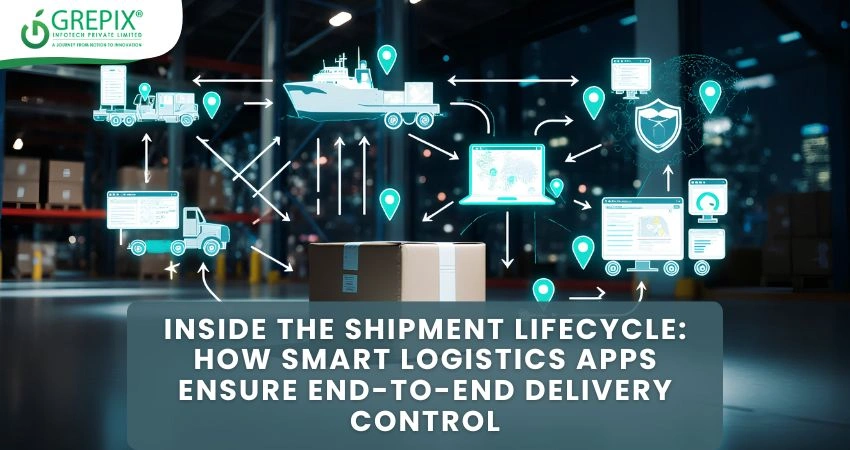
Inside the Shipment Lifecycle: How Smart Logistics Apps Ensure End-to-End Delivery Control
Shipment lifecycle management is the comprehensive process of overseeing a shipment from the point of origin to the destination. It includes all stages such as pickup, transit, warehouse handling, last-mile delivery, and final proof of delivery. With the rise of digital transformation in logistics, smart logistics software solutions have revolutionized how businesses manage their shipments, enabling operational efficiency, transparency, and real-time data accessibility.
Real-time data is the backbone of modern shipment lifecycle management. It enhances delivery reliability by enabling precise tracking of shipments at every stage. This transparency fosters customer trust, as clients receive timely updates and accurate estimated times of arrival (ETA). Businesses using delivery tracking apps benefit from fewer delivery errors and improved communication with customers, ultimately leading to higher satisfaction and loyalty.
This blog explores shipment lifecycle management and how smart logistics apps transform delivery tracking and control. From pickup to proof of delivery, learn about live tracking, warehouse software integration, and last-mile delivery monitoring that improve accuracy, customer trust, and operational efficiency. Discover Grepix’s innovative solution empowering businesses to streamline logistics end to end with timestamped tracking and seamless warehouse management integration, enhancing transparency and performance.
Stages of the Shipment Lifecycle
Pickup: Driver Assigned and Parcel Collected
The shipment lifecycle begins with the driver being assigned to the pickup task. Smart logistics software solutions automatically allocate drivers based on availability, location, and efficiency metrics. Once assigned, the parcel is collected, and the driver's app records the pickup time, location, and initial parcel condition. This data instantaneously updates the shipment lifecycle management system, allowing businesses and customers to monitor progress right from the start.
In-Transit: Live Location and Route Tracking
During transit, continuous live location tracking is crucial. Delivery tracking apps utilize GPS technology to monitor the shipment's exact position in real-time. This feature allows logistics managers to optimize routes dynamically, avoiding traffic congestion or roadblocks. In-transit tracking not only ensures timely deliveries but also provides transparency, minimizing customer anxiety about their shipments.
At Warehouse: Automated Status Update and Scan Logs
When shipments arrive at a warehouse, warehouse logistics software comes into play. Automated systems scan barcodes or RFID tags, updating the shipment status in the system. These scan logs create a detailed history of parcel handling and storage, reducing human errors. Integration between shipment lifecycle management and warehouse management systems ensures synchronized data flow, enabling efficient inventory control and faster dispatch.
Out for Delivery: Final Dispatch with ETA Notification
Once a shipment leaves the warehouse, it enters the last-mile delivery phase. Last-mile delivery tracking is critical because this stage most directly impacts customer satisfaction. Smart logistics apps send automatic notifications with ETAs to recipients, allowing them to prepare for delivery or reschedule if needed. This proactive communication reduces missed deliveries and enhances overall service quality.
Delivered: Proof-of-Delivery Capture via Photo or Signature
The final stage of the shipment lifecycle is delivery confirmation. Proof of delivery apps offer multiple ways to capture delivery proof, including photos, digital signatures, or barcode scans. This confirmation is immediately uploaded to the shipment lifecycle management system, ensuring accountability and enabling quick dispute resolution if necessary. Such digital proof helps businesses maintain records for compliance and customer service improvements.
Also Read: Accelerating Your Fortune: Becoming a Billionaire in South Africa's Taxi Industry
Benefits for Businesses Using Smart Logistics Apps
Improved Accountability and Transparency
Smart shipment lifecycle management tools provide end-to-end visibility, making every step accountable. Businesses can trace delays or damages back to specific points in the shipment path, empowering better service quality control.
Error Reduction Through Automation
Automation embedded in logistics software solutions, from driver assignment to warehouse scans, decreases human errors. This reduces instances of lost parcels, incorrect deliveries, or miscommunication.
Real-Time Analytics for Process Optimization
Data collected across the shipment lifecycle provides actionable insights. Businesses analyze this data to identify bottlenecks, optimize routes, and improve warehouse operations, driving cost efficiency and faster deliveries.
Grepix’s Edge in Smart Logistics Software Solutions
Grepix offers a robust shipment lifecycle management system tailored for modern logistics challenges. Its features include:
- Timestamped Tracking and Shipment History: Every parcel's journey is logged with timestamps, creating a transparent and searchable shipment history.
- Integrated Warehouse Management Module: Grepix’s system integrates warehouse logistics software, streamlining inventory management and shipment handling within a single platform.
These capabilities empower businesses to maintain strict control over their delivery processes and enhance customer satisfaction.
Conclusion
Take full control of every delivery step with Grepix’s end-to-end shipment lifecycle system. By leveraging groundbreaking technology such as delivery tracking apps and proof of delivery apps, your business can achieve unparalleled transparency, accountability, and efficiency. Optimize your logistics operations, reduce errors, and offer your customers a seamless delivery experience.
FAQs
1. What is shipment lifecycle management?
Shipment lifecycle management is the end-to-end coordination and tracking of a shipment’s journey from pickup to delivery, ensuring transparency and efficient handling at every stage.
2. How does a delivery tracking app improve customer satisfaction?
By providing real-time updates, ETAs, and proactive communication, delivery tracking apps keep customers informed, reducing anxiety and missed deliveries.
3. What features define a good proof of delivery app?
A reliable proof of delivery app offers digital signature capture, photo evidence, and barcode scanning to confirm deliveries with real-time uploads.
4. Why is warehouse logistics software important in shipment management?
Warehouse logistics software automates inventory tracking, status updates, and reduces human error, ensuring smooth handling within warehouses and faster dispatch.
5. How does last-mile delivery tracking optimize the delivery process?
Last-mile delivery tracking provides accurate ETAs and route optimization, minimizing delays and improving delivery success rates.