
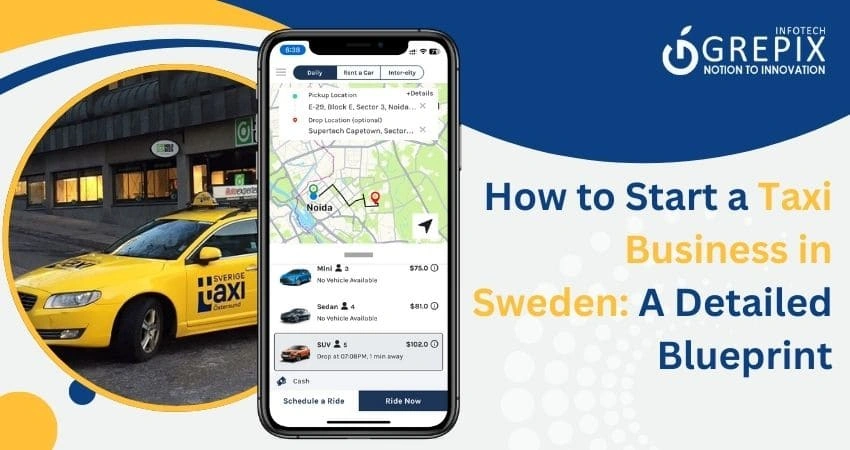
How to Start a Taxi Business in Sweden: A Detailed Blueprint
Starting a taxi business in Sweden can be a lucrative venture, especially in urban areas where public transportation might not cover every commuter's needs. With Sweden's well-regulated transport system, running a taxi business offers compelling opportunities for entrepreneurs willing to navigate the legal, operational, and technological aspects of this evolving industry. From Stockholm's busy commuter corridors to the tourist-heavy streets of Gothenburg and Malmö, demand for dependable, app-enabled taxi services continues to grow year on year.
Launching a taxi business in Sweden requires careful, strategic planning - from obtaining the correct licenses and permits to setting up an efficient digital booking system that can compete with international ride-hailing giants. With this detailed blueprint, you can build a profitable taxi business, differentiate yourself in a competitive market, and deliver the kind of consistent, high-quality service that generates loyal repeat customers. If you're ready to start, the first steps are clear: register your business, assemble your fleet, integrate the right technology, and focus relentlessly on customer experience.
But where do you begin? From satisfying the Swedish Transport Agency's regulatory requirements to deploying a feature-rich taxi booking app that modern passengers expect, this guide provides a comprehensive, step-by-step breakdown of how to launch, operate, and grow a successful taxi business in Sweden.
Starting a taxi business in Sweden can be a profitable venture, particularly in urban areas where public transport may not meet all commuter needs. With a well-regulated industry, entrepreneurs must navigate licensing, vehicle acquisition, technology integration, and marketing strategies to establish a successful operation. Understanding the competitive landscape, leveraging modern dispatch software and ride-hailing technology for bookings, and ensuring full compliance with Swedish Transport Agency regulations are all crucial steps on the path to profitability. Grepix Infotech, a leading taxi app development company, offers innovative, white-label solutions to streamline operations and enhance customer experience from day one. With the right planning, technology partner, and market focus, you can build a thriving taxi service and capitalize on Sweden's growing demand for reliable, app-enabled transportation.
1 Understanding the Taxi Industry in Sweden
Before committing capital to a taxi business in Sweden, it's essential to develop a thorough understanding of the country's taxi industry landscape. Unlike many European markets where taxi fares are fixed by government decree, Sweden operates a fully deregulated taxi market - a distinctive feature that creates both opportunity and complexity for new entrants. Taxi operators in Sweden are free to set their own fares, but they are legally required to display all pricing information transparently and visibly to passengers before the journey begins.
Key Points to Consider:
- Market Demand: Major cities like Stockholm, Gothenburg, and Malmö have consistently high demand for taxi services, especially during peak commuting hours, late-night periods, and in areas where the public transport network has coverage gaps. Tourist destinations and airport corridors represent particularly strong revenue opportunities for well-positioned operators.
- Competition: International ride-hailing services like Uber and Bolt operate actively in Sweden's largest cities, creating significant competitive pressure for traditional taxi operators. Success in this environment requires a clear differentiation strategy built around service quality, local knowledge, pricing transparency, and digital accessibility.
- Legal Framework: The Swedish Transport Agency (Transportstyrelsen) regulates all taxi services operating in Sweden, setting standards for vehicle safety, driver qualifications, and fare transparency to protect both passengers and the integrity of the industry.
- Technology Expectations: Swedish consumers are among the most digitally sophisticated in Europe. Passengers increasingly expect seamless app-based booking, real-time driver tracking, cashless payments, and instant fare estimates as baseline features - not premium add-ons. Operators who invest in modern taxi app technology are significantly better positioned to capture and retain market share.
If you're serious about entering Sweden's taxi industry, thorough market research will help you determine which cities or regions offer the best entry points, how to structure competitive and sustainable pricing, and what service niches - such as airport transfers, corporate accounts, or accessible transport - represent the most attractive growth opportunities.
Sweden Taxi & Ride-Hailing Market Split
Note: App-based dispatch systems and digital hail platforms represent the fastest-growing sector across major hubs like Stockholm, Gothenburg, and Malmö.
2 Creating a Taxi Business Plan
A well-structured, research-backed business plan is the bedrock of any successful taxi venture in Sweden. It serves as both a strategic roadmap for your day-to-day operations and a credibility document when applying for business loans, seeking investor funding, or approaching corporate clients. Your taxi business plan for Sweden should cover several essential components in sufficient depth to guide decision-making at every stage of the business lifecycle.
Begin with a detailed market analysis - identify your primary target customer segments (daily commuters, airport travelers, tourists, corporate clients, medical transport users), map the geographic areas of highest demand, and objectively assess the strengths and weaknesses of existing operators and ride-hailing platforms in your target market. This analysis will inform how you position your taxi service to capture underserved demand or outperform incumbent providers on specific dimensions of value.
Next, define your business model with clarity. Will you operate an owner-driver sole proprietorship, a multi-vehicle fleet under a single brand, or a hybrid model where you own the platform and recruit independent licensed drivers? Each model has different capital requirements, regulatory implications, and scalability profiles. Financial planning must accompany this decision - covering initial vehicle acquisition or lease costs, licensing and insurance expenses, technology platform investment, staff costs, and a realistic projection of revenue ramp-up over the first 12 to 24 months of operation.
Finally, develop a go-to-market strategy that defines how you will attract your first customers and build sustainable booking volumes - through digital channels, corporate partnerships, local SEO, or referral incentives. Operators who engage a specialist taxi app development partner from the outset can often launch with a branded booking app already in hand, giving them an immediate competitive advantage over competitors still relying on phone dispatch alone.
Startup Setup Roadmap
Incorporate the Entity (Bolagsverket)
Register your business name. Incorporating an *Aktiebolag (AB)* requires a minimum share capital initialization of 25,000 SEK.
Tax Approvals (F-skatt)
Apply for F-skatt status and VAT registration (*Mervärdesskatt*) through the Skatteverket corporate portal.
Fleet Tech Synchronization
Equip vehicles with taximeters or set up your digital dispatch platform configuration connected to a certified BPT reporting center.
Insurance Infrastructure
Secure commercial vehicle insurance (*taxiförsäkring*) to cover liabilities for both drivers and passengers.
3 Registering Your Taxi Business
Formal business registration is a non-negotiable prerequisite for operating a taxi service in Sweden. The structure you choose at this stage has lasting implications for your tax position, personal liability exposure, and capacity to raise external funding as the business grows.
For single-operator businesses with a small initial fleet, registering as a Sole Proprietorship (Enskild Firma) is the most straightforward route. It involves minimal administrative overhead and allows you to get operational quickly. However, for taxi businesses with plans to employ drivers, own multiple vehicles, or attract outside investment, incorporating a Limited Liability Company (Aktiebolag - AB) provides stronger legal protection and greater commercial credibility with corporate clients and financial institutions.
Regardless of the structure chosen, all taxi businesses in Sweden must register with Bolagsverket (the Swedish Companies Registration Office) and obtain a Corporate Tax ID from Skatteverket (the Swedish Tax Agency). If your annual turnover is expected to exceed SEK 80,000 - which it almost certainly will be in any viable taxi operation - you are legally required to register for Value Added Tax (VAT) and submit regular VAT returns. Completing these registrations correctly from the outset protects you from penalties and lays a solid administrative foundation for the business ahead.
| License Type | Governing Authority | Core Prerequisite | Mandatory Equipment |
|---|---|---|---|
| Driver License (TFL) | Transportstyrelsen | Age 21+, valid EU license for 2+ years, passed medical & background checks. | Physical Driver Badge ID Displayed |
| Company License (Trafiktillstånd) | Transportstyrelsen | Financial stability validation (proving capital allocation per vehicle), clean tax status. | Approved Taximeter or Certified App-Based Meter |
| Fiscal Connection | Skatteverket (Tax Agency) | Corporate registration (AB or Enskild firma) with structural VAT declarations. | Certified Cash Register Profile integration |
4 Obtaining Necessary Licenses and Permits
Running a legal, compliant taxi service in Sweden requires obtaining and maintaining several distinct permits and certifications, all overseen by the Swedish Transport Agency (Transportstyrelsen). Understanding these requirements in detail before you begin operating is essential - non-compliance can result in heavy fines, forced suspension, or permanent revocation of your operating license.
The most fundamental requirement is the Taxi Operator's License (Taxitrafiktillstånd), issued by the Swedish Transport Agency. This license is granted only to businesses and individuals who meet specific financial standing and professional competence criteria, and it must be renewed periodically. All vehicles in your fleet must pass an annual roadworthiness inspection to demonstrate they meet Swedish safety standards. Comprehensive passenger liability insurance is mandatory and must be maintained without lapse to protect both your passengers and your business against the financial consequences of accidents.
All taxis operating in Sweden must be equipped with an approved, calibrated taxi meter, and full fare information - including the starting rate, per-kilometre rate, and any surcharges for night, weekend, or airport journeys - must be clearly displayed inside the vehicle at all times. This transparency requirement is central to the Swedish regulatory framework and helps build the passenger trust that underpins a sustainable taxi business. For operators integrating digital booking platforms, fare transparency must also be built into the app interface, with upfront estimates displayed before the passenger confirms their booking.
5 Acquiring Vehicles for Your Fleet
Vehicle selection is one of the most consequential decisions you will make when launching a taxi business in Sweden. The vehicles you operate are simultaneously your primary revenue-generating asset, your most visible brand touchpoint, and a significant ongoing cost centre - making the right choice at the outset critically important for long-term financial performance.
Sweden places a strong national emphasis on sustainable, eco-friendly transport policy. Electric Vehicles (EVs) are actively incentivized through government tax reductions, reduced congestion charges in city centres, and access to dedicated EV infrastructure. For taxi operators, EVs offer the dual benefit of lower per-kilometre fuel costs and alignment with the environmental expectations of an increasingly eco-conscious Swedish passenger base. Hybrid vehicles represent a practical intermediate option - offering improved fuel efficiency over traditional petrol or diesel taxis while avoiding the range anxiety associated with pure EVs for operators covering longer intercity routes.
The buy-versus-lease decision requires careful financial modelling. Purchasing vehicles outright demands a higher initial capital outlay but results in lower long-term total cost of ownership once the asset is depreciated. Leasing reduces the upfront financial barrier and provides greater flexibility to upgrade your fleet as vehicle technology evolves, but involves ongoing monthly commitments that must be covered even during periods of lower booking volumes. Whichever acquisition model you choose, all vehicles must be fully compliant with Swedish emissions standards, safety inspection requirements, and the specific vehicle specification rules set out by the Swedish Transport Agency before entering commercial service.
6 Setting Up Insurance and Legal Compliance
Comprehensive insurance coverage is not merely a legal box to tick - it is a fundamental pillar of financial risk management for any taxi business operating in Sweden. The right insurance package protects your vehicles, your drivers, your passengers, and the long-term financial health of your business against the range of incidents and liabilities that are an inevitable feature of operating a commercial transport service.
Three core insurance categories are required for legal taxi operation in Sweden. Vehicle Insurance must cover damages arising from collisions, theft, and third-party property damage for every vehicle in your fleet. Passenger Liability Insurance specifically covers the costs of passenger injury or death occurring during a journey, and is a non-negotiable legal requirement for all licensed taxi operators. Business Insurance provides broader coverage against operational disruptions, equipment failures, and other unforeseen losses that could threaten business continuity.
Beyond insurance, maintaining ongoing legal compliance with Swedish Transport Agency requirements - including keeping all driver licenses, taxi operator licenses, vehicle inspection certificates, and insurance policies current and valid - requires active administrative management. Many successful taxi operators in Sweden use specialist fleet management software to automate compliance reminders and document tracking, reducing the risk of inadvertent license lapses that could expose the business to significant legal and financial consequences.
7 Hiring and Training Drivers
The quality of your driver team is, ultimately, the most powerful determinant of your taxi business's reputation and long-term customer retention in Sweden. Every passenger interaction is a brand experience - and in an era of instant online reviews and social media, a single poor experience can have disproportionate negative consequences, while consistently excellent service builds the kind of word-of-mouth advocacy that no amount of paid advertising can replicate.
All taxi drivers operating commercially in Sweden must hold a valid Taxi Driver's License (Taxiförarlegitimation), issued by the Swedish Transport Agency. Obtaining this license requires passing a theoretical knowledge examination, demonstrating proficiency in Swedish geography and taxi-specific regulations, and holding a valid standard driving license with a clean record. All prospective drivers must also pass a comprehensive background check to verify they hold no criminal convictions incompatible with working in a passenger-carrying role.
Beyond the statutory minimum requirements, operators who invest meaningfully in driver training - covering professional customer service skills, conflict de-escalation, accessible transport protocols, navigation proficiency, and the specific features of your digital booking platform - consistently outperform competitors on passenger satisfaction metrics. Well-trained, motivated drivers who feel genuinely valued by their employer also demonstrate significantly better retention rates, reducing the costly cycle of recruitment and onboarding that plagues underprepared taxi operators.
8 Setting Up a Taxi Dispatch System
In today's competitive Swedish taxi market, an efficient, technology-driven dispatch and booking system is not a luxury - it is a fundamental operational requirement that directly determines your capacity to compete against ride-hailing platforms and tech-forward local operators. The dispatch system you deploy shapes every aspect of your customer experience, driver productivity, and business intelligence capabilities.
For micro-operations with only one or two vehicles, manual phone dispatch may suffice during the initial phase. However, for any taxi business with ambitions to grow beyond a handful of vehicles, investing in automated dispatch technology is essential. Modern cloud-based taxi dispatch platforms provide real-time GPS tracking of your entire fleet, algorithmic ride-assignment that minimizes passenger wait times and driver idle time, automated booking confirmation and driver notification, and detailed reporting dashboards that give you actionable insight into peak demand periods, average trip values, and driver performance.
The most competitive operators in Sweden go a step further by deploying a branded passenger-facing mobile app - available on both Android and iOS - that enables passengers to book rides, track their driver in real time, pay digitally, and rate their experience without any phone interaction. Partnering with Grepix Infotech's Uber-like app development solutions allows you to launch a fully branded, feature-complete booking app in a fraction of the time and at a fraction of the cost of custom development from scratch - giving your business the digital presence it needs to attract and retain the modern Swedish passenger.
9 Marketing Your Taxi Business
Once your taxi business is operationally ready in Sweden, building a consistent pipeline of bookings requires a multi-channel marketing strategy that reaches your target customers through the channels they use most. In a market where passengers have multiple app-based alternatives at their fingertips, visibility, brand trust, and ease of booking are the primary competitive levers at your disposal.
Digital marketing should form the backbone of your customer acquisition strategy. Building a professionally designed, mobile-optimized website with integrated online booking functionality - and optimizing it for local search terms such as "taxi Stockholm," "airport taxi Gothenburg," or "taxi booking Malmö" - will capture high-intent organic search traffic from passengers actively seeking a ride. Investing in targeted Google Ads campaigns and geographically focused social media advertising on platforms popular with your target demographics allows you to drive immediate booking volume while your organic SEO rankings build over time. Registering and actively managing a Google Business Profile for your taxi operation is one of the highest-ROI digital marketing actions available to any local service business in Sweden, dramatically increasing your visibility in local search results and on Google Maps.
Offline marketing channels remain highly effective for taxi businesses serving specific geographic markets. Establishing commercial partnerships with hotels, corporate offices, hospitals, and major transport hubs like train stations and airports provides a steady stream of pre-qualified passengers who need reliable, professional taxi services. Distributing professionally designed business cards and flyers at high-footfall locations builds brand awareness among potential customers who may not yet have discovered your service digitally. A well-structured customer referral programme - offering booking credits or fare discounts to passengers who successfully refer new customers - is a cost-effective way to leverage your existing satisfied customer base as a growth engine.
Also Read: "Best Ride-Hailing And Taxi Apps In Sweden"
10 Managing Operations and Customer Service
Efficient day-to-day operations management is the engine that keeps your taxi business performing at the level Swedish passengers expect. In a deregulated market where passenger choice is abundant, operational excellence is a powerful competitive differentiator that directly translates into higher ratings, more repeat bookings, and stronger word-of-mouth growth.
Pricing strategy requires ongoing attention in Sweden's deregulated taxi environment. Set fares that are competitive relative to ride-hailing alternatives and other local operators, while ensuring they cover your full cost base and deliver an acceptable margin. All fare structures - including base rates, per-kilometre rates, waiting charges, and any surcharges for airports, nights, or weekends - must be displayed transparently in every vehicle and within your booking platform, in full compliance with Swedish Transport Agency requirements. Offering a comprehensive range of payment options - including cash, all major debit and credit cards, mobile payment solutions like Swish, and in-app digital payments - removes friction from the transaction process and increases conversion among the large proportion of Swedish passengers who prefer cashless payments.
Establishing a systematic process for capturing, reviewing, and acting on customer feedback is essential for continuous service improvement. Whether through in-app post-trip rating prompts, email follow-ups, or social media monitoring, understanding what your passengers value and where they experience frustration gives you the intelligence needed to make targeted operational improvements that build long-term loyalty. Complaints should be handled promptly, professionally, and with a genuine commitment to resolution - even dissatisfied customers can become loyal advocates when they experience exceptional complaint handling.
11 Scaling and Expanding Your Business
Once your taxi business has established a stable operational foundation and is generating consistent profitability in its initial market, Sweden's broader geography and diverse urban landscape offer compelling opportunities for strategic expansion. Scaling successfully requires the same disciplined planning and execution that drove your initial success - applied to new markets, new service categories, or new customer segments.
The most straightforward expansion path is fleet growth within your existing operating area to capture a larger share of rising local demand. As your fleet grows, the operational leverage provided by automated dispatch software and a digital booking platform becomes increasingly significant - enabling you to manage more vehicles and serve more passengers without proportional increases in administrative overhead. Geographic expansion into adjacent cities or regional markets should be approached with the same rigorous market research that informed your initial launch, with careful assessment of local competition, demand patterns, and regulatory requirements before committing capital.
More ambitious operators may consider pivoting toward a platform model - where you own and operate the booking technology and recruit independent licensed drivers to service rides through your platform, rather than employing drivers directly. This model, similar to the approach used by Uber and Bolt, offers dramatically higher scalability with lower fixed cost growth. White-label ride-hailing platform solutions from Grepix Infotech make this type of expansion accessible to regional taxi operators who want to compete at scale without the cost and complexity of building proprietary technology from the ground up.
12 Financial Management and Taxation
Rigorous financial management is the foundation of a sustainable, long-lived taxi business in Sweden. The combination of vehicle depreciation, fuel or charging costs, insurance premiums, driver wages or contractor payments, platform subscription fees, and regulatory compliance costs means that the economics of a taxi operation require active, disciplined management to remain healthy - particularly during the first two years when booking volumes are still building.
Implement cloud-based accounting software - Fortnox is the most widely used platform among Swedish small businesses - from the very first day of trading. Maintaining accurate, real-time records of all income and expenditure makes VAT filing straightforward, gives you clear visibility into your profit margins at the trip and fleet level, and provides the financial reporting that banks and investors require when you seek growth financing. All taxi operators in Sweden are subject to corporate income tax (or personal income tax for sole proprietors), VAT on revenue, and employer social contributions on driver wages. Engaging an experienced Swedish accountant or tax adviser who understands the specific nuances of the transport sector from the outset will save you significantly more than their fees in avoided errors, penalties, and missed deductions.
13 Overcoming Challenges in the Taxi Business
Every industry has its characteristic challenges, and Sweden's taxi market is no exception. Understanding the most common obstacles before you encounter them allows you to build proactive mitigation strategies into your business model from the start, rather than scrambling to react after they impact your operations and profitability.
Competition from Uber, Bolt, and other well-funded ride-hailing platforms is the defining competitive challenge facing traditional taxi operators across Sweden. The most effective response is not to attempt to undercut their pricing - a battle you are unlikely to win sustainably - but to out-serve them on the dimensions of quality, reliability, and local knowledge that their platform-model services structurally struggle to deliver. Building deep, trust-based relationships with corporate clients, hotels, and healthcare providers creates a stable contracted revenue base that is far less susceptible to ride-hailing competition than consumer-facing demand.
High fuel and vehicle maintenance costs represent a structural challenge in any taxi operation. Transitioning your fleet toward electric or hybrid vehicles as quickly as your capital position allows is the most powerful long-term lever for reducing per-kilometre operating costs, while simultaneously qualifying your business for Sweden's generous EV incentive programmes. Seasonal demand fluctuations - particularly the significant reduction in business travel during Swedish summer holiday periods - should be accounted for in your cash flow planning, with sufficient reserves maintained to cover fixed costs through lower-demand periods without compromising service quality or driver retention.
A practical example of how the right technology strategy can transform a small Swedish taxi operation into a competitive, scalable urban mobility business.
14 Why Demand for Taxi Services Keeps Rising in Sweden
A few converging trends explain why this remains a strong sector to enter despite the presence of established ride-hailing platforms. Sweden's cities continue to densify, and while public transport is excellent in central Stockholm, Gothenburg, and Malmö, demand consistently outstrips supply during evenings, weekends, and around major events when public transit frequency drops. At the same time, Sweden's near-universal smartphone adoption and comfort with cashless payment mean almost the entire population is comfortable booking and paying through an app, removing a barrier that slows growth in many other markets. Add to this a steady flow of international visitors, business travelers, and newcomers who specifically look for English-language, app-based booking options, and the result is a market where well-run, technology-enabled operators consistently find demand they can convert into loyal repeat customers.
15 Is a Taxi Business in Sweden Actually Profitable?
Profitability in the Swedish taxi market comes down less to any single fixed figure and more to how tightly utilisation is managed against cost. A vehicle running consistent airport transfers, corporate accounts, or healthcare contracts in Stockholm or Gothenburg can comfortably cover fuel, driver wages, insurance, and maintenance reserves while still returning a healthy margin once it is busy enough during the working day. The single biggest threat to that margin is idle time - a parked vehicle earns nothing while still accumulating depreciation, insurance, and finance costs. This is exactly where a booking and dispatch platform pays for itself, by keeping vehicles moving between fares rather than waiting to be flagged down. Operators who track cost-per-kilometre against revenue-per-kilometre on a weekly basis, rather than relying solely on year-end accounting from Fortnox, tend to identify both profitability problems and growth opportunities months earlier than those who don't.
16 Comparing Taxi Business Models for the Swedish Market
The structure you choose has a major impact on both your startup capital requirements and your daily operational workload. A fully owner-operated fleet - where you purchase every vehicle and employ every driver directly - gives you the tightest control over branding, service quality, and compliance with Sweden's fare transparency rules, but it also means every cost and every risk sits entirely on your own books. A driver-partner model, where licensed independent drivers affiliate with your brand and app for a share of each fare, lets you scale the number of vehicles on the road far faster than your own capital would allow, though it requires stronger systems for monitoring service quality and compliance since you aren't managing every driver directly. Many successful Swedish operators use a hybrid approach: a small core of company-owned vehicles serving premium, corporate, and healthcare contracts, paired with a larger network of affiliated drivers covering everyday city demand. For most new entrants, starting lean with a small owned fleet and layering in partner drivers once booking volume justifies it tends to balance growth speed against the operational and regulatory discipline Sweden's market demands.
17 The Future of Taxi Technology: AI, Green Fleets, and Personalisation
Three key trends are shaping the next phase of growth for taxi operators in Sweden, a market widely recognized for its early adoption of innovative mobility technologies. The first is the growing use of artificial intelligence in dispatch and pricing. Advanced AI-powered systems can analyze commuter behavior, recurring demand patterns, transit disruptions, major events, and driver performance to efficiently match the right vehicle with the right passenger, reducing wait times and improving operational efficiency. The second trend is the continued shift toward electric and hybrid vehicles.
Sweden's strong support for sustainable transportation and EV incentive programs has accelerated fleet electrification across the country. Taxi operators that transition to electric and hybrid vehicles early can achieve significant cost savings on a per-kilometer basis while simultaneously appealing to environmentally conscious passengers. Over time, these savings can create a substantial competitive advantage. The third trend is personalization. Modern taxi applications are increasingly designed to remember passenger preferences, including preferred pickup locations, favorite drivers, accessibility requirements, and preferred payment methods.
By delivering a more personalized user experience, operators can improve customer satisfaction, strengthen loyalty, and encourage repeat bookings. Operators that begin investing in the data infrastructure required to support these capabilities today, even at a modest scale, will be better positioned to adopt AI-driven dispatch systems and fully electrified fleets as these technologies become standard across the Swedish mobility landscape. Those who act early will be well-equipped to capitalize on future opportunities while maintaining a competitive edge in an increasingly digital transportation market.
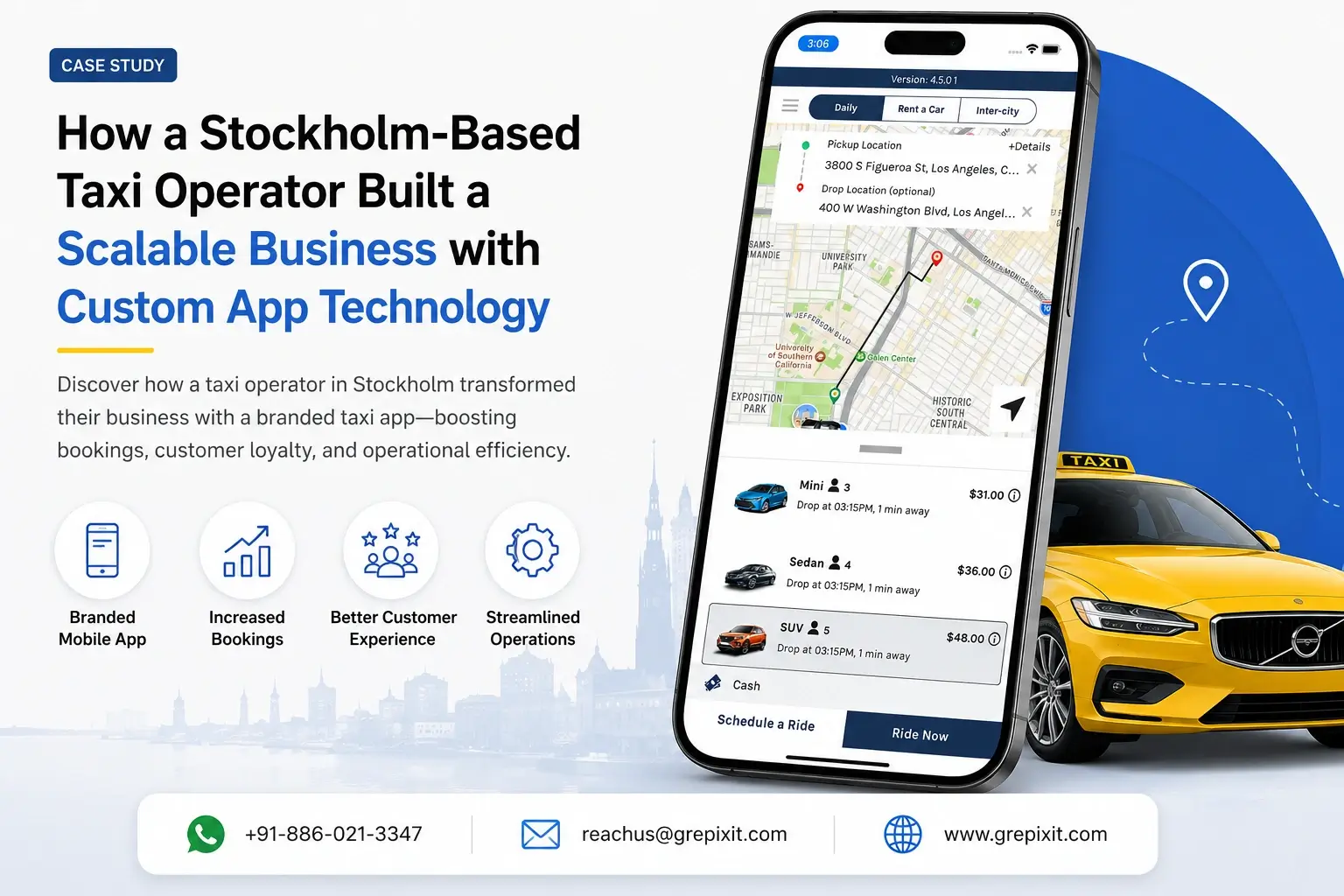
Case Study: How a Stockholm-Based Taxi Operator Built a Scalable Business with Custom App Technology
Background: A Stockholm-based taxi entrepreneur with three licensed vehicles and four years of street-hailing and phone-dispatch experience was finding it increasingly difficult to sustain booking volumes as Uber and Bolt expanded aggressively across the Swedish capital. Despite strong repeat customer loyalty among his existing passenger base, the operator had no digital booking capability, no app presence, and no way to attract the growing segment of Stockholm commuters who exclusively book rides through smartphone applications.
The Challenge: The operator needed to transition from a phone-only dispatch model to a fully digital booking experience - complete with a passenger-facing mobile app, in-app GPS tracking, cashless payment processing, and a driver app for real-time ride management - without the multi-year timeline and seven-figure development budget that building such a system from scratch would typically require. The business also needed the new platform to be deployable under its own brand identity, not as a white-label driver on a competitor's platform.
The Solution: The operator engaged Grepix Infotech to deploy a fully branded white-label taxi app solution. The platform comprised a passenger app for Android and iOS with real-time driver tracking and Swish/card payment integration, a driver app with automated trip assignment, earnings dashboard, and navigation integration, and a web-based admin panel providing fleet visibility, booking management, and performance reporting. The entire platform was configured to comply with Swedish fare transparency requirements and customized to reflect the operator's brand identity. The deployment timeline from contract signing to live launch was under six weeks. For full details on similar solutions, visit Grepix Infotech's taxi app development page.
The Results: Within four months of launching the branded app, digital bookings accounted for over 60% of total ride volume - up from zero. Monthly revenue increased by 280% compared to the pre-app baseline, driven by a combination of new customer acquisition through app store discovery and organic search, and significantly higher booking frequency among the existing customer base who appreciated the convenience of app-based booking. The operator expanded the fleet from 3 to 11 vehicles within twelve months to meet rising demand, and secured two corporate account contracts with Stockholm-based companies who specifically required an app-enabled taxi provider as a condition of the contract. Average passenger ratings on the platform reached 4.8 out of 5. The business is now positioned for further geographic expansion to Gothenburg, validating the original investment in scalable platform technology.
Key Takeaway: This case study demonstrates that with the right taxi app technology partner, even a small established operator in Sweden's competitive urban taxi market can rapidly transform their business model, attract a new generation of app-native passengers, and build the operational foundation needed for sustainable long-term growth.
Conclusion
Starting a taxi business in Sweden presents a genuinely lucrative opportunity for well-prepared, technology-forward entrepreneurs - particularly in urban centres where demand for reliable, app-enabled transportation continues to grow and where the deregulated market structure creates space for differentiated operators to build strong, profitable businesses alongside the major ride-hailing platforms.
To build a sustainable competitive position in this market, success requires more than simply obtaining the right licenses and buying a reliable vehicle. It demands a genuine commitment to digital transformation - deploying the kind of seamless booking app, transparent fare technology, and data-driven dispatch system that today's Swedish passengers expect as standard - combined with a culture of service excellence that converts first-time passengers into loyal, high-frequency customers who actively advocate for your brand.
For those looking to accelerate their path to market and gain a decisive competitive edge, partnering with an experienced transportation technology provider is the single most impactful decision you can make. Grepix Infotech, a leading taxi app development company, offers comprehensive, white-label ride-hailing solutions - from feature-rich passenger booking apps and AI-powered dispatch systems to full fleet management platforms - specifically designed to help entrepreneurs launch, operate, and scale taxi businesses in competitive markets like Sweden.
If you're ready to transform your taxi business vision into a profitable Swedish operation, the time to act is now. Connect with Grepix Infotech today to discuss how our proven technology solutions can accelerate your launch, reduce your operational costs, and position your taxi brand for long-term growth in Sweden's dynamic urban mobility market.
FAQs
1. How much does it cost to start a taxi business in Sweden?
The total startup cost depends on several variables including fleet size, vehicle type, licensing fees, insurance, and your technology platform. For a single-vehicle owner-driver operation, expect an initial investment in the range of SEK 200,000–350,000 covering vehicle acquisition, licensing, insurance, and basic dispatch tools. A multi-vehicle fleet operation with a branded booking app, proper staff, and marketing budget will typically require SEK 500,000–1,000,000 or more to launch sustainably. Choosing electric vehicles may increase upfront vehicle costs but reduces long-term fuel and maintenance expenses significantly, often improving total return on investment over a 3–5 year horizon.
2. Do I need a special license to drive a taxi in Sweden?
Yes. All commercial taxi drivers in Sweden must hold a Taxi Driver's License (Taxiförarlegitimation), issued by the Swedish Transport Agency (Transportstyrelsen). This requires passing a theoretical knowledge examination, holding a valid standard driving license with a clean record, and successfully completing a background check. Additionally, the business entity operating the taxi service must hold a separate Taxi Operator's License (Taxitrafiktillstånd) before any commercial rides can legally be carried. Operating without these licenses exposes you to significant fines and potential criminal liability.
3. Can I run a taxi business as a sole proprietor in Sweden?
Yes. Operating as a Sole Proprietorship (Enskild Firma) is a legally valid business structure for taxi operators in Sweden and is often the simplest route for single-vehicle owner-drivers looking to get started quickly. However, for businesses with multiple vehicles, employed drivers, or plans to seek external financing, incorporating as a Limited Liability Company (Aktiebolag - AB) provides greater legal protection, stronger commercial credibility, and more flexibility for future growth. Your choice of structure will have meaningful implications for taxation, personal liability, and administrative burden - so consulting a Swedish business adviser before registering is highly recommended.
4. How do I compete with Uber and Bolt in Sweden?
Competing effectively with Uber and Bolt in the Swedish market requires a multi-dimensional strategy. First, invest in your own branded taxi booking app - passengers who book through your own platform develop loyalty to your brand rather than to a ride-hailing aggregator. Second, build direct relationships with corporate clients, hotels, hospitals, and airport transfer services that value reliability and accountability over lowest price. Third, differentiate on service quality - professional, well-trained drivers who genuinely prioritize passenger experience create positive reviews and referrals that drive sustainable organic growth. Finally, compete on local knowledge: your drivers' deep familiarity with your city's traffic patterns, neighbourhoods, and events is a genuine advantage that platform-model services cannot easily replicate.
5. Are there government incentives for electric taxis in Sweden?
Yes. Sweden offers several government incentive programmes supporting the adoption of electric and low-emission commercial vehicles. These include the Bonus–Malus system, which provides purchase bonuses for electric and plug-in hybrid vehicles, exemption from or reduction in Stockholm and Gothenburg congestion charges for zero-emission vehicles, access to EV-only taxi ranks at major airports and transport hubs, and reduced employer taxation benefits for certain green vehicle benefits. As Sweden continues advancing toward its net-zero transport ambitions, these incentives are expected to remain a core pillar of national transport policy, making early EV fleet adoption a sound long-term financial and strategic decision for new taxi operators.
6. How long does it take to get a Taxi Operator's License in Sweden?
The processing time for a Taxi Operator's License (Taxitrafiktillstånd) from the Swedish Transport Agency (Transportstyrelsen) typically ranges from four to twelve weeks, depending on the completeness of your application and current processing volumes at the agency. Applicants must demonstrate professional competence in transport management and meet financial standing requirements. Submitting a complete, well-prepared application with all supporting documentation is the most reliable way to minimize delays. During the waiting period, you can productively use the time to finalize your vehicle acquisitions, insurance arrangements, and technology platform setup, so you are ready to begin operations as soon as your license is granted.
7. Can foreigners start a taxi business in Sweden?
Yes. Non-Swedish nationals can legally establish and operate a taxi business in Sweden, provided they hold a valid right to live and work in Sweden (either as an EU/EEA citizen or as a holder of a valid Swedish residence and work permit), meet the professional competence and financial standing requirements for the Taxi Operator's License, and comply with all Swedish Transport Agency regulations on the same basis as Swedish nationals. Foreign entrepreneurs entering the Swedish taxi market often benefit from engaging a local legal and business adviser to navigate the registration process and ensure full compliance from the outset.
8. How important is a mobile app for a taxi business in Sweden?
Extremely important. Sweden consistently ranks among the highest in Europe for smartphone penetration and digital service adoption. Swedish passengers - particularly in urban centres - have come to expect app-based booking, real-time driver tracking, upfront fare estimates, and seamless cashless payment as standard features of any taxi service they use. Taxi businesses operating without a branded passenger app in Sweden are structurally disadvantaged relative to Uber, Bolt, and other tech-enabled competitors. Deploying a white-label taxi booking app through a partner like Grepix Infotech is one of the highest-impact investments a new Swedish taxi operator can make, directly enabling customer acquisition, retention, and competitive positioning from launch day.
9. Is a taxi business profitable in Sweden?
Yes, when run with disciplined cost tracking and high vehicle utilisation. The biggest factor separating profitable operators from struggling ones is idle time - vehicles that sit between bookings instead of being matched to new fares quickly. A booking and dispatch app that keeps cars moving, combined with weekly cost-per-kilometre tracking, is one of the simplest ways new operators improve their margins within the first few months of operation.
Looking out to start your own venture like Uber? Try out our HireMe Taxi Uber Clone, the easiest way to kick-start your taxi business.