
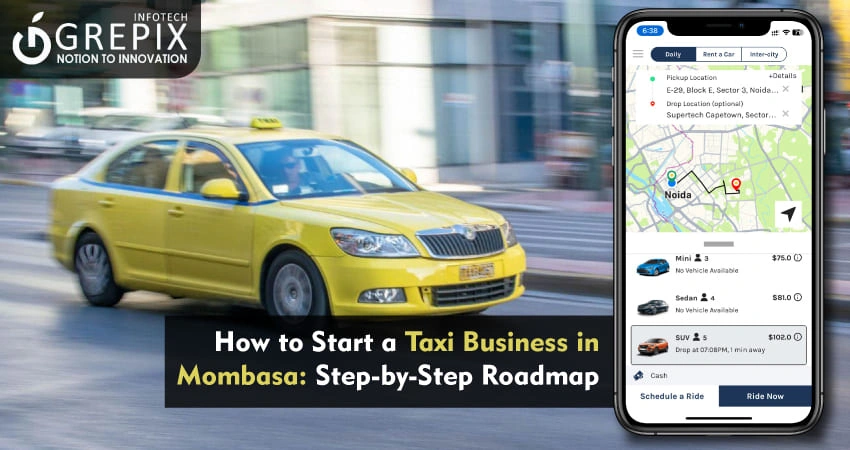
How to Start a Taxi Business in Mombasa: Step-by-Step Roadmap
Starting a taxi business in Mombasa can be a rewarding venture if you approach it strategically. By understanding the market, complying with legal requirements, building an efficient fleet, and marketing effectively, you can establish a successful enterprise. Stay adaptable and focused on customer satisfaction, and your taxi business will thrive in Mombasa's dynamic environment.
Mombasa, with its bustling streets and vibrant tourism industry, is a prime location for starting a taxi business. The demand for reliable, convenient, and affordable transportation is growing, driven by residents, tourists, and the business community. But how do you set up a taxi business successfully? This guide will walk you through the steps to turn your vision into a profitable enterprise.
Coastal cities like Mombasa sit at the intersection of heavy tourist footfall, a growing middle class, and an underserved public transport network - a combination that consistently rewards well-run, technology-enabled taxi operators. Whether you plan to run a handful of saloon cars or build a fleet that rivals established ride-hailing brands, the fundamentals covered in this roadmap apply at every scale, from registering your first vehicle to integrating a fully branded taxi app into your daily operations.
Starting a taxi business in Mombasa offers a rewarding opportunity, driven by the city's vibrant tourism industry and growing demand for reliable transportation. Success lies in understanding market trends, complying with legal requirements, building an efficient fleet, and employing effective marketing strategies. Mombasa's evolving taxi landscape, influenced by ride-hailing platforms and customer priorities like safety and affordability, provides opportunities for innovation. By focusing on customer satisfaction and adopting technology, you can establish a competitive and profitable enterprise. With strategic planning, exceptional service, and adaptability, your taxi business can thrive in Mombasa's dynamic transportation market.
1 Understanding the Taxi Business Landscape in Mombasa
Current Market Trends
The taxi industry in Mombasa is rapidly evolving. Traditional taxis are competing with ride-hailing platforms like Uber and Bolt, which offer app-based services for convenience. Customers now prioritize safety, affordability, and digital accessibility. These trends create opportunities for innovative and customer-focused taxi operators.
Three forces are reshaping the coastal transport market at once: smartphone penetration is rising every year, tourism arrivals at the Moi International Airport and Mombasa's beach resorts keep climbing, and county authorities are tightening enforcement of PSV regulations. Together, these forces favour operators who can prove compliance, track every trip digitally, and respond quickly to demand spikes during the high tourist season (roughly July–March).
| Market Indicator | Approximate Current Status | Why It Matters for New Operators |
|---|---|---|
| Share of rides booked via app | Rising steadily year-on-year | Street-hail-only fleets lose visibility to app-first competitors |
| Peak tourist season demand | July–March, with December/January spikes | Fleet planning and driver shifts should flex around these months |
| Airport & resort transfer demand | Consistently high, premium pricing tolerated | A strong niche for new entrants with clean, well-maintained cars |
| Customer priority: safety & verified drivers | Top-ranked concern in most local surveys | Background checks and in-app tracking become a selling point |
| Cashless payment adoption | Growing, led by M-Pesa integrations | In-app wallets and M-Pesa support are now expected, not optional |
Identifying Your Niche
Finding a niche can help you stand out. Options include budget-friendly taxis for local commutes, high-end vehicles for VIP clients, or partnering with ride-hailing apps. Specializing in airport transfers or eco-friendly taxis could give your business a unique edge.
Beyond the obvious categories, consider underserved micro-niches that are easy to enter and hard for larger fleets to copy quickly: scheduled school and staff transport contracts, late-night safety-focused rides for women travelling alone, motorbike-to-car transfer bundles for tourists arriving from upcountry, and corporate retainer deals with hotels along Nyali and Bamburi beach. Each niche has different pricing power, so map out two or three options before committing your capital.
2 Researching and Planning Your Taxi Business
Conducting Market Research
Market research is essential. Understand your competitors: what are they offering, and what are their weaknesses? Also, identify your target audience. Are they tourists looking for guided transportation or locals seeking affordable rides?
Spend time actually riding competitor services - note their response times, vehicle condition, driver conduct, and pricing at different times of day. Talk to hotel concierges, tour operators, and matatu stage attendants; they have first-hand knowledge of where current taxi options fall short. Document everything in a simple spreadsheet so you can compare options objectively rather than relying on guesswork.
Drafting a Business Plan
A solid business plan is your roadmap to success. It should outline your financial goals, estimated startup costs, marketing strategies, and operational plans. This document is not only a guide for you but also a tool to secure funding from investors or banks.
A practical business plan for a Mombasa taxi operation should include: a one-page executive summary, a breakdown of your target customer segments, a 12-month cash-flow projection, a fleet growth timeline, and a clear technology plan covering dispatch, payments, and customer support. Lenders and investors respond well to plans that show how quickly each additional vehicle reaches break-even.
Choosing a Business Structure
| Structure | Best Suited For | Liability |
|---|---|---|
| Sole Proprietorship | Single-owner, 1–3 vehicles | Personal, unlimited |
| Partnership | Co-owned fleets, shared capital | Shared, generally unlimited |
| Limited Liability Company (LLC) | Growing fleets, outside investment | Limited to company assets |
3Legal Requirements for Starting a Taxi Business in Mombasa
Business Registration
The first step to operating legally is registering your business. In Kenya, you need to register your taxi business with the Kenyan Registrar of Companies. Decide on the structure of your business whether as a sole proprietorship, partnership, or limited liability company. A sole proprietorship is simpler to register but offers fewer liability protections than an LLC.
Acquiring Licenses and Permits
- NTSA Registration: The National Transport and Safety Authority oversees public transportation services. You'll need to comply with their regulations to operate.
- Mombasa County Operational Permits: Obtain permits from the county government to run your taxis in specific regions of Mombasa.
- Driver's Licenses: Ensure all drivers have a valid Kenyan driver's license and a PSV (Public Service Vehicle) badge.
- Single Business Permit: Issued by Mombasa County, required annually for any commercial vehicle operation within the county.
- KRA PIN & Tax Compliance Certificate: Needed for business registration, banking, and any tender or corporate contract work.
Vehicle Insurance
Insurance is non-negotiable in the taxi business. Comprehensive coverage is essential to protect against accidents, theft, and damage. Additionally, passenger liability insurance ensures your customers are covered in case of injuries.
When comparing insurers, ask specifically about PSV-rated comprehensive cover (standard private-vehicle policies often exclude commercial ride income), windscreen and theft add-ons, and how claims are handled for vehicles that are off the road for repairs - downtime directly affects your revenue, so a fast claims process is worth more than a marginally cheaper premium.
| Requirement | Issuing Authority | Renewal Cycle |
|---|---|---|
| NTSA PSV Licence | National Transport & Safety Authority | Annual |
| County Operational Permit | Mombasa County Government | Annual |
| PSV Badge (per driver) | NTSA | 3 years |
| Comprehensive PSV Insurance | Licensed Insurer | Annual |
| Single Business Permit | Mombasa County Government | Annual |
4 Building Your Fleet
Choosing the Right Vehicles
The type of vehicles you choose can make or break your taxi business. Prioritize fuel-efficient cars to save on operational costs. Vehicles like Toyota Probox or Honda Fit are popular due to their affordability and low maintenance costs. For luxury services, consider high-end models like Toyota Land Cruiser or Nissan Patrol.
| Segment | Typical Vehicles | Ideal Customer | Relative Running Cost |
|---|---|---|---|
| Budget / Local Commute | Toyota Probox, Honda Fit, Toyota Axio | Daily commuters, short hops | Low |
| Mid-Range / App-Based | Toyota Fielder, Nissan Note, Mazda Demio | Ride-hailing platform riders | Moderate |
| Premium / Airport & VIP | Toyota Land Cruiser, Nissan Patrol, Toyota Crown | Tourists, corporate clients | High |
Financing Your Fleet
If purchasing vehicles outright is beyond your budget, consider alternative financing options. Vehicle loans from banks and microfinance institutions can provide tailored solutions for small businesses. Leasing offers an affordable way to start without the commitment of full ownership. Alternatively, explore partnerships with vehicle owners to share profits and reduce upfront costs.
A fourth, increasingly common route is the "car owner + driver" model, where individual vehicle owners contract their car onto your platform in exchange for a fixed percentage of fares. This lets you scale the number of cars on the road without tying up your own capital in every vehicle, while you retain control over branding, dispatch, and customer experience through your own app.
Maintenance and Safety Standards
Regular maintenance keeps your fleet roadworthy and extends the lifespan of your vehicles. Set up a schedule for inspections, oil changes, and repairs. Compliance with safety standards, such as seat belts, first aid kits, and clean interiors, will also ensure customer satisfaction.
Keep a maintenance log per vehicle (mileage, service dates, parts replaced) rather than relying on memory or paper notes scattered across drivers. Many fleet operators now track this directly inside their dispatch app, which also flags vehicles due for service before they're assigned to long-distance airport runs.
5 Setting Up a Taxi Business Operation
Hiring and Training Drivers
Your drivers are the face of your business, so hire wisely. Screen applicants thoroughly, checking their driving history and background. Once hired, train them in customer service, safety, and navigation around Mombasa. A professional and courteous driver can turn one-time customers into regular clients.
Developing a Dispatch System
A reliable dispatch system ensures efficient operations. Consider app-based dispatch platforms, as they are increasingly popular. You can also invest in fleet management software to track vehicle locations, monitor performance, and optimize routes.
Most new operators in Mombasa now skip manual call-centre dispatch entirely and go straight to taxi app development for booking, GPS tracking, fare calculation, and driver-passenger matching in one system. If building from scratch isn't practical on your budget or timeline, a white label taxi app solution lets you launch a fully branded rider and driver app in weeks rather than months, while still owning your customer data and pricing model.
Customer Support and Communication
Set up at least one reliable channel - a phone line, WhatsApp number, or in-app chat - where riders can report issues, request a callback, or follow up on a lost item. Fast, polite responses to complaints are one of the cheapest ways to build a reputation that outlasts your early competitors.
6 Financial Management for Your Taxi Business
Managing Operational Costs
Managing ongoing expenses such as driver salaries, insurance, maintenance, and fuel is necessary when running a taxi business. Choosing fuel-efficient cars, scheduling routine maintenance to prevent expensive repairs, and negotiating advantageous terms for insurance and large purchases are all ways to maintain profitability. By keeping a careful eye on your spending, you can find ways to cut costs without sacrificing the quality of your services.
Below is a typical breakdown of where revenue goes in a small-to-mid-sized Mombasa taxi operation. Actual figures vary by fleet size and vehicle segment, but the proportions are a useful starting benchmark when building your own budget.
Illustrative cost distribution for a typical Mombasa taxi fleet - figures will shift with fuel prices, vehicle type, and route mix.
Revenue Tracking
Install software to monitor daily earnings, driver commissions, and fleet usage. Analyze revenue streams regularly to ensure fares cover operating costs and provide a profit margin. Adjust pricing strategies based on demand, fuel prices, and competitor rates to remain competitive while maximizing revenue.
A connected taxi app gives you this visibility automatically - every trip, fare, and commission is logged in real time, which removes the need for manual end-of-day reconciliation and makes it far easier to spot underperforming vehicles or shifts early.
Break-Even Planning
Before adding a vehicle to your fleet, estimate how many trips per day it needs to cover fuel, the driver's share, maintenance reserve, and your loan or lease instalment. Most operators in Mombasa find that a mid-range vehicle running consistent app-based bookings reaches break-even faster than one relying purely on street hailing, simply because idle time between fares is lower.
Also Read: "Accelerating Your Fortune: Becoming a Billionaire in South Africa's Taxi Industry"
7 Overcoming Challenges in the Taxi Industry
Dealing with Competition
The taxi industry in Mombasa is competitive, with traditional taxis, ride-hailing apps, and private car hire all vying for customers. To stand out:
- Offer superior customer service train drivers to be polite and professional.
- Use pricing strategies balance affordability with profitability.
- Focus on reliability ensure timely pickups and well-maintained vehicles.
- Build loyalty programs reward frequent riders with discounts or free trips.
Building a loyal customer base can help mitigate the impact of competition.
Navigating Regulatory Changes
Transportation regulations in Kenya are constantly evolving. Stay informed about new rules from authorities like the NTSA and Mombasa County. Regular compliance checks and an adaptable business strategy will keep your operations running smoothly.
Managing Fuel Price Volatility
Fuel costs are one of the most unpredictable line items in any taxi budget. Building a small fuel-price buffer into your fare calculations, encouraging fuel-efficient driving habits, and reviewing pricing every quarter rather than waiting for a crisis can keep margins stable even when pump prices move sharply.
Driver Retention
Losing trained, trustworthy drivers to competitors is costly in both recruitment time and lost institutional knowledge. Transparent commission structures, on-time payouts, and a simple grievance process go a long way toward keeping good drivers loyal to your brand instead of jumping platforms for marginal fare differences.
8 Scaling and Expanding Your Taxi Business
Adding More Vehicles to the Fleet
Once your taxi business is stable and profitable, consider expanding. Adding vehicles to your fleet can help you cover more routes and serve customers. Monitor market demand and only scale up when your finances allow it without straining your operations.
Exploring New Revenue Streams
Diversify your services to increase revenue. For example:
- VIP or luxury car options Cater to corporate clients.
- Specialized airport transfer services provide reliable transport for travelers.
- Partner with tour operators Offer transportation for tourists exploring Mombasa.
- Courier and parcel delivery use idle daytime capacity for small package deliveries.
These strategies can create additional income while catering to different customer needs.
Expanding Beyond Mombasa
Once your model is proven, nearby towns such as Malindi, Diani, and Kilifi offer similar tourism-driven demand with less established competition. Replicating your operating playbook - the same driver vetting process, pricing logic, and app-based dispatch - makes expansion far smoother than starting from scratch in a new market.
9 Leveraging Technology and Taxi Apps for Growth
Technology is no longer a "nice to have" for taxi operators - it is the main lever for cutting costs and improving the rider experience at the same time. A purpose-built taxi app gives you live GPS tracking, automated fare calculation, cashless payments (including M-Pesa), driver ratings, and trip history that would be nearly impossible to manage manually once you pass three or four vehicles.
| Approach | Typical Launch Time | Ownership of Brand & Data | Best For |
|---|---|---|---|
| Listing only on third-party platforms (Uber/Bolt) | Immediate | None - platform owns the customer | Single-vehicle owners testing the market |
| White Label Taxi App | A few weeks | Full - your brand, your data | Fleets ready to scale with limited dev budget |
| Custom Taxi App Development | Several months | Full - built to your exact specifications | Established operators with unique workflows |
For most new entrants in Mombasa, a white label taxi app development route offers the best balance - you get a tested, ready-to-launch rider and driver app without the cost and time of building one from the ground up, while still operating under your own brand name and pricing rules.
10 Marketing Your Taxi Business
Even the best-run fleet needs consistent visibility to fill seats every day. Combine low-cost digital tactics with on-the-ground partnerships for the fastest results:
- Local SEO and Google Business Profile: Make sure your business appears when tourists search "taxi near me" or "airport transfer Mombasa."
- Social proof: Encourage satisfied riders to leave reviews; consistent ratings build trust faster than paid ads.
- Hotel and resort partnerships: Negotiate referral arrangements with front desks and concierge teams.
- WhatsApp Business and social media: Many local riders book directly through WhatsApp; treat it as a real booking channel, not just customer support.
- Referral incentives: A small discount for both referrer and new rider can be one of the cheapest acquisition channels available.
11 Sustainability and Eco-Friendly Taxi Options
Fuel-efficient and hybrid vehicles are gaining traction among environmentally conscious tourists and corporate clients who actively look for greener transport options. Even without going fully electric, simple measures - fuel-efficient driving training, regular engine servicing, and tyre pressure checks - reduce both emissions and your fuel bill. As charging infrastructure expands along the coast, early movers into hybrid or electric taxis may be able to market this as a genuine differentiator rather than just a cost-saving measure.
Case Study: Applying the Roadmap on the Ground in Mombasa
To see how the steps in this roadmap come together in practice, consider this illustrative example based on common patterns among small Mombasa taxi operators.
Niche and registration: An entrepreneur started by identifying airport and resort transfers as their niche, exactly as outlined in Section 1. They registered as a sole proprietorship with the Registrar of Companies, secured their NTSA registration and Mombasa County operational permit, and insured a single mid-range saloon car for PSV use.
Fleet financing: Rather than paying outright, the operator used a vehicle loan from a local microfinance institution to acquire their first car, following the financing approach described in Section 4. This kept upfront capital low while still allowing full ownership of the vehicle and its branding.
The bottleneck: Within a few months, the business hit a ceiling. Bookings were taken entirely over the phone, there was no way to plan around incoming flights, and cash-only fares made it hard to track which trips were actually profitable once fuel and maintenance were accounted for.
The fix - dispatch and financial tracking: Following the guidance in Sections 5 and 6, the operator moved to an app-based dispatch system and began tracking every trip and commission digitally instead of on paper. They also partnered directly with two beachfront hotels in Nyali for scheduled transfers, applying the marketing approach described in Section 10.
| Metric | Before App & Hotel Partnership | After (12 Months) |
|---|---|---|
| Fleet size | 1 vehicle | 5 vehicles |
| Booking source | Phone calls & word-of-mouth only | ~50% hotel/app pre-bookings, 50% walk-up |
| Airport pickup reliability | Frequently missed flight timing | Scheduled against live flight arrival data |
| Revenue tracking | Cash-only, untracked per-trip profitability | Every trip and commission logged automatically |
The takeaway: No single step in this roadmap created the turnaround on its own. It was the combination of a clear niche, proper legal compliance, low-risk fleet financing, app-based dispatch, and a direct hotel partnership that let this Mombasa operator grow from one car to a small, reliably profitable fleet within a year.
Conclusion
Grepix Infotech, a leading taxi app development company, empowers entrepreneurs to establish successful taxi businesses in vibrant locations like Mombasa. With its thriving tourism industry, bustling streets, and increasing demand for reliable transportation, Mombasa offers immense potential for a profitable taxi business. By leveraging Grepix's advanced taxi app solutions, you can streamline operations, enhance customer experience, and stand out in the competitive market.
A strategic approach focused on market understanding, compliance with legal requirements, and exceptional customer service will set the foundation for success. Whether you choose a white label taxi app to launch quickly or invest in full taxi app development tailored to your operations, the right technology partner makes it far easier to manage drivers, fares, and customer experience as you grow. With Grepix's expertise and technology, your taxi business in Mombasa can thrive and adapt to the city's dynamic transportation needs.
FAQs
1. What is the cost of starting a taxi business in Mombasa?
The startup cost depends on the number of vehicles, licensing fees, and operational expenses. On average, you might need between KSh 1.5 million and KSh 5 million to get started, depending on the scale.
2. Do I need a special driver’s license to operate a taxi?
Yes, all drivers in Kenya operating public service vehicles must have a PSV badge in addition to their regular driver’s license.
3. How do I partner with ride-hailing platforms?
To partner with platforms like Uber or Bolt, register on their website, provide required documents (vehicle details, insurance, etc.), and complete their onboarding process.
4. What are the key challenges in running a taxi business in Mombasa?
Challenges include stiff competition, fluctuating fuel prices, and changing regulations. Customer retention and vehicle maintenance are also critical.
5. Is it better to buy or lease vehicles for the fleet?
Buying provides ownership but requires significant upfront capital. Leasing is less expensive initially but involves monthly payments. The choice depends on your financial situation and long-term goals.
Looking out to start your own venture like Uber? Try out our HireMe Taxi Uber Clone, the easiest way to kick-start your taxi business.