

How to Start a Taxi Business in Bulgaria: Step-by-Step Guide
Starting a taxi business in Bulgaria can be a lucrative opportunity for entrepreneurs looking to enter the growing urban transport sector. With rapidly expanding urban populations, record-breaking tourism numbers, and increasing demand for reliable, app-based ride-hailing services, Bulgaria's transport industry offers significant potential for new entrants. However, launching a successful taxi company requires a thorough understanding of Bulgarian taxi regulations, operational logistics, fleet management strategies, and digital marketing approaches.
By carefully planning your approach, ensuring full compliance with local transport regulations, and adopting effective marketing strategies combined with modern taxi dispatch technology, you can establish a sustainable and profitable taxi business in Bulgaria's competitive market.
Launching a taxi business in Bulgaria presents a promising opportunity for entrepreneurs ready to capitalize on Bulgaria's EU-integrated economy and its fast-growing digital adoption. Success requires strategic planning, regulatory compliance, investment in professional fleet management, and customer-focused ride-hailing services. By leveraging market trends, ride-sharing technology, and white-label taxi app solutions, you can build a thriving taxi business. This comprehensive guide outlines all the critical steps to help you get started in Bulgaria's expanding taxi industry.
Starting a taxi business in Bulgaria offers great potential due to growing urban populations, increasing tourism, and high demand for reliable transport services. However, success requires thorough planning, regulatory compliance, and effective marketing strategies. Key steps include registering the business, securing necessary licenses, choosing the right fleet, hiring professional drivers, and leveraging technology for efficiency. Partnering with Grepix Infotech, a leading taxi app development company, can provide a competitive edge through advanced taxi booking apps, real-time GPS tracking, and seamless payment integration. By combining innovation with strategic planning, entrepreneurs can build a profitable and sustainable taxi business in Bulgaria's expanding market.
1 Understanding the Taxi Industry in Bulgaria
Market Analysis
Bulgaria's taxi industry is thriving, especially in major cities like Sofia, Plovdiv, and Varna. These urban areas experience consistent demand for urban taxi services due to high population density, limited private parking, and increasing reliance on on-demand transportation. Rural areas also present opportunities for specialized services, including long-distance intercity taxi rides and medical transport solutions catering to elderly and disabled passengers.
Emerging trends in the Bulgarian transport industry such as eco-friendly hybrid and electric vehicle adoption, contactless payments, and ride-sharing technology are fundamentally reshaping how taxi companies operate. Entrepreneurs who adopt these innovations early gain a significant competitive edge in the taxi booking market. Bulgaria's EU membership also means rising consumer expectations for service quality, which creates additional space for premium and tech-enabled taxi operators. The market's steady expansion highlights its potential for long-term profitability and business sustainability.
Competitive Landscape
Competition in the Bulgarian taxi industry is strong, with established taxi companies and independent licensed drivers dominating major city routes. Internationally, platforms like Bolt have made inroads in Sofia, raising the bar for digital ride-hailing experiences. However, clear service gaps exist in customer service quality, vehicle accessibility for passengers with reduced mobility, and premium executive transport. Entrepreneurs who focus on differentiated services — including wheelchair-accessible taxis, airport transfer packages, corporate taxi accounts, and tech-integrated ride booking can carve out a profitable niche in this growing market.
2 Legal Requirements and Regulations
Registering Your Business
Starting a taxi business in Bulgaria requires proper legal business registration with the relevant Bulgarian authorities. Entrepreneurs can choose between different business structures, such as a sole proprietorship (ET) or a limited liability company (OOD/LLC), each carrying different tax and liability implications. The taxi company registration process includes selecting a unique business name, registering with the Bulgarian Commercial Register at the Registry Agency, and obtaining a Unified Identification Code (EIK/UIC). Additionally, VAT registration may be required once annual turnover exceeds the statutory threshold. Completing these steps ensures that your taxi business is legally compliant and officially recognized under Bulgarian commercial law.
Taxi Licensing in Bulgaria
To legally operate a taxi service in Bulgaria, you must obtain a taxi operator's permit from the local municipal authority in the city where your fleet will operate. This Bulgarian taxi licensing process involves providing proof of business registration, submitting vehicle registration documents and technical inspection certificates, and demonstrating compliance with all vehicle safety and technical standards as set out by the Road Transport Act. Additionally, all taxi drivers are required to hold a professional taxi driver's license (Category B with taxi permit), which includes passing psychomotor and medical fitness examinations. Failure to secure proper taxi licensing in Bulgaria can result in heavy fines and business suspension.
Insurance Requirements
All Bulgarian taxi businesses must carry mandatory commercial vehicle insurance to protect passengers, drivers, and third parties. Required coverage includes compulsory third-party liability insurance and comprehensive passenger accident insurance. The cost of taxi insurance in Bulgaria varies depending on vehicle type, engine displacement, driver history, and coverage level. Investing in comprehensive taxi insurance not only ensures financial security but also builds passenger trust a crucial differentiator in the competitive Bulgarian transport market. Some insurers also offer fleet-wide policies that reduce per-vehicle costs as your taxi company grows.
3 Creating a Business Plan
Defining Your Target Market
Understanding your customer base is essential for building a successful taxi business in Bulgaria. The main target market segments include urban daily commuters in cities like Sofia and Plovdiv who need reliable point-to-point transport, international and domestic tourists visiting Bulgaria's Black Sea resorts and mountain regions, corporate clients requiring scheduled business travel and airport transfers, and rural residents needing connections to nearby towns for medical appointments or shopping. Tailoring your taxi services to specific customer preferences whether prioritizing affordability, luxury executive rides, or accessible transport helps position your business competitively and attract the right clientele from day one.
Estimating Costs and Revenue
A well-defined financial plan is the backbone of any successful taxi business launch. Estimated startup costs for a small Bulgarian taxi fleet typically include:
- Vehicles: €10,000–€20,000 per taxi (new or certified used)
- Licensing & permits: €500–€1,000 per vehicle
- Branding & vehicle customization: €1,000–€2,000
- Insurance: €800–€1,200 annually per vehicle
- Taxi app development or white-label taxi software: €2,000–€8,000 (one-time)
- Marketing & initial advertising: €500–€2,000
Revenue potential depends on fare pricing strategy, operational efficiency, peak-hour demand, and whether you serve tourist corridors. On average, a well-managed taxi in Sofia or Varna can generate approximately €2,000–€4,000 per month per vehicle. Scaling to a multi-vehicle fleet with a professional taxi booking app significantly increases revenue potential through improved utilization rates.
Financial Planning and Funding Options
Securing adequate funding is key to sustaining taxi operations through the initial growth phase. Potential funding sources for Bulgarian taxi entrepreneurs include bank loans from commercial banks with competitive interest rates, European Union structural funds and grants available for small transport businesses, and private investor partnerships. Proper budgeting for ongoing operational expenses such as fuel costs, vehicle maintenance schedules, driver payroll, software subscriptions, and insurance renewals ensures long-term profitability and financial resilience. Building a 3-month operating cash reserve is advisable before launch.
4 Setting Up Your Fleet
Choosing the Right Vehicles
Vehicle selection is one of the most important decisions you will make when starting a taxi business in Bulgaria. The choice of vehicles significantly impacts both profitability and customer perception. Key factors to evaluate include fuel efficiency to reduce operating costs, passenger comfort and legroom for a better customer experience, cargo space for airport transfer clients with luggage, and mechanical reliability to minimize costly downtime. Popular taxi models in Bulgaria include the Toyota Corolla, Skoda Octavia, Volkswagen Passat, and Mercedes-Benz E-Class for executive services. Many forward-thinking operators are also opting for hybrid and electric vehicles such as the Toyota Prius or Nissan Leaf, which offer long-term fuel savings and align with Bulgaria's green transport agenda.
Vehicle Customization & Branding
Effective vehicle branding and customization play a crucial role in business visibility, customer trust, and regulatory compliance. Essential taxi modifications in Bulgaria include installing a certified taximeter connected to a fiscal memory device, mounting a rooftop taxi sign that meets municipal specifications, integrating a GPS vehicle tracking system for real-time fleet monitoring, displaying your company logo and contact number on vehicle doors, and ensuring all vehicles pass Bulgaria's periodic roadworthiness inspection. Well-branded, professionally equipped taxis not only build customer recognition but also signal professionalism and reliability key differentiators in a competitive market.
Maintenance and Fleet Management
Regular vehicle maintenance is essential for passenger safety, driver confidence, and operational efficiency. A well-structured taxi fleet maintenance schedule should include monthly inspections of brakes, tires, oil, and engine health, routine interior and exterior cleaning to maintain a professional image, access to a trusted mechanic network for emergency repairs, and use of fleet management software to track mileage, schedule preventive maintenance, and monitor driver behavior. Minimizing vehicle downtime through proactive maintenance directly protects your monthly revenue and prevents costly roadside breakdowns that damage customer trust.
5 Hiring and Training Drivers
Recruitment Strategies
Hiring skilled, professional drivers is fundamental to building a reputable taxi business in Bulgaria. Key eligibility requirements for Bulgarian taxi drivers include a valid Category B driving license with an active taxi permit, a clean driving history with no serious traffic violations, a criminal record clearance certificate, and a valid medical fitness certificate. Effective driver recruitment strategies include posting detailed job listings on Bulgarian job portals, leveraging LinkedIn and local Facebook groups for driver communities, offering competitive commission structures, and providing a clear onboarding process that outlines company expectations and earning potential.
Training Programs
Comprehensive driver training programs ensure consistently high service quality and customer satisfaction across your entire fleet. Training content should cover defensive and eco-driving techniques to reduce fuel costs and accident risk, customer service excellence and handling of difficult passenger situations, proper use of the taxi dispatch app and digital payment tools, route optimization using GPS navigation for efficient navigation through city traffic, and first aid basics in case of passenger medical emergencies. Well-trained, courteous drivers directly enhance your taxi company's reputation, generate positive online reviews, and build the loyal repeat customer base that sustains long-term growth.
6 Developing an Online Presence
Building a Professional Website
A professional, mobile-optimized website is the digital foundation of your taxi business in Bulgaria. It increases credibility, enables direct bookings, and improves your visibility in local search results. Essential website features include an online taxi booking form with real-time availability, a fare estimator for price transparency, a dedicated airport transfer booking page highly searched by tourists, customer reviews and star ratings to build social proof, and a Bulgarian-language version to serve local clients effectively. Optimizing your website for local SEO keywords like "taxi Sofia," "taxi Plovdiv," and "airport transfer Bulgaria" will drive organic traffic from Google searches.
Leveraging Social Media
Social media platforms are powerful and cost-effective marketing channels for taxi businesses targeting Bulgarian consumers. Facebook remains Bulgaria's dominant social platform and is ideal for targeted local advertising campaigns. Effective social media strategies include posting seasonal promotions and holiday transfer discounts, sharing testimonials and five-star reviews from satisfied passengers, running geo-targeted Facebook Ads to reach users in specific Sofia neighborhoods or resort areas, and creating engaging content such as travel tips, local destination guides, and behind-the-scenes fleet updates to build brand familiarity.
Mobile App Development for Taxi Business
In today's digital-first transport market, developing a dedicated mobile taxi app is one of the most powerful steps you can take to grow your business and compete with global ride-hailing platforms. A professional taxi booking app delivers key features including real-time GPS taxi tracking for passengers, automated driver dispatch to minimize wait times, multiple digital payment options including card, wallet, and cash, in-app driver rating and feedback systems, and ride history and e-receipts for corporate clients. An app not only dramatically improves the customer experience but also provides your business with operational data to make smarter decisions. Grepix's Uber Clone and Bolt Clone solutions offer a fast, cost-effective route to launching your own branded taxi app in Bulgaria.
Also Read: "Top Taxi Apps in Bulgaria: Your Guide for Seamless Urban Travel"
7 Marketing Your Taxi Business
Local Advertising Strategies
Building strong local visibility is critical for taxi businesses operating in Bulgarian cities and tourist regions. Effective offline marketing strategies include forming B2B partnerships with hotels, resorts, and hostels in Sofia, Varna, and Bansko who can refer guests to your taxi service, establishing agreements with Sofia Airport and Plovdiv Airport for official transfer services, distributing branded business cards and flyers at bus stations, train stations, and shopping malls, and placing signage at taxi ranks in high-footfall tourist and business districts. Corporate taxi account programs offering monthly invoicing for local companies can also generate a steady, predictable revenue stream.
Online Advertising and Digital Marketing
Digital marketing provides a highly measurable and scalable way to reach potential taxi customers across Bulgaria. Key online marketing channels include Google Ads campaigns targeting high-intent keywords such as "taxi Sofia booking," "Varna airport transfer," and "taxi Plovdiv," Facebook and Instagram social media advertising targeting specific age groups and travel interests, Search Engine Optimization (SEO) for your taxi website to capture long-term organic traffic, and Google Business Profile optimization to appear prominently in local map searches. Listing your taxi service on Bulgarian travel aggregators and platforms can drive additional bookings from international tourists.
Customer Retention Strategies
Encouraging repeat customers and building brand loyalty is far more cost-effective than continuously acquiring new riders. Proven taxi customer retention strategies include implementing a points-based loyalty rewards program where frequent riders earn discounts, creating a referral incentive program that rewards existing customers for introducing new passengers, sending personalized SMS or push notification reminders to past customers before peak travel seasons, conducting post-ride satisfaction surveys to identify and address service issues, and offering preferred routes, saved home and work addresses, and favorite driver options within your taxi booking app to personalize the experience.
8 Managing Operations
Dispatch Systems and Technology
Efficient taxi dispatch technology is the operational backbone of any modern taxi business in Bulgaria. Implementing a GPS-integrated taxi dispatch software system enables intelligent route optimization to minimize passenger wait times, automated ride assignment based on driver proximity and availability, real-time vehicle tracking visible to both passengers and fleet managers, detailed performance analytics and trip reporting, and surge pricing capabilities during peak demand periods such as summer beach season and major Sofia events. Cloud-based dispatch platforms also allow remote fleet management, enabling you to oversee operations without being physically present at a dispatch center.
Handling Customer Complaints
A structured, empathetic complaint resolution process is a competitive differentiator in the Bulgarian taxi market where customer experience is increasingly valued. Your taxi business should establish a clear multi-channel feedback system — in-app ratings, email, phone, and social media acknowledge all passenger complaints within 24 hours, investigate each incident thoroughly using GPS trip data and driver reports, implement corrective actions such as driver retraining or policy updates, and follow up personally with dissatisfied passengers to offer compensation or courtesy rides where appropriate. Publishing your customer service commitment publicly builds credibility and attracts quality-conscious clients.
Managing Finances and Compliance
Sound financial management is fundamental to the long-term sustainability of your Bulgarian taxi business. All taxi operators in Bulgaria are legally required to use certified fiscal cash registers and taximeters that record every transaction for tax compliance purposes. Cloud-based accounting software simplifies transaction recording, VAT return filing, and payroll processing. Regular financial reviews help track profitability per vehicle, identify underperforming routes, and adjust pricing strategies. Maintaining clean financial records also simplifies any future applications for business loans or EU funding to scale your taxi fleet.
9 Overcoming Challenges
Dealing with Competition
Standing out in Bulgaria's competitive taxi market requires a multi-pronged strategy that goes beyond simply offering lower fares. Differentiation approaches that work in the Bulgarian context include offering guaranteed fixed-price airport transfers with no surge pricing surprises, providing executive and business-class taxi options for corporate clients, implementing transparent digital payments with e-receipts that appeal to tech-savvy users, maintaining a spotlessly clean and well-maintained fleet, and responding rapidly to online reviews on Google Maps and Facebook. Your branded white-label taxi app is also a powerful competitive tool passengers who download your app are less likely to hail a competitor's cab.
Adapting to Market Changes
The Bulgarian taxi industry is in a period of significant technological and regulatory transition. Staying competitive and compliant requires continuous business adaptation. Key forward-looking strategies include investing in electric vehicles to reduce fuel costs and qualify for Bulgaria's growing network of EV charging subsidies, monitoring developments in Bulgarian ride-hailing regulations as the government periodically revises transport legislation, exploring partnerships with European ride-sharing networks as Bulgaria's transport sector integrates further with the EU, and upgrading your taxi app technology annually to match the feature expectations set by global platforms. Entrepreneurs who stay ahead of these trends will be best positioned to lead Bulgaria's next generation of urban mobility.
10 Scaling Your Taxi Business
Expanding Your Fleet and Service Area
Once your initial taxi operations in one Bulgarian city are running profitably and your processes are well-established, scaling becomes the natural next step. Expansion strategies include adding vehicles to your fleet incrementally as cash flow allows, establishing operations in a second Bulgarian city for example, expanding from Sofia to Plovdiv or from Varna to Burgas and introducing specialized service verticals such as a dedicated school transport service, an elderly-passenger medical ride service, or a premium executive taxi division. Each new service line should be supported by a targeted marketing campaign and potentially a dedicated section within your taxi booking app to attract the right customer segment.
Leveraging Data for Growth
Modern taxi dispatch and fleet management platforms generate rich operational data that smart operators use to make evidence-based growth decisions. Key data points to analyze include your busiest pickup and drop-off zones by time of day to optimize driver positioning, average trip duration and distance by route to set competitive fare rates, driver productivity metrics to identify top performers, customer acquisition cost per channel to optimize your marketing budget, and seasonal demand patterns across Bulgarian cities to plan fleet expansion and driver hiring ahead of peak periods like summer tourism season and winter ski transfers to Bansko and Borovets.
11 How Profitable Is a Taxi Business in Bulgaria? A Revenue Breakdown
One of the most common questions from aspiring taxi entrepreneurs is: can I actually make money doing this? The honest answer is yes but only if you run it like a business, not just a car service. Here's a realistic breakdown of what Bulgarian taxi operators are earning in 2025.
Revenue Per Vehicle: What to Realistically Expect
A single taxi operating in Sofia or Varna on a standard day-shift schedule (roughly 10 hours) can complete between 12 and 20 trips. At an average fare of €6–€10 per trip, that translates to approximately €80–€180 in daily gross revenue per vehicle. Factor in airport transfers which can range from €25 to €60 per booking and the daily figure climbs significantly during peak tourism seasons. On a monthly basis, a well-utilized taxi in a Bulgarian urban center can generate €2,000–€4,000 in gross revenue. After deducting fuel (roughly €300–€500/month), driver commission (typically 30–40%), insurance, and maintenance, net monthly profit per vehicle typically lands between €600 and €1,200 for the fleet owner.
The Fleet Multiplication Effect
Here's where the taxi business model becomes genuinely compelling. A five-vehicle fleet with good utilization can generate net monthly income of €3,000–€6,000 for the owner without the owner driving a single kilometre themselves. A fifteen-vehicle fleet with app-based dispatch and corporate accounts can push net monthly earnings beyond €15,000. The key profitability levers are: minimizing vehicle downtime, maximizing trips per shift through smart dispatch technology, building corporate accounts for predictable monthly revenue, and capturing the high-value airport transfer segment. Operators who invest in a professional taxi booking app typically see 30–50% higher utilization rates compared to phone-only dispatch, dramatically improving per-vehicle profitability.
Seasonal Revenue Patterns in Bulgaria
Bulgaria's taxi revenue is highly seasonal and smart operators plan around this. Summer (June–August) is peak season for coastal cities like Varna and Burgas, where tourist demand can push daily revenue 40–60% above the annual average. Winter (December–March) brings a surge in ski transfer demand around Bansko, Borovets, and Pamporovo. Sofia maintains relatively stable year-round demand due to its role as a business and administrative hub. Building a mixed portfolio urban daily rides, tourist transfers, and corporate accounts is the most effective strategy for smoothing revenue across all four seasons and maximizing annual profitability.
Also Read: "Implementing Taxi Dispatch Software: A Step-by-Step Success Guide"
12 AI-Powered Taxi Apps: The Competitive Edge You Can't Ignore
If you're starting a taxi business in Bulgaria in 2025, you're entering a market that has already been reshaped by mobile technology. But the next wave is arriving even faster: AI-powered taxi applications that go far beyond simple GPS tracking and ride booking. Here's what AI is actually doing for taxi operators today and why it matters for your bottom line.
Intelligent Dispatch and Route Optimization
Traditional dispatch assigns the nearest available driver to a ride request. AI-powered dispatch does something far smarter: it predicts where demand will spike 15–30 minutes from now based on historical patterns, event calendars, weather data, and time of day and pre-positions drivers accordingly. In a city like Sofia, this means your drivers are already near the National Palace of Culture when a concert ends, or near Sofia Airport at the time international flights land. The result is shorter wait times for passengers and fewer dead kilometres for drivers directly improving both customer satisfaction and profitability. Grepix's taxi app platform incorporates intelligent dispatch logic that helps Bulgarian operators achieve exactly this kind of predictive efficiency.
Dynamic Pricing and Surge Management
AI-driven dynamic pricing is one of the most powerful revenue tools available to modern taxi operators. Rather than fixed flat rates, an AI pricing engine adjusts fares in real time based on demand levels, driver availability, traffic congestion, and competitor pricing signals. For Bulgarian taxi operators, this means capturing higher revenue during peak demand periods New Year's Eve in Sofia, summer beach season, or major corporate events without alienating regular passengers during off-peak hours. Transparent surge pricing, communicated clearly through the app, is increasingly accepted by Bulgarian passengers who understand the supply-and-demand logic.
AI-Powered Safety Features
Safety is a growing differentiator in the Bulgarian taxi market, where passenger trust is hard-won and easily lost. AI-enabled safety features now available in modern taxi apps include real-time driver fatigue detection through driving pattern analysis, automatic SOS alerts triggered by unusual stops or route deviations, in-app ride sharing with trusted contacts via a live tracking link, and AI-flagged trip anomalies for fleet manager review. These features not only protect passengers but also reduce your liability exposure and insurance costs a meaningful financial benefit for Bulgarian taxi fleet operators.
Chatbot Customer Support and Automated Communication
Bulgarian taxi customers increasingly expect instant responses at midnight, on weekends, and during holiday periods when your office may be unmanned. AI-powered chatbot integration within your taxi app handles common customer queries such as booking confirmations, fare estimates, lost property reports, and complaint logging automatically without human intervention. This keeps passenger satisfaction high 24/7 and frees your operations team to focus on complex issues. For small to mid-sized Bulgarian taxi fleets without a dedicated call centre, AI chatbots effectively provide enterprise-grade customer service at a fraction of the cost.
13 Taxi Business Models Compared: Which Is Right for You in Bulgaria?
Not all taxi businesses are structured the same way. Before you invest, it's worth understanding the different operational models available because the model you choose will define your revenue structure, your risk exposure, your management workload, and your growth ceiling.
Owner-Operator Model
The simplest entry point: you own one or a few vehicles and drive them yourself. Startup costs are lowest, and you retain 100% of the fare revenue minus operating expenses. The limitation is your personal earning ceiling there are only so many hours you can drive. This model suits Bulgarian entrepreneurs testing the market before scaling, or those in smaller cities where fleet overhead is harder to justify. Many successful Bulgarian fleet owners started this way before expanding.
Fleet Owner Model
You own vehicles and hire employed or commission-based drivers to operate them. Revenue scales with fleet size, and you transition from driver to business owner. This model requires stronger management systems driver scheduling, compliance monitoring, vehicle maintenance, and payroll but delivers superior income potential. A well-run 10-vehicle fleet in Sofia can be a genuinely life-changing business. The white-label taxi app model from Grepix is purpose-built for this structure, giving fleet owners the dispatch and monitoring tools they need.
Franchise / Aggregator Model
You join an existing taxi brand or platform either a Bulgarian regional brand or an international aggregator like Bolt — and operate under their umbrella. The advantage is immediate brand recognition and a built-in customer base. The disadvantage is ongoing commission payments (typically 20–30% of each fare) and dependence on the platform's terms, pricing, and reputation. Many experienced Bulgarian taxi entrepreneurs use aggregators as a volume channel while simultaneously building their own branded app to capture the highest-margin direct bookings.
Hybrid Model: The Smart Play for 2025
The most effective approach for Bulgarian taxi entrepreneurs in 2025 is a hybrid model: use a platform like Bolt for baseline volume and brand exposure while simultaneously building your own branded taxi app for direct bookings, corporate accounts, and airport transfer packages. This dual-channel strategy maximizes booking volume in the short term while progressively reducing commission dependence as your own app builds its user base. Operators who successfully execute this hybrid transition typically see their effective commission rate drop from 25%+ to under 10% within 18–24 months a transformation that directly doubles their net profitability.
14 The Future of Taxi Technology in Bulgaria: What's Coming Next
The Bulgarian taxi industry is approaching a technological inflection point. The operators who understand what's coming — and position early will be the ones who dominate the next decade of urban transport in Bulgaria. Here are the technologies that will define the next phase of growth.
Electric Vehicles: From Optional to Essential
Bulgaria's EV charging infrastructure is expanding rapidly, particularly in Sofia, Plovdiv, Varna, and along major highway corridors. EU-mandated emissions targets will make fossil-fuel-only taxi fleets increasingly costly to operate through carbon charges and maintenance premiums. Forward-thinking Bulgarian operators are already transitioning to hybrid-electric vehicles as a first step, capturing fuel savings that translate directly into margin improvement. Early EV adopters also benefit from public goodwill and premium positioning an increasingly important brand differentiator as environmentally conscious passengers (particularly international tourists) actively seek green transport options.
Autonomous and Semi-Autonomous Features
Full self-driving taxis remain years away for Bulgarian roads, but semi-autonomous driver assistance features adaptive cruise control, automatic emergency braking, lane-keeping assistance, and fatigue monitoring are already available in mid-range fleet vehicles. These features reduce accident rates, lower insurance premiums, and attract safety-conscious passengers. Bulgarian taxi operators who specify vehicles with advanced driver assistance systems (ADAS) today are building a safety-first brand reputation that will compound in value as passenger awareness of these features grows.
Hyper-Personalized Passenger Experiences
The next generation of taxi apps will recognize returning passengers and automatically apply their preferences: preferred temperature, music genre, route type, and even preferred driver selection. Subscription models monthly flat-rate ride packages for regular commuters are emerging in European markets and will reach Bulgaria as consumer expectations rise. Corporate clients will expect deep integration between taxi apps and expense management platforms. Operators who invest in personalization features today are building the kind of passenger loyalty that no amount of competitor discounting can easily break.
Integrated Multimodal Transport
Sofia's urban transport ecosystem is evolving toward integration where a single app can plan a journey combining metro, bus, and taxi seamlessly. Bulgarian taxi operators who integrate their services with public transport platforms and airport shuttle networks will gain access to a much larger user base and benefit from the growing preference for door-to-door journey planning. This integration trend also opens new B2B revenue streams partnering with Sofia's public transport authority, national rail operator, and major corporate employers to become the "last mile" provider of choice.
15 Why the Taxi Industry in Bulgaria Is Growing And Why Now Is the Right Time to Enter
Some aspiring entrepreneurs hesitate, worried they've "missed the moment." The data tells a different story. The Bulgarian taxi market is larger today than it was five years ago, and several structural forces suggest it will continue to expand through the rest of this decade.
Tourism Is Breaking Records
Bulgaria welcomed over 11 million international visitors in 2023, with numbers continuing to rise. Each tourist who arrives at Sofia Airport, Varna Airport, or Burgas Airport is a potential taxi customer. International visitors are particularly high-value passengers: they're unfamiliar with local public transport, willing to pay for convenience, and often making their booking decisions through digital channels where a strong Google presence and a professional taxi app give you a decisive advantage over street-hailing competitors.
Urban Populations Are Growing and Car Ownership Costs Are Rising
Sofia's population continues to grow as Bulgaria's economic activity concentrates in its capital. Simultaneously, the cost of car ownership purchase price, insurance, parking, and fuel is rising faster than incomes for many Bulgarian households. This is driving a structural shift toward on-demand transport, particularly among younger urban Bulgarians who are less attached to car ownership than previous generations. This demographic shift is a long-term tailwind for app-based taxi operators who serve this mobile-first audience.
Digital Adoption Is Accelerating
Smartphone penetration in Bulgaria now exceeds 80%, and digital payment adoption accelerated sharply following the pandemic. Bulgarian consumers are increasingly comfortable booking and paying for services through apps removing one of the biggest historical barriers to taxi app adoption. This means the addressable market for app-based taxi services is growing every year, and the customer acquisition cost for well-positioned operators is falling as organic digital search and social referrals become more effective.
Corporate Mobility Budgets Are Expanding
Bulgaria's growing professional services, technology, and outsourcing sectors particularly in Sofia's business districts are generating significant corporate mobility demand. International companies operating Bulgarian offices increasingly require reliable, invoiceable taxi services for client transport, employee late-night travel, and visitor transfers. This corporate segment offers taxi operators predictable monthly revenue, premium fares, and multi-year account relationships — the ideal foundation for a stable, scalable business.
16 Real Challenges Bulgarian Taxi Operators Face And How to Overcome Them
A guide that only tells you about the opportunity without acknowledging the obstacles isn't doing you any favours. Here are the real problems Bulgarian taxi operators encounter and the proven strategies for navigating each one.
Challenge: Driver Retention and Reliability
Finding good drivers is the number one operational headache for Bulgarian taxi fleet owners. The driver pool is aging, younger candidates often prefer gig economy flexibility over traditional employment, and turnover can be costly. The solution requires treating drivers as genuine business partners rather than employees: offer transparent earnings, fast payment processing, flexible shift structures, performance bonuses, and opportunities for advancement into senior driver or fleet coordinator roles. Fleet owners who invest in driver welfare and culture consistently report lower turnover and higher passenger ratings which creates a self-reinforcing cycle of better reviews, more bookings, and more income for drivers.
Challenge: Fare Wars and Price Pressure from Aggregators
Competing on price alone against aggregators with deep pockets is a race to the bottom that independent operators cannot win. The way out is differentiation: build a premium brand around reliability, cleanliness, fixed airport transfer pricing, and professional drivers. Passengers who have been let down by an anonymous aggregator driver late, wrong vehicle, confusing app experience are actively looking for a trustworthy alternative. Your job is to be visible and credible when that moment of disappointment arrives. A professional branded taxi app with strong ratings is the most effective tool for capturing these loyalty-switching passengers.
Challenge: Regulatory Complexity and Compliance Costs
Bulgarian taxi licensing, vehicle certification, and fiscal cash register requirements can feel overwhelming, particularly for first-time operators. The key is to treat compliance not as a burden but as a competitive moat: properly licensed, fully compliant operators can confidently market to corporate clients, airports, and hotels customer segments that are completely inaccessible to non-compliant operators. Engaging a Bulgarian transport law specialist for initial setup and annual compliance reviews is a worthwhile investment that pays dividends in avoided fines and unlocked revenue opportunities.
Challenge: Seasonal Revenue Gaps
Bulgaria's tourism-driven demand creates feast-or-famine revenue patterns for operators who rely on a single market. The solution is deliberate portfolio diversification: in lean months, pivot toward corporate accounts, medical transport contracts, and school transfer services all of which operate independently of seasonal patterns. Operators who establish at least two stable revenue streams before their first slow season report significantly less financial stress and better driver retention through quieter periods.
Challenge: Negative Reviews and Reputation Damage
In the Bulgarian taxi market, a single viral negative review on Google Maps or Facebook can cause a measurable drop in bookings. The most effective protection is a systematic reputation management process: respond personally to every negative review within 24 hours, acknowledge the issue without being defensive, describe what corrective action you're taking, and follow up privately with the passenger. This response pattern visible to anyone reading the reviews — actually builds trust with prospective customers who see it. An operator who handles complaints professionally and publicly demonstrates the kind of accountability that distinguishes a serious business from an informal operation.
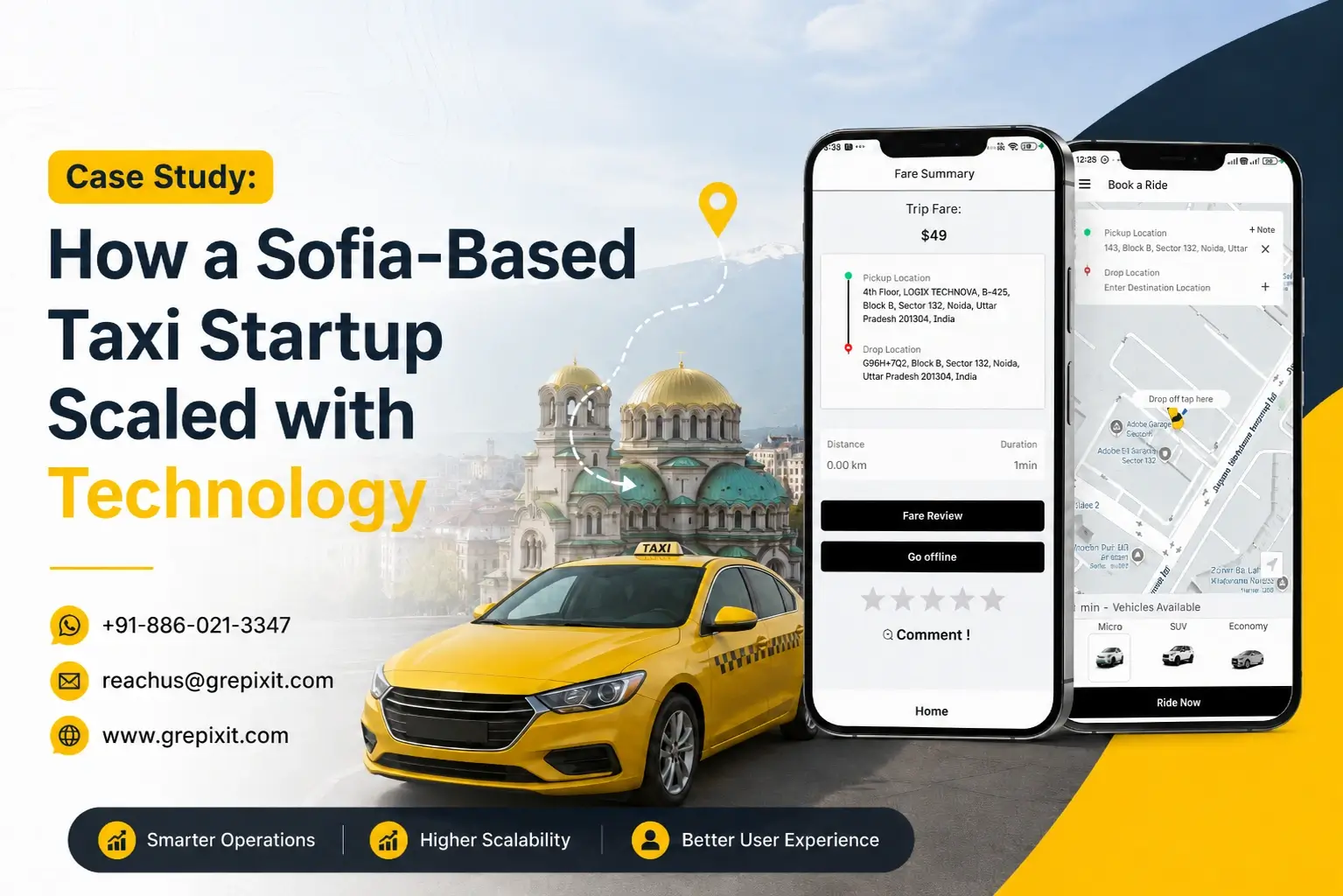
Case Study: How a Sofia-Based Taxi Startup Scaled with Technology
To illustrate what a successful taxi business launch in Bulgaria looks like in practice, consider the journey of a Sofia-based entrepreneur who launched a mid-sized taxi operation with just five vehicles and a clear technology-first strategy.
Facing intense competition from both traditional taxi companies and the ride-hailing platform Bolt, the founder decided early on to differentiate through a branded passenger app, consistent service quality, and a corporate account program targeting Sofia's growing business district. Rather than building a taxi app from scratch which would have been costly and time-consuming the company partnered with Grepix Infotech to deploy a customized Uber Clone white-label taxi app solution. The app was launched within six weeks, branded with the company's own logo and color scheme, and offered passengers real-time GPS tracking, in-app card payments, and a five-star driver rating system.
Within the first three months of launching the app, the company saw a 40% increase in daily bookings compared to the previous phone-dispatch-only system. Corporate accounts with several Sofia-based companies were secured within four months, generating predictable monthly revenue. A structured driver training program covering both customer service and route optimization helped maintain an average passenger rating of 4.8 stars, which drove strong word-of-mouth referrals and positive Google reviews.
By the end of year one, the fleet had grown from five to fourteen vehicles, a second city operation in Plovdiv had been launched, and the company had introduced a dedicated Sofia Airport Transfer booking page that consistently ranked on the first page of Google for relevant Bulgarian search terms. The founder credits three factors for this rapid growth: choosing the right taxi app development partner, investing early in driver training and service quality, and using data from the dispatch system to make every operational and marketing decision. This case demonstrates that even in Bulgaria's competitive urban transport market, a technology-driven, customer-centric approach can deliver exceptional results for new entrants.
Conclusion
A key factor in today's competitive taxi market is leveraging technology to streamline operations and deliver a superior passenger experience. Grepix Infotech, a leading taxi app development company with a proven global track record, specializes in developing user-friendly, scalable, and feature-rich taxi booking applications tailored to specific market needs. Whether you need a full Uber Clone solution, a Bolt Clone platform, real-time GPS fleet tracking, automated taxi dispatch software, or secure multi-method payment integration, Grepix's cutting-edge technology ensures seamless operations, happy passengers, and a business ready to scale.
Bulgaria's transport industry is at an exciting inflection point, with digital adoption accelerating and consumer expectations rising fast. Entrepreneurs who combine a solid business foundation with innovative ride-hailing technology and a relentless focus on customer experience will be the ones who build lasting, profitable taxi companies. Now is the perfect time to take the next step in launching your taxi venture and capitalizing on Bulgaria's thriving transport sector. Partnering with Grepix Infotech can give your business the technological edge to succeed and grow in the modern taxi market.
FAQs
1. What licenses are required to start a taxi business in Bulgaria?
To legally operate a taxi business in Bulgaria, you need a taxi operator's permit from the relevant municipal authority, a professional taxi driver's license for each driver (Category B with taxi endorsement), vehicle registration documents, certified taximeter installation certificates, and valid commercial taxi insurance. All documents must comply with the Bulgarian Road Transport Act.
2. How much does it cost to start a taxi business in Bulgaria?
Startup costs for a small Bulgarian taxi fleet typically range between €15,000 and €35,000, depending on vehicle selection, licensing fees, insurance, branding, and whether you invest in a dedicated taxi booking app. A single-vehicle operation can launch for as little as €12,000–€18,000, while a five-vehicle fleet with a white-label taxi app will require a larger initial investment.
3. Can foreigners establish a taxi business in Bulgaria?
Yes, EU citizens and non-EU nationals with the right to do business in Bulgaria can legally establish and operate a taxi business, provided they register a Bulgarian legal entity (OOD or ET), obtain all required taxi permits and licenses, and ensure their drivers hold Bulgarian-valid professional driving licenses. Non-EU nationals may require additional permits to conduct business activities in Bulgaria.
4. Which cities are the best for running a taxi business in Bulgaria?
Sofia is the largest and most profitable market, with year-round demand from business travelers, residents, and tourists. Varna and Burgas are highly seasonal but very lucrative during Bulgaria's summer Black Sea tourism peak. Plovdiv offers steady year-round demand as Bulgaria's second city and a major business and cultural center. Bansko is a strong winter ski season market for airport transfer services. Starting in Sofia or Plovdiv and expanding to coastal cities seasonally is a proven growth strategy.
5. Is a mobile taxi app necessary for a taxi business in Bulgaria?
While not legally required, having a branded taxi booking app has become a major competitive necessity in Bulgaria's urban markets, where passengers increasingly expect digital booking, real-time GPS tracking, and cashless payments. A taxi app built on a white-label platform like Grepix's Uber Clone solution can be deployed quickly and cost-effectively, and typically pays for itself within months through increased booking volumes and improved driver utilization.
6. What type of vehicles should I use for a taxi business in Bulgaria?
The best vehicles for a Bulgarian taxi business balance fuel efficiency, reliability, passenger comfort, and low maintenance costs. Popular choices include the Toyota Corolla, Skoda Octavia, and Volkswagen Passat for standard taxi services, the Mercedes-Benz E-Class for executive rides, and the Toyota Prius or similar hybrids for cost-effective, eco-friendly operations. Electric vehicles are increasingly viable as Bulgaria's EV charging infrastructure expands, particularly in Sofia and coastal cities.
7. How long does it take to get a taxi license in Bulgaria?
The taxi licensing timeline in Bulgaria varies by municipality. In Sofia, the process typically takes four to eight weeks from initial application submission, provided all documents are complete and vehicles pass technical inspection. Rural municipalities may process applications faster. It is advisable to prepare all business registration documents, vehicle certificates, and driver qualification records in advance to avoid delays that could push back your launch date.
8. How can Grepix Infotech help me launch a taxi business in Bulgaria?
Grepix Infotech provides end-to-end taxi app development solutions specifically designed for entrepreneurs launching taxi businesses in new markets. Their white-label taxi app platforms including the popular Uber Clone and Bolt Clone solutions can be customized with your branding, language, currency, and local payment methods, and deployed in as little as two to four weeks. Grepix also provides ongoing technical support, feature updates, and integration with GPS tracking and dispatch management systems, giving your Bulgarian taxi business a professional digital infrastructure from day one.
9. What marketing strategies work best for taxi businesses in Bulgaria?
The most effective marketing strategies for Bulgarian taxi businesses combine digital and offline approaches. Online, invest in Google Ads targeting local ride and transfer keywords, optimize your Google Business Profile for local map visibility, and run geo-targeted Facebook Ads in your service area. Offline, build partnerships with Sofia and regional hotels, airports, and corporate offices, and distribute branded materials at transport hubs. Launching a customer referral program within your taxi app is also a highly cost-effective way to grow your passenger base through word-of-mouth.
Looking out to start your own venture like Uber? Try out our HireMe Taxi Uber Clone, the easiest way to kick-start your taxi business.