
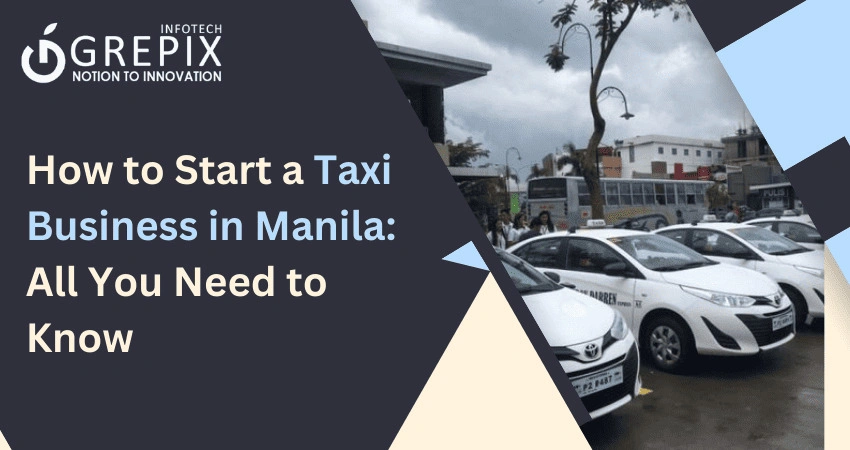
How to Start a Taxi Business in Manila: All You Need to Know
Starting a taxi business in Manila is an exciting opportunity with real and substantial potential for profitability. With the city densely populated streets, extremely high commuter demand, booming tourism sector, and a passenger base that is increasingly comfortable with app-based booking and cashless payments, the conditions for a professional taxi operator to thrive have never been more favorable. However, the process demands careful planning, strict adherence to regulatory requirements, and strategic decision-making from day one.
Launching a taxi business in Manila is a rewarding venture when approached with the right combination of market knowledge, operational discipline, and technology. From deeply understanding the local transport landscape to managing your fleet, your drivers, and your finances, every decision you make in the early stages shapes your long-term competitive position in one of Southeast Asia most dynamic urban transport markets.
Manila taxi industry is at a turning point. The operators winning today are not those with the most vehicles they are those who deploy AI-powered dispatch, accept GCash on day one, and build corporate account pipelines before their competitors do. This guide covers everything from LTFRB registration to real revenue projections, AI-based taxi app models, a comparison of taxi business structures, and a clear look at where Manila transport market is heading by 2030. Whether you&;re starting with one vehicle or planning a fleet of twenty, the strategic edge comes from understanding the full picture before you invest.
1 Understanding the Taxi Market in Manila and Quezon City
Demand for Taxi Services in Quezon City
Quezon City a hub for commerce, education, media, and culture sees extraordinarily high demand for transportation services around the clock. Students commuting to UP Diliman and Ateneo, professionals traveling between Eastwood City and the Quezon City CBD, and tourists exploring nearby cultural landmarks all represent distinct segments with different expectations around pricing, comfort, and booking convenience. Taxis fill a unique niche for direct, door-to-door travel that jeepneys, MRT, and bus routes simply cannot replicate with the same flexibility.
Competitors and Alternatives
The Manila taxi market is intensely competitive. Ride-hailing apps like Grab dominate app-based bookings, while traditional jeepneys, e-jeepneys, and tricycles serve lower-income commuter segments. To carve out your share, you must understand the strengths and weaknesses of each alternative. Traditional taxis can offer metered fares for regulatory compliance, personalized door-to-door service, and consistent availability in areas where ride-hailing apps frequently show surge pricing or poor driver availability. A branded taxi booking app removes the remaining disadvantage by giving your service the same booking convenience as Grab.
Identifying Your Target Audience
Successful Manila taxi operators build their strategy around a specific primary audience rather than trying to serve everyone at once. Office professionals in BGC and Ortigas value speed and reliability and will pay premium fares for guaranteed punctuality. Late-night commuters in Quezon City prioritize personal safety and driver verification. Budget-conscious students from major universities near Commonwealth Avenue respond best to transparent metered fares and loyalty discounts integrated into your taxi booking app. Defining your core audience from the outset allows you to price, market, and service your business with precision.
2 Crafting a Solid Business Plan
Setting Clear Goals and Objectives
Every successful Manila taxi business starts with a clear, written vision. Define what you want to achieve whether it is operating a specialized premium fleet, building the most trusted corporate transport service in Quezon City, or creating a technology-forward ride-hailing alternative for Manila university belt. Setting SMART goals (Specific, Measurable, Achievable, Relevant, and Time-bound) converts your vision into concrete milestones that guide every operational decision and keep your team aligned.
Analyzing Financial Requirements and Budgeting
Starting a taxi business in Manila requires significant upfront investment that must be planned with precision. Budget line items include vehicle acquisition costs (whether new or used), LTFRB franchise application fees, LTO registration, comprehensive insurance premiums, driver salaries and SSS/PhilHealth contributions, fuel reserves, taxi app deployment, and initial marketing spend. Build a detailed monthly cash flow projection covering at least the first 12 months to ensure you have sufficient working capital to sustain operations while your customer base builds.
Defining Your Unique Selling Proposition
Your unique selling proposition (USP) must give Manila commuters a compelling reason to choose your service over Grab and traditional taxis consistently. Strong USPs include faster average response times backed by intelligent dispatch technology, guaranteed vehicle cleanliness and air-conditioning standards verified through regular inspection, female-friendly safe ride programs with verified female drivers for women passengers, or integrated GCash and Maya payment options that make every transaction frictionless and paperless.
3 Registering Your Taxi Business
Necessary Licenses and Permits
Operating a taxi business in the Philippines requires permits from multiple agencies. You must secure a Mayor Permit from Quezon City or your local government unit, register your business with the Department of Trade and Industry (DTI) for sole proprietorships or the Securities and Exchange Commission (SEC) for corporations or partnerships, and obtain a BIR Certificate of Registration for tax compliance. Ensuring all these documents are in order before your first trip protects you from penalties and establishes credibility with corporate clients who require fully documented service providers.
Navigating the LTFRB
The Land Transportation Franchising and Regulatory Board (LTFRB) is the central regulatory authority for taxi franchises in the Philippines. You must submit a formal franchise application specifying your proposed routes and vehicle specifications, pay the applicable franchise fees, and demonstrate financial capacity to operate. The LTFRB also enforces compliance with mandatory taximeters, vehicle age limits, driver conduct standards, and fare rate structures all of which you must integrate into your operational planning from the outset to avoid costly fines or franchise suspension.
Tax Registration and Compliance
Register your business with the Bureau of Internal Revenue (BIR) and ensure you file monthly percentage taxes and annual income tax returns accurately and on time. Maintain comprehensive records of all revenue and expenses using accounting software this not only keeps you BIR-compliant but also gives you the financial visibility needed to manage profitability, identify cost reduction opportunities, and present clean books when seeking expansion financing.
4 Acquiring and Maintaining a Fleet
Choosing the Right Vehicles
The vehicles you select directly shape passenger perception of your brand quality and your daily operating costs. For standard metered taxi operations, fuel-efficient sedans like the Toyota Vios, Mitsubishi Mirage G4, and Honda City offer the best balance of passenger comfort, fuel economy, and maintenance cost in Manila demanding stop-and-go traffic conditions. For premium or corporate fleet services, Toyota Fortuner or Toyota Hiace minivans allow you to serve higher-paying group travel and airport transfer segments.
Buying New vs. Used Cars
New vehicles offer manufacturer warranties, lower initial repair costs, and a more professional first impression but require significantly higher capital outlay and generate higher monthly amortization payments that pressure early-stage cash flow. Well-maintained used vehicles from reputable dealers in Quezon City Banawe automotive hub can dramatically reduce startup costs, though you should commission an independent mechanical inspection and verify clean LTO registration before completing any purchase.
Vehicle Maintenance and Fleet Management
Keeping your Manila taxi fleet in consistently excellent condition is one of the most important operational disciplines you will develop as a taxi business owner. Implement a structured preventive maintenance schedule covering oil changes, brake inspections, tyre rotation, and air-conditioning servicing. Use your fleet management software to set automated maintenance reminders triggered by mileage intervals so that no vehicle slips through without timely servicing. Unplanned breakdowns not only generate repair costs but also damage your punctuality reputation with regular passengers who depend on you daily.
5 Hiring and Training Drivers
What to Look for in Potential Drivers
Your drivers represent your brand in every single passenger interaction their professionalism, knowledge of Manila complex road network, and ability to handle difficult situations calmly will define how passengers perceive your service and whether they book again. Prioritize candidates with valid professional driver licenses, at least two years of PSV driving experience in Metro Manila, demonstrably clean driving records with the LTO, and genuine customer service orientation that goes beyond basic courtesy.
Background Checks and Driving Tests
Conducting thorough background verification is absolutely non-negotiable for passenger safety and your business legal liability. Request NBI clearance certificates and verify them independently, confirm employment history with previous employers, and conduct a practical driving evaluation that tests their ability to navigate EDSA, handle Manila notorious traffic situations calmly, and operate your booking app technology without difficulty. Drug testing in compliance with LTFRB requirements is also mandatory before any driver begins passenger-carrying operations.
Training Drivers for Excellent Customer Service
Structured driver training is one of the highest-ROI investments you can make in your Manila taxi business. Cover customer greeting and communication standards, professional handling of passenger complaints and disputes, efficient use of your taxi dispatch app and GPS navigation, Quezon City and Metro Manila route knowledge including LTFRB franchise route compliance, and emergency response procedures. Well-trained drivers generate consistently high passenger ratings that build your reputation and drive organic referrals far more cost-effectively than any advertising campaign.
6 Implementing Effective Marketing Strategies
Traditional Advertising Methods
Traditional advertising remains highly effective in Metro Manila densely populated urban environment. Distribute professionally designed flyers and tarpaulins near major commuter points including MRT and LRT stations, universities, large office parks in Eastwood and Triangle Drive, and major malls like SM North EDSA, TriNoma, and Robinsons Galleria. Branded vehicle wraps turn every taxi in your fleet into a rolling billboard that builds awareness across every route it travels throughout the day.
Leveraging Social Media and Online Platforms
A strong, consistent social media presence is essential for building brand recognition in Manila hyper-connected market. Facebook remains the most important platform for reaching Metro Manila mass market run targeted paid promotions to Quezon City-based professionals and students. TikTok and Instagram reach younger commuter demographics effectively through short, engaging content like driver spotlights and behind-the-scenes operations. Encourage satisfied passengers to post and tag your business in exchange for referral discounts redeemable through your taxi booking app.
Partnering with Hotels, Universities, and Businesses
Strategic B2B partnerships are among the most cost-efficient customer acquisition channels available to Manila taxi operators. Approach hotels in Timog, Cubao, and New Manila to become their recommended taxi service for guests. Establish preferred transport agreements with large Quezon City-based corporations, BPO companies operating night shifts, and universities requiring faculty and student transport services. These institutional partnerships deliver steady, predictable passenger volumes that stabilize your revenue far beyond what individual bookings alone can provide.
7 Incorporating Technology for Better Efficiency
Using GPS and Tracking Systems
Real-time GPS tracking is essential for managing a Manila taxi fleet effectively given the city complex, heavily congested road network. GPS integration in your taxi management system allows you to always know each vehicle precise location, assign the nearest driver to incoming bookings in seconds, monitor route compliance with LTFRB franchise requirements, and provide passengers with live arrival tracking through your app a feature that significantly reduces booking cancellations caused by uncertainty about driver arrival times.
Benefits of Digital Payment Systems
Cashless payments are rapidly becoming the standard expectation among Metro Manila commuters, particularly among the young professional and student demographics who form the core taxi market. Integrate GCash and Maya (PayMaya) the Philippines&; two dominant e-wallets as well as Visa and Mastercard card acceptance into your payment system. Cashless transactions eliminate driver cash-handling risks, generate automated digital receipts for corporate passengers, and create a complete transaction audit trail that simplifies your accounting and BIR compliance obligations significantly.
Creating a Taxi Booking App for Your Business
Deploying a branded white-label taxi booking app through a specialist provider like Grepix Infotech gives your Manila taxi service immediate competitive parity with major ride-hailing platforms at a fraction of the development cost. Key features to prioritize include real-time GPS tracking visible to passengers, upfront fare estimates before booking confirmation, post-trip driver ratings, GCash and Maya payment integration, and driver-passenger in-app messaging for pre-arrival communication. Your own app also builds a direct passenger database you own entirely critical for loyalty marketing and corporate account management.
8 Managing Finances and Operations
Setting Fares and Optimizing Pricing
Your fare structure must balance competitive positioning against Grab and traditional taxis with the profitability requirements of your specific cost base. Study LTFRB-regulated base and flag-down rates for metered taxis, analyze Grab typical pricing on your most common routes, and factor in your actual fuel, maintenance, driver salary, and insurance costs per kilometer. Introduce dynamic pricing during Metro Manila notorious peak hours 7-9AM and 5-8PM on weekdays to capture additional revenue when demand consistently outstrips the supply of available taxis.
Budgeting for Operational Expenses
A sustainable operational budget in Manila must account for fuel (typically your largest variable cost), driver salaries plus mandatory government contributions (SSS, PhilHealth, Pag-IBIG), vehicle maintenance reserves, LTO and LTFRB annual renewal fees, insurance premium installments, app subscription fees, and a contingency reserve for unexpected costs like accident repairs or regulatory compliance changes. Review your actual vs. budgeted costs monthly and adjust allocations based on real operating data rather than estimates.
Tracking Revenue and Managing Profits
Use dedicated taxi business accounting software to track revenue by vehicle, by driver, and by route daily. Analyze revenue per kilometer, trips per driver per shift, and average fare value weekly to identify your most profitable operational patterns. Regular financial review meetings with your operations manager even if it just you reviewing your own dashboard ensure you catch profitability issues early before they compound into serious financial problems that threaten your ability to service loans or maintain your fleet.
9 Ensuring Safety and Compliance
Vehicle Safety Standards and Inspections
Safety must be embedded into every operational process, not treated as a periodic compliance task. Schedule LTO-mandated vehicle inspections well in advance of expiry dates, conduct your own internal pre-trip safety checks daily covering brakes, tyres, lights, and seat belts, and install in-vehicle dashcams that record both the road ahead and the passenger cabin for driver accountability and evidence in the event of incidents or passenger complaints.
Insuring Your Taxi Business and Fleet
Comprehensive commercial vehicle insurance is legally mandatory under LTFRB franchise requirements and financially essential for any serious taxi operator. Your policy must cover own damage to your vehicles, third-party liability for accidents involving other motorists, and critically passenger liability coverage that protects you from claims arising from passenger injuries sustained during the course of a trip. Leading Philippine insurers like Malayan Insurance, Pioneer Insurance, and BPI/MS General Insurance offer specialized taxi fleet policies worth comparing carefully.
Adhering to Local Regulations and Laws
Stay continuously updated on LTFRB circulars, LTO memoranda, and Quezon City traffic ordinances that may affect your operations. Subscribe to LTFRB official communication channels and join TODA (Taxi Operators and Drivers&; Association) membership to receive early notice of regulatory changes. Full and visible compliance is not just a legal obligation it is a marketing asset that differentiates you from informal and non-compliant operators when pitching corporate accounts and institutional partnerships.
10 Building and Maintaining Customer Relationships
Importance of Excellent Customer Service
In Manila crowded and competitive taxi market, exceptional customer service is your most durable competitive advantage. Train every driver to prioritize passenger comfort, maintain immaculate vehicle cleanliness, and handle every complaint or difficult situation with patience and professionalism. A single consistently outstanding experience where the driver is courteous, the car is cool and clean, and the booking app worked perfectly converts a first-time rider into a loyal regular who recommends your service to friends, officemates, and family through Manila powerful word-of-mouth networks.
Collecting and Acting on Feedback
Implement an automatic post-trip rating and feedback request through your taxi app, and treat every piece of negative feedback as a priority operational signal rather than a complaint to be managed. Review driver rating trends weekly and address any driver whose ratings are consistently declining through a structured performance conversation before the issue affects your overall brand reputation. Publicly acknowledging positive customer testimonials on social media also builds brand trust among prospective passengers who are evaluating whether to try your service for the first time.
Encouraging Repeat Customers with Loyalty Programs
A well-designed loyalty program built into your taxi booking app is one of the most cost-effective ways to increase booking frequency among your existing passenger base. Award points for every completed trip, offer free rides or fare discounts after reaching point thresholds, and provide special privileges like priority booking during peak hours to your top-tier loyalty members. Filipino commuters respond particularly well to loyalty reward programs a well-promoted app loyalty scheme can increase repeat booking rates by 30 to 40% within the first six months of launch.
11 Overcoming Challenges in the Manila Taxi Business
Tackling Competition from Ride-Hailing Services
The rise of Grab has permanently changed Manila passengers&; expectations they now expect app-based booking, transparent pricing, and cashless payment as standard. Rather than viewing this as an insurmountable competitive threat, treat it as the blueprint for minimum viable service standards your taxi business must meet through your own branded app. Your key competitive advantages over Grab include no surge pricing surprises, LTFRB-regulated metered fares that passengers legally understand, driver familiarity with your specific service area, and direct customer relationships that generate loyalty Grab cannot replicate.
Managing Rising Fuel and Maintenance Costs
Fuel and maintenance represent the two largest controllable expense categories for most Manila taxi operators. Invest in fuel-efficient vehicle models from the outset, implement driver coaching programs focused on eco-driving techniques that reduce fuel consumption by 10-15%, and establish relationships with trusted independent mechanics in Quezon City auto belt who provide quality servicing at rates below dealership prices. Track fuel consumption per vehicle weekly through your fleet management dashboard to catch unusually high consumption that signals mechanical issues early.
Dealing with Metro Manila Unpredictable Challenges
Metro Manila operational environment presents unique challenges including extreme traffic congestion on EDSA and C5, weather disruptions from typhoon season, periodic government transport strikes and TNVS regulatory hearings that affect operations, and MMDA coding restrictions that limit vehicle availability on specific days. Build operational resilience by integrating real-time traffic data into your dispatch system, maintaining a sufficient driver roster to absorb sick leave and vehicle downtime, and keeping your passengers proactively informed about expected delays through your app in-app messaging feature.
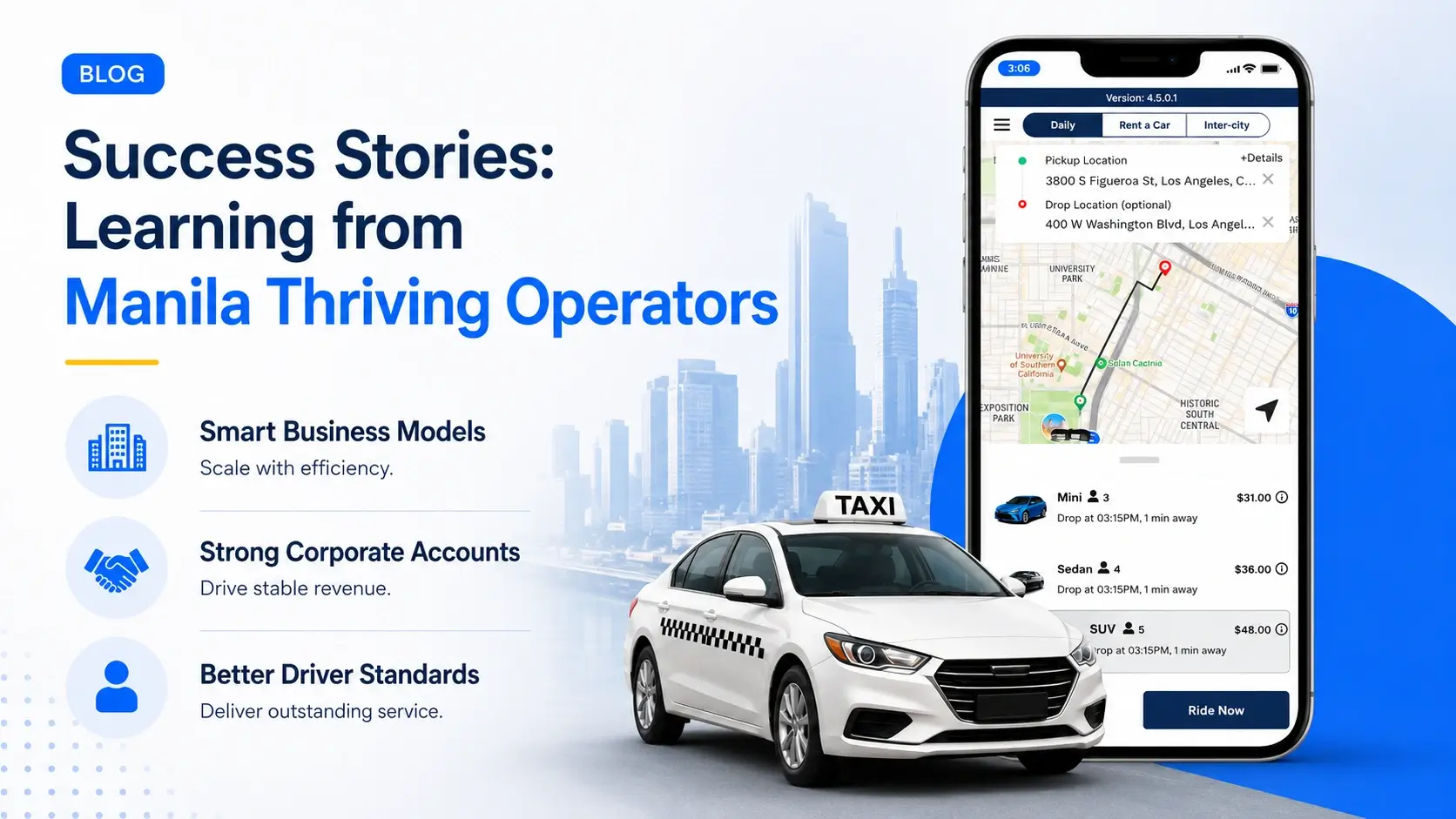
12 Success Stories: Learning from Manila Thriving Operators
Examples of Thriving Taxi Businesses in the Philippines
The most successful Philippine taxi operators in recent years share a common strategic thread: they embraced technology early, developed strong corporate account pipelines, and invested in driver professionalization that raised service quality above the industry standard. Operators who signed exclusive hotel and BPO transport agreements in BGC and Ortigas during 2019-2022 emerged from the pandemic period with stable institutional revenue that protected them when individual passenger volumes dropped. Their experience is a powerful lesson in the strategic value of diversified revenue sources.
Lessons Learned from Successful Entrepreneurs
Study how successful Manila taxi entrepreneurs navigated the transition from phone-based bookings to app-based ride-hailing the operators who adapted fastest captured the largest share of the app-savvy commuter market. Key lessons include: deploy your own branded taxi app before your competitors do; build corporate account relationships before you need them; invest in driver retention programs because replacement costs for well-trained drivers are far higher than the cost of keeping them; and maintain strict vehicle maintenance standards even when cash flow is tight, because a breakdown during a corporate trip can cost you the entire contract.
13 Is a Taxi Business in Manila Actually Profitable? Real Numbers
What Operators Actually Earn Per Vehicle Per Month
Before you invest, you deserve honest revenue numbers not just optimistic projections. A single standard metered taxi in Metro Manila operating two shifts daily (morning and evening, approximately 16 active hours) generates between 8 and 14 completed trips per shift, with average fare values of PHP 150 to PHP 300 depending on route length and time of day. At realistic utilization, a well-managed single vehicle can generate gross revenue of PHP 25,000 to PHP 45,000 per month. After fuel (roughly PHP 8,000–12,000 per month for city driving), driver salary (PHP 15,000–20,000), insurance allocation, and maintenance reserves, net profit per vehicle typically ranges from PHP 5,000 to PHP 15,000 monthly modest on its own, but scalable.
How Revenue Scales with Fleet Size
The real profitability of a Manila taxi business emerges not from one vehicle but from fleet economics. A fleet of ten vehicles each generating PHP 8,000–12,000 net monthly produces PHP 80,000 to PHP 120,000 in combined monthly profit while your fixed overhead (office, dispatch software, management salary) stays largely flat. Operators who reach 15 to 20 vehicles report net monthly earnings of PHP 150,000 to PHP 250,000 from taxi operations alone, before adding corporate contract premiums. This is why the most successful Manila taxi entrepreneurs reinvest aggressively in their first two years: each additional vehicle added to a professionally managed fleet has far higher return on investment than the first.
Revenue Diversification: Beyond Individual Passenger Fares
Single-trip passenger revenue is only one of several income streams available to a well-structured Manila taxi operation. Corporate transport contracts where you provide guaranteed daily vehicle availability to a company in exchange for fixed monthly invoicing can deliver PHP 40,000 to PHP 95,000 per month per signed account with far lower customer acquisition cost than individual bookings. Hotel partnerships for guest transfers, airport-to-hotel shuttle agreements with tourism operators, and university faculty shuttle programs all represent predictable recurring revenue that cushions your business against the natural volatility of individual fare demand. The taxi operators with the most stable businesses in Manila today typically have at least 40% of their monthly revenue locked in through these institutional channels.
14 Comparing Taxi Business Models: Which Is Right for You?
Not every taxi business looks the same. The model you choose from day one shapes your capital requirements, your daily management burden, and your ceiling for profitability. Understanding the real trade-offs between each model is one of the most important decisions you will make before investing.
Owner-Operator Model
In the owner-operator model, you own one or two vehicles and drive yourself at least part-time. Startup costs are lowest as little as PHP 800,000 to PHP 1,200,000 for one vehicle fully compliant with LTFRB requirements. Your cost structure is tight because you eliminate driver salary on shifts you cover personally. The ceiling, however, is low: your earning capacity is physically limited by how many hours you can drive. This model works well as a proof of concept or supplemental income but rarely builds a business with meaningful exit value or the ability to operate without the owner daily presence.
Small Fleet Model (3–10 Vehicles)
The small fleet model is where most serious Manila taxi entrepreneurs find their sweet spot in the early years. You hire professional drivers, deploy a taxi booking app for dispatch and customer bookings, and begin pitching corporate accounts while managing operations from a management rather than driving role. Capital requirement rises to PHP 3,000,000–PHP 8,000,000 depending on vehicle choices, but net monthly profitability can reach PHP 60,000–PHP 120,000 once utilization stabilizes. This is the model that offers the best balance between manageable investment and meaningful income.
Corporate Fleet Model (11+ Vehicles)
At this scale, your taxi business becomes a genuine transport enterprise. You employ a dispatcher, an operations coordinator, and potentially a sales person dedicated to acquiring and managing corporate accounts. Your taxi management platform carries real operational weight handling automated dispatch, driver performance tracking, and corporate invoicing at scale. Startup capital requirements are significant (PHP 15,000,000 and above), but the economics reward disciplined operators: fleet-wide margins, institutional revenue stability, and genuine business asset value. Several Manila taxi operators who reached this scale during 2022–2024 have built businesses with annual revenues exceeding PHP 10,000,000.
Aggregator / White-Label Ride-Hailing Model
An emerging model gaining traction in Metro Manila is the aggregator approach: rather than owning all vehicles yourself, you build and operate a branded white-label taxi app platform and onboard independent licensed taxi owners under your brand. You earn a commission (typically 10–18%) on every completed booking facilitated through your platform without carrying the full capital burden of vehicle ownership. The risk is regulatory LTFRB franchise requirements for aggregators differ from individual operators but the capital efficiency is exceptional. This model is best suited to entrepreneurs with strong tech and sales skills who want to build a platform business rather than a traditional fleet operation.
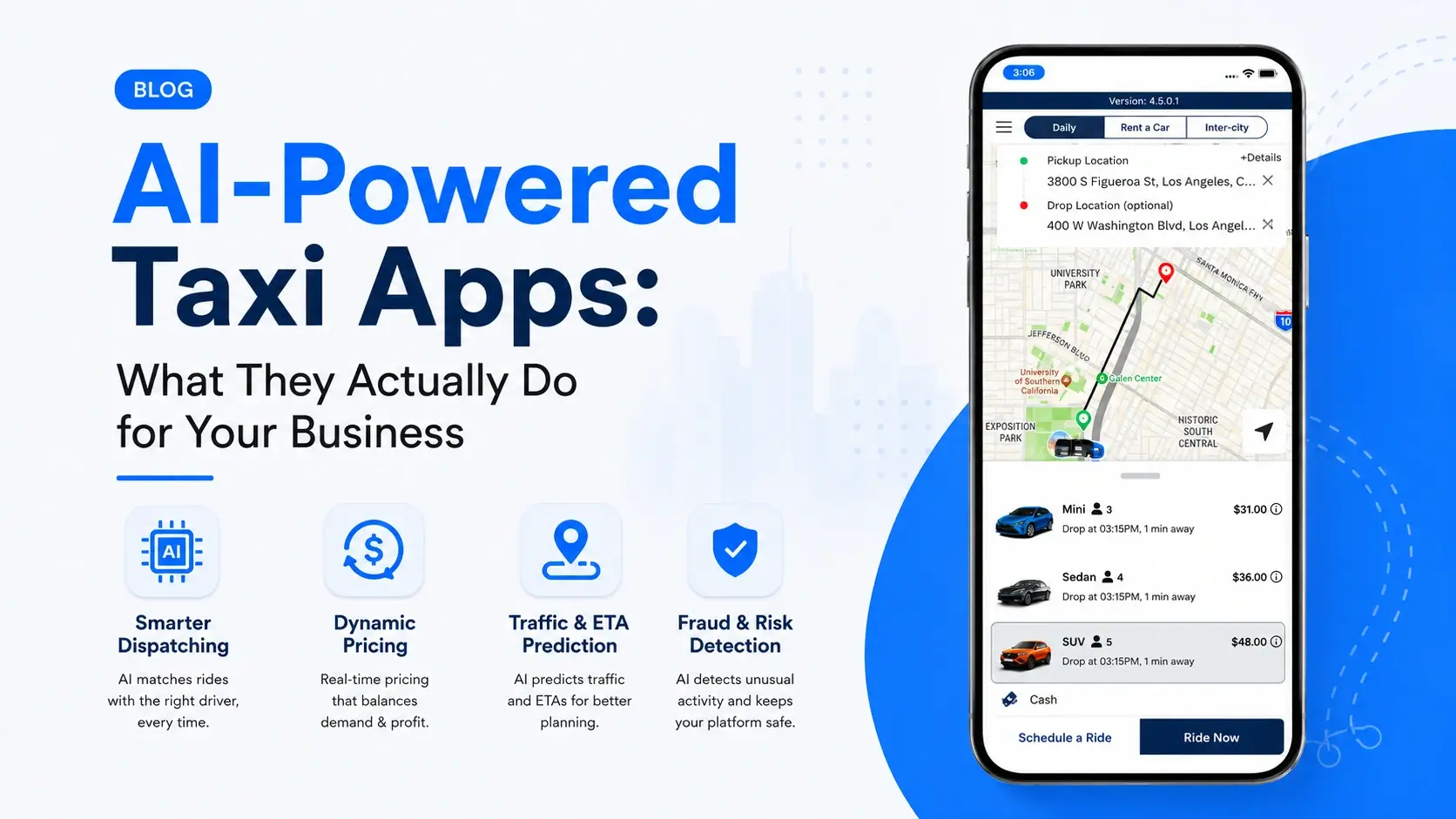
15 AI-Powered Taxi Apps: What They Actually Do for Your Business
Why Traditional Dispatch Methods Are Costing You Money
If your dispatch method is still phone calls, WhatsApp messages, or manual radio dispatch, you are losing bookings every single day to friction. Studies of Manila transport operators who switched from manual to app-based dispatch consistently show 20–35% increases in completed trips per driver per shift not because demand increased, but because assignment speed improved, dead miles reduced, and passenger no-shows dropped when real-time arrival tracking made wait times visible. Every booking lost to a slow manual dispatch process is revenue transferred directly to Grab.
What an AI-Driven Taxi App Does That Basic Apps Don&;t
Basic taxi booking apps handle passenger requests and show driver locations. AI-powered taxi platforms go significantly further. Intelligent demand forecasting identifies which Manila zones will experience booking spikes near SM North EDSA before mall closing time, around Eastwood at the end of business hours, near Trinoma on weekends and pre-positions drivers in those zones before the surge peaks. Dynamic pricing optimization balances demand and supply automatically, capturing additional revenue per trip during peak hours without manual intervention. Driver performance scoring flags declining service metrics before they generate passenger complaints. For a growing Manila fleet, these features do not just improve service they directly increase revenue per vehicle per month.
Comparing Leading Taxi App Solutions for Manila Operators
Manila taxi operators considering their technology options typically evaluate three categories of solution. First, building a custom app from scratch expensive (PHP 1,500,000 to PHP 5,000,000 for a full-featured build), slow (6–12 months to production), and carrying significant technical risk for operators without in-house development expertise. Second, subscribing to a global SaaS dispatch platform lower upfront cost but ongoing subscription fees that compound over years, often with limited GCash and Maya payment integration and support teams unfamiliar with LTFRB compliance specifics. Third, deploying a white-label taxi app from a specialist provider like Grepix Infotech a proven codebase customized with your brand, pre-integrated with Philippine payment gateways, and configured for Manila regulatory environment in weeks rather than months. For most Manila operators, white-label is the clearest path to competitive app capability at manageable cost and timeline.
Key App Features That Directly Impact Manila Passenger Retention
Not all app features are created equal in the Manila market. Real-time arrival tracking reduces booking cancellation rates by up to 40% by eliminating uncertainty about driver location during Manila unpredictable traffic. Upfront fare estimates before booking confirmation address the biggest trust barrier Manila commuters have toward taxi services over Grab. In-app GCash payment reduces the friction of exact-change requirements that drive passengers away from traditional taxis. Post-trip driver rating systems create driver accountability that self-reinforces service quality improvement over time. And in-app emergency assistance buttons connecting passengers directly to your operations team or the Philippine National Police hotline address the personal safety concern that is a primary decision factor for female and late-night Manila commuters.
16 Why the Manila Taxi Market Is Growing and Will Keep Growing
Population and Urban Density: A Structural Demand Driver
Metro Manila population of approximately 14 million with Quezon City alone housing over 3 million creates structural, permanent demand for personal transport that public infrastructure simply cannot fully satisfy. The MRT-3, LRT-1, and LRT-2 lines serve only narrow corridors, leaving the vast majority of Metro Manila geography unreachable without road transport. Road expansion cannot keep pace with population growth. This gap between public transit supply and passenger demand is the foundation of every successful Manila taxi business and it is not going away.
Tourism Recovery and International Arrivals
International tourism to the Philippines has been recovering strongly since 2023, with Manila serving as the primary gateway for visitors to Palawan, Boracay, Cebu, and other top destinations. International arrivals generate disproportionately high taxi revenue per trip airport transfers, hotel-to-attraction runs, and multi-stop sightseeing itineraries command premium fares and leave consistently positive reviews when service quality meets expectations. A Manila taxi operator with formal hotel partnerships and a multilingual app interface is exceptionally well positioned to capture the international tourism segment that casual local operators routinely miss.
The BPO Industry Permanent Transport Demand
The Philippines&; business process outsourcing industry employs over 1.7 million people in Metro Manila, with a large proportion working night shifts that end between 2 AM and 6 AM precisely when public transport is unavailable. BPO companies in Quezon City, Eastwood, and Ortigas face a genuine, ongoing obligation to provide safe transport for night-shift employees. This creates a structured, year-round corporate transport market that delivers monthly contracted revenue to Manila taxi operators who position their service specifically for BPO night-shift coverage. A single BPO contract covering 30–50 employees can generate PHP 60,000–PHP 120,000 in guaranteed monthly revenue.
Manila Cashless Transition Is Unlocking New Passengers
BSP (Bangko Sentral ng Pilipinas) data consistently shows accelerating growth in GCash and Maya transaction volumes across Metro Manila. For Manila taxi operators, this cultural shift toward digital payments is a significant business opportunity: the segment of commuters who previously chose Grab purely for cashless convenience is now reachable by any taxi service that accepts e-wallet payments. Integrating GCash and Maya into your taxi booking app is no longer a premium feature it is the baseline expectation of Metro Manila growing cashless commuter majority.
17 The Future of Taxi Services in Manila: 2025–2030
AI-Optimized Operations Will Become the Industry Standard
The gap between Manila taxi operators using AI-powered dispatch and those relying on manual methods will widen significantly over the next five years. AI route optimization, predictive demand positioning, and automated driver performance coaching are already available through platforms like Grepix white-label solutions and operators who deploy these capabilities now are building operational infrastructure that will be difficult for late-adopters to replicate quickly. By 2027, AI-optimized dispatch will likely be the baseline expectation of Manila corporate transport buyers, not a differentiator.
Electric Vehicles: The Green Taxi Transition in the Philippines
The Philippine government Electric Vehicle Industry Development Act (Republic Act 11832) mandates a transition toward electric vehicles in the public transport fleet, with incentives for EV adoption including tax exemptions and preferential financing. For Manila taxi operators, early adoption of hybrid and fully electric taxis offers two significant advantages: dramatically lower per-kilometer fuel costs (electric taxis in comparable Southeast Asian markets have demonstrated 60–70% fuel cost savings over petrol equivalents) and a genuine marketing differentiator in a market where environmental consciousness is rising among corporate clients and younger commuters. Forward-thinking operators who begin transitioning their fleets toward EVs and hybrids in 2025 will face far lower cost and less competition than those who wait until EV adoption becomes mandatory.
Personalized Taxi Services: The Experience Economy in Transport
The next competitive frontier in Manila taxi market is personalization using passenger data to deliver a service experience that feels designed for each individual rider. This means app interfaces that remember preferred routes and payment methods, drivers who greet returning passengers by name, vehicle temperature and music preferences saved to passenger profiles, and loyalty reward structures that recognize and celebrate your most frequent riders. These features were once the exclusive province of luxury hotel concierge services. Through modern taxi app platforms, they are within reach of any Manila taxi operator willing to invest in the right technology and they create a form of passenger loyalty that no surge-pricing platform can buy.
Safety Technology: Dashcams, Panic Buttons, and Verified Identities
Passenger safety concerns are the single biggest barrier preventing female commuters and late-night travelers from adopting new taxi services in Manila. The operators who solve this problem convincingly will unlock a massive underserved market segment. AI-assisted dashcam systems that detect driver drowsiness or erratic behavior and alert your operations center in real-time are already commercially available. In-app emergency buttons that share the passenger live location with a trusted contact and your safety team simultaneously are table-stakes for competing for the BPO night-shift market. Biometric driver verification at the start of each shift confirming the registered driver is actually behind the wheel closes the identity fraud risk that passengers experienced with early ride-hailing platforms. These safety features are increasingly expected, not merely appreciated.
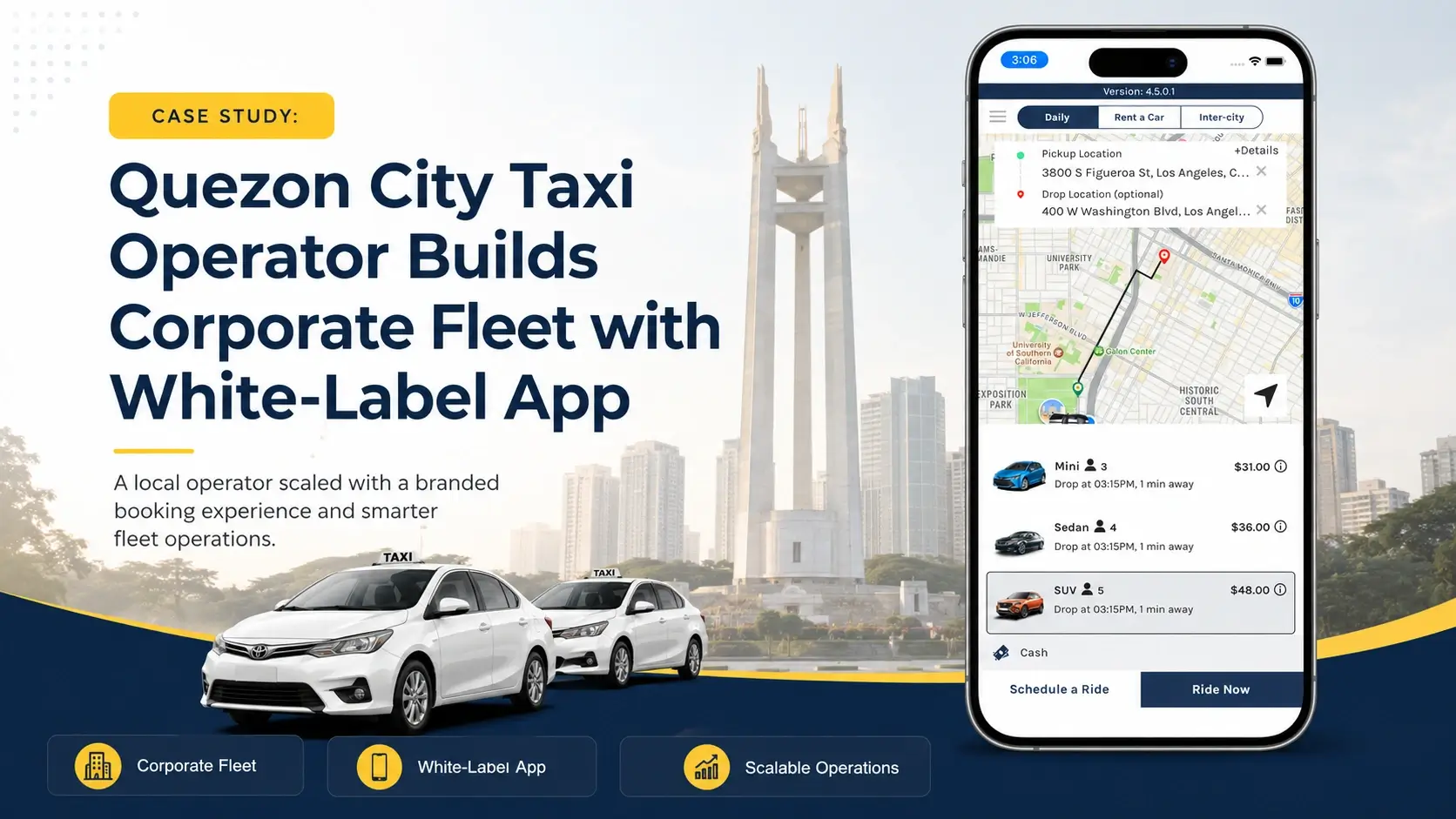
Case Study: Quezon City Taxi Operator Builds Corporate Fleet with White-Label App
Maria C., a former logistics coordinator from Quezon City, started her taxi business in 2021 with five Toyota Vios units serving the Cubao-Makati-BGC corporate corridor. For the first year she relied on phone bookings and Facebook Messenger a system that worked but left her unable to offer the real-time tracking and GCash payments that corporate clients increasingly demanded as standard.
After deploying a white-label taxi app through Grepix Infotech branded under her own company name and configured with GCash, Maya, and corporate invoicing she secured a preferred supplier agreement with a Quezon City-based BPO company requiring daily driver transport for 45 night-shift employees. This single corporate contract added PHP 95,000 in guaranteed monthly revenue within 45 days of launching the app.
Within 18 months her fleet had grown to 12 vehicles, she had signed two additional corporate accounts, and her app-based bookings accounted for 78% of total monthly revenue eliminating the inefficiency and cash-handling risks of her original phone booking system entirely. Her story demonstrates the transformative impact that deploying the right technology infrastructure can have on a Manila taxi business speed of growth and quality of revenue. Explore Grepix Infotech taxi app solutions to start your own journey.
Conclusion
Starting a taxi business in Manila in 2025 is not just possible it is one of the most strategically sound transport businesses an entrepreneur can build in Southeast Asia right now. The structural demand drivers are strong and permanent: 14 million residents, a booming BPO sector generating year-round night-shift transport needs, recovering international tourism, and a cashless payment revolution that has removed the last remaining friction barrier between Manila commuters and branded taxi services.
The operators who will dominate Metro Manila taxi market over the next decade are building three capabilities right now: a technology infrastructure that matches or exceeds Grab convenience for passengers, a corporate account portfolio that delivers predictable monthly revenue, and a fleet management discipline that keeps vehicles on the road and drivers performing at a consistently high standard. None of these require unlimited capital they require strategic clarity and the right platform to execute on.
As a leading taxi app development company, Grepix Infotech provides the white-label technology platform that makes all three capabilities accessible from day one. From AI-powered dispatch and real-time GPS tracking to GCash and Maya integration, automated corporate invoicing, and driver performance analytics Grepix equips your Manila taxi business with enterprise-grade tools at a fraction of the cost of building from scratch. Their platforms are specifically configured for Philippine regulatory requirements and Metro Manila operational realities.
Partner with Grepix Infotech to launch your Manila taxi business with a technology foundation that grows with your ambitions.Contact Grepix Infotech today your first corporate contract could be just one app deployment away.
FAQs
1. What is the cost of starting a taxi business in Manila?
Starting with one vehicle typically requires PHP 800,000 to PHP 1,500,000 covering vehicle purchase, LTFRB franchise fees, LTO registration, comprehensive insurance, and initial marketing. A small fleet of three to five vehicles with a taxi booking app typically requires PHP 3,000,000 to PHP 5,000,000 in total startup capital.
2. Do I need a franchise to operate a taxi business in Manila?
Yes. A Certificate of Public Convenience (franchise) from the LTFRB is legally mandatory to operate taxi services in Manila and throughout the Philippines. Without it, your vehicles cannot legally carry paying passengers and you risk vehicle impoundment and fines if caught operating without proper authority.
3. How can I attract more customers to my Manila taxi service?
Deploy a branded taxi booking app with GCash and Maya integration, build an active Facebook and Instagram presence targeting your service area, establish hotel and corporate transport partnerships, and run introductory promotions offering discounted first rides to new app users. Consistently excellent service quality and post-trip rating requests generate the word-of-mouth referrals that compound into significant organic customer growth.
4. What is the best way to recruit reliable drivers in Manila?
Require NBI clearance, verify LTO driving records, conduct practical Metro Manila driving evaluations, and implement mandatory drug testing per LTFRB requirements. Your best existing drivers are typically your most reliable source of quality referrals offer a referral bonus to incentivize them to recommend candidates from their professional networks who meet your standards.
5. Can I start a taxi business in Manila with just one vehicle?
Yes. Starting with a single fully compliant vehicle allows you to validate your service model, build initial customer relationships, and generate proof-of-concept revenue before committing to a larger fleet investment. A white-label taxi app makes even a single-vehicle operation look professional and scalable to prospective corporate clients from day one.
6. What digital payments should my Manila taxi service accept?
GCash and Maya (PayMaya) are essential as the Philippines&; two dominant e-wallets. Additionally offer Visa and Mastercard for corporate clients and international passengers. Integrating all payment options through your taxi app makes transactions seamless, eliminates cash-handling risks for your drivers, and generates automatic digital receipts that corporate clients require for expense management.
7. Is a white-label taxi app suitable for a small Manila taxi business?
Absolutely. A white-label taxi app from Grepix Infotech can be deployed for even a two or three vehicle operation at a cost far below custom development. It gives you a fully branded, professional passenger-facing app with GCash integration, real-time tracking, and automated dispatch capabilities that immediately elevate your service quality above informal competitors and position you to win corporate contracts that would otherwise go to larger, more established operators.
Looking out to start your own venture like Uber? Try out our HireMe Taxi Uber Clone, the easiest way to kick-start your taxi business.