
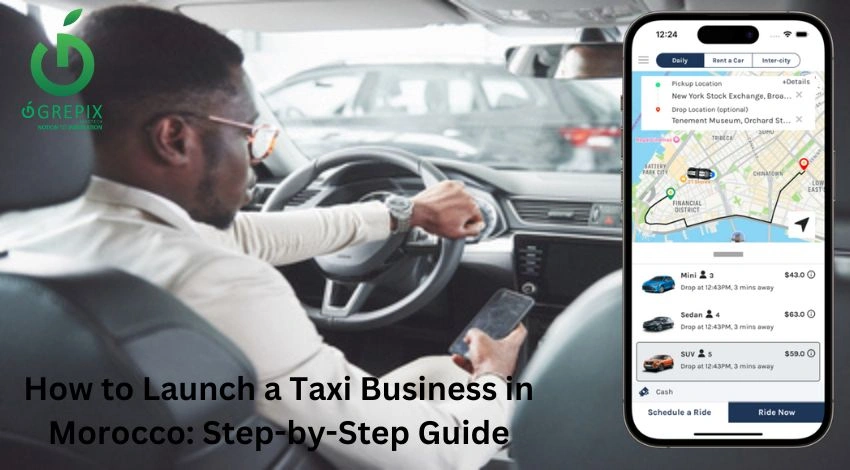
How to Launch a Taxi Business in Morocco: Step-by-Step Guide
Launching a taxi business in Morocco is a rewarding venture, but it requires careful planning, thorough research, and a commitment to quality service. By understanding the local market, securing necessary licenses, investing in technology, and prioritizing customer satisfaction, you can build a thriving business. Stay adaptable and proactive to overcome challenges and capitalize on opportunities in this dynamic industry.
Starting a taxi business in Morocco can be a rewarding venture if you navigate it strategically. The Moroccan market, bustling with locals and tourists alike, offers a lucrative opportunity for entrepreneurs. In this guide, we'll walk you through every step of launching a successful taxi business in Morocco.
Launching a taxi business in Morocco offers a lucrative opportunity for entrepreneurs, driven by increasing urbanization and tourism. However, success requires careful planning, compliance with local regulations, and a customer-centric approach. Understanding Morocco’s taxi market spanning petit taxis for city travel and grand taxis for intercity routes is crucial for targeting the right audience. Investing in reliable vehicles, technology like GPS and booking apps, and strategic marketing ensures operational efficiency and visibility. By staying adaptable and prioritizing quality service, you can overcome challenges and thrive in this dynamic market. With determination, your taxi business can become a key player in Morocco’s transportation landscape.
1Understanding the Taxi Market in Morocco
Overview of Morocco’s Transportation System
Morocco boasts a vibrant transportation network that combines traditional and modern modes of travel. The public transport sector, especially taxis, plays a crucial role in connecting urban and rural areas. Taxis in Morocco cater to locals and tourists alike, making them an essential component of the country’s economic and social fabric. With increasing urbanization and a growing influx of tourists, the demand for reliable taxi services is on the rise. The introduction of ride-hailing apps has also added a new dimension to the market, blending traditional services with innovative technology.
2 The Demand for Taxi Services in Morocco
Morocco’s cities like Casablanca, Marrakech, and Rabat see high demand for taxi services due to bustling urban life and significant tourist activity. Additionally, taxis are often the preferred mode of transportation in areas where public buses or trams may not have extensive coverage. This demand creates a lucrative opportunity for entrepreneurs.
3 Types of Taxis Operating in Morocco
Morocco’s taxi industry primarily consists of two categories:
- Petit Taxis: Small, city-based vehicles ideal for short-distance travel. These taxis operate within city limits and are generally affordable.
- Grand Taxis: Larger vehicles, often older models, that operate between cities or cater to groups. They are more expensive but indispensable for intercity transport.
Understanding these distinctions is critical to deciding your target market and operational focus.
4 Morocco's Taxi Industry: Key Statistics and Market Opportunity in 2025
Before investing in a taxi business in Morocco, understanding the actual numbers helps you make smarter decisions. Morocco's urban population crossed 22 million in 2024, with Casablanca, Rabat, Marrakech, Fes, and Tangier collectively hosting millions of daily commuters who rely on taxis. Here's a snapshot of why the taxi business in Morocco is a high-potential opportunity:
| Factor | Detail |
|---|---|
| Annual Tourists (2024) | Over 14.5 million international visitors |
| Ride-Hailing Market Growth | Estimated CAGR of 9–12% in North Africa (2024–2029) |
| Petit Taxi Operating Cities | Casablanca, Rabat, Marrakech, Agadir, Fes, Tangier |
| Grand Taxi Routes | Intercity: Casablanca–Rabat, Fes–Meknes, Marrakech–Essaouira |
| Smart City Initiatives | Government-backed mobility programs in Casablanca & Rabat |
| EV Push | Morocco targets 42% renewable energy use by 2030 – creating EV taxi incentives |
These figures make it clear: the Moroccan taxi market is not saturated it is evolving. Entrepreneurs who enter now with modern technology, proper licensing, and a customer-first approach will capture significant market share.
Why Now Is the Best Time to Start a Taxi Business in Morocco
- Tourism is rebounding strongly Morocco's tourism sector is growing year-over-year, with major events like the 2030 FIFA World Cup driving infrastructure investment.
- Gaps in app-based taxi services Unlike saturated markets in Europe, Morocco still has significant room for app-powered taxi startups outside major cities.
- Government support for SMEs Morocco's National Initiative for Human Development (INDH) and CRI (Regional Investment Centers) offer support for transport entrepreneurs.
- Younger population A tech-savvy youth demographic increasingly prefers app-based ride booking over flagging down taxis on the street.
5 Petit Taxis vs Grand Taxis: Which Business Model Is Right for You?
One of the most critical early decisions when launching a taxi business in Morocco is choosing between operating Petit Taxis or Grand Taxis or potentially both. Each model has a distinct regulatory structure, target audience, and profit potential.
| Feature | Petit Taxi | Grand Taxi |
|---|---|---|
| Area of Operation | Within city limits only | Intercity and suburban routes |
| Vehicle Size | Small cars (Dacia Logan, Fiat Uno) | Larger cars (Mercedes, Peugeot 504) |
| Fare Type | Metered fares (taximeter required) | Fixed route fares, negotiated pricing |
| Passenger Capacity | Up to 3 passengers | Up to 6 passengers (shared taxi) |
| License Availability | Controlled quota per city | Route-specific permits |
| Tech Adoption | High app integration possible | Moderate mostly traditional booking |
| Target Customers | Urban commuters, tourists, shoppers | Intercity travelers, group passengers |
| Revenue Consistency | Higher in peak hours | Depends on route frequency |
Which Should You Choose?
If you are targeting Casablanca, Marrakech, or Rabat and want to integrate a ride-hailing app, start with Petit Taxis. The urban density and tourist footfall make metered city rides more predictable and scalable. If you want to serve intercity travelers or operate in smaller towns with limited taxi competition, Grand Taxis offer less competition and loyal route-based customers.
Many successful Moroccan taxi entrepreneurs start with a small Petit Taxi fleet, establish cash flow, and then diversify into Grand Taxi intercity routes as their business grows.
6 Research and Planning
Identifying Target Markets
Before launching, determine whether your taxi service will focus on locals, tourists, or both. Urban hubs like Casablanca and Marrakech are ideal for tourist-oriented services, while rural areas may require intercity or community-focused taxis.
Studying Local Regulations and Licensing Requirements
Morocco has specific regulations for operating taxi services. Each region has licensing requirements, including permits, vehicle standards, and fare regulations. Familiarize yourself with local laws to avoid legal hassles.
Competitive Analysis: Knowing Your Competitors
Analyze the strengths and weaknesses of established taxi operators and ride-hailing services. Assess their pricing models, customer service strategies, and areas of operation to identify gaps your business can fill.
7 Securing Legal Requirements
Obtaining a Taxi License in Morocco
Taxi licenses in Morocco are typically issued by local authorities. The process involves providing proof of ownership or lease agreements for your vehicles and meeting certain compliance criteria. Licenses may also be limited in number, making early application critical.
Complying with Safety and Environmental Standards
Morocco emphasizes environmental sustainability. Taxis must meet emission standards, and some cities encourage hybrid or electric vehicles. Ensuring your fleet complies with these regulations enhances your credibility.
Understanding Taxation for Taxi Businesses
You’ll need to register your business with Morocco’s tax authorities and understand the applicable taxes, including VAT and income tax. Hiring a local accountant can help you navigate this process efficiently.
8 Setting Up Your Taxi Business
Choosing the Right Vehicle
It's critical to choose cars that appeal to your target market. While intercity services might need larger, more comfortable vehicles, city operations are best served by small, fuel-efficient cars.
Installing Taxi Meters and GPS Systems
Equip your fleet with taxi meters to ensure transparency in pricing. GPS systems help drivers navigate efficiently and enable you to monitor operations in real-time.
Branding and Customizing Your Fleet
Your taxis should have a consistent and professional appearance. Consider branding your vehicles with logos, contact information, and a distinct color scheme to stand out from competitors.
9 Financing Your Taxi Business
Launching a taxi business involves significant investment in vehicles, licenses, branding, and initial marketing. Prepare a detailed budget to estimate your startup costs accurately.
How Much Does It Cost to Start a Taxi Business in Morocco?
The cost depends on your fleet size, city, and whether you buy new or used vehicles. Here is a realistic cost estimate for a single-vehicle Petit Taxi startup in Morocco:
| Expense Category | Estimated Cost (MAD) | Estimated Cost (USD) |
|---|---|---|
| Vehicle (used, e.g. Dacia Logan) | 60,000 – 100,000 MAD | $6,000 – $10,000 |
| Taxi License (purchase/transfer) | 50,000 – 150,000 MAD | $5,000 – $15,000 |
| Vehicle Branding & Paint | 2,000 – 5,000 MAD | $200 – $500 |
| Taximeter Installation | 1,500 – 3,000 MAD | $150 – $300 |
| GPS System | 1,000 – 2,500 MAD | $100 – $250 |
| Commercial Insurance (annual) | 5,000 – 9,000 MAD | $500 – $900 |
| Business Registration & Permits | 1,000 – 3,000 MAD | $100 – $300 |
| Initial Marketing (website, cards) | 2,000 – 5,000 MAD | $200 – $500 |
| Working Capital Reserve (3 months) | 10,000 – 20,000 MAD | $1,000 – $2,000 |
| Total Estimated Startup Cost | 132,500 – 297,500 MAD | $13,250 – $29,750 |
Exploring Financing Options in Morocco
From local bank loans to government subsidies for small businesses, various financing options are available. Research these options and choose the one that best suits your financial plan.
- CIH Bank & Attijariwafa Bank offer vehicle financing loans for commercial transport operators
- Al Barid Bank Microfinance accessible for small-scale entrepreneurs and first-time business owners
- Tamwilcom (formerly CCG) provides state-backed loan guarantees for SMEs including transport businesses
- Family/Community Lending (Tontines / Daret) a traditional Moroccan rotating savings practice widely used for startup capital
- Leasing (Ijarah) Islamic finance-compliant vehicle leasing available through Dar Assafaa and Umnia Bank
Managing Ongoing Operational Costs
Factor in recurring expenses such as fuel, maintenance, driver salaries, and insurance premiums. Efficient cost management is key to maintaining profitability.
10 Building a Reliable Fleet
Buying vs. Leasing Vehicles
One of the first decisions you’ll face is whether to buy or lease your vehicle. Buying may offer long-term savings and more control, but it requires significant upfront capital. Leasing, on the other hand, reduces initial costs and offers flexibility in upgrading your fleet, which can be beneficial in a market like Morocco with evolving consumer preferences.
Maintaining Your Fleet
A well-maintained fleet ensures safety, reliability, and customer satisfaction. Create a routine maintenance schedule for inspections, repairs, and servicing. Collaborating with local mechanics or garages can reduce downtime and ensure your vehicles are always road-ready.
Ensuring Insurance Coverage
Insurance is a non-negotiable aspect of running a taxi business. Secure comprehensive policies that cover your vehicles, drivers, and passengers. This minimizes financial risks in case of accidents or unforeseen events.
11 Hiring and Training Drivers
Recruiting Skilled Drivers
Your drivers are the face of your business. Hire individuals with valid driving licenses, clean driving records, and a friendly demeanor. Conduct thorough interviews and background checks to ensure they align with your business values.
Also Read: "Top Ride-Sharing and Taxi Apps in Morocco"
Offering Driver Training Programs
Even experienced drivers can benefit from training tailored to your business. Focus on customer service, safe driving practices, and familiarization with local routes and GPS technology. Well-trained drivers improve customer satisfaction and reduce operational risks.
Implementing a Code of Conduct
Establishing a clear code of conduct for your drivers ensures professionalism and consistency. Cover aspects like punctuality, vehicle cleanliness, customer interaction, and handling disputes. Integrate following these rules into the culture of your business.
Legal Requirements for Hiring Taxi Drivers in Morocco
- Valid Permis de Conduire de catégorie B (Class B driving license), minimum 2 years old
- Certificat médical d'aptitude medical fitness certificate issued by an approved doctor
- Casier judiciaire clean police record (criminal background check)
- Completion of a professional driver training course as required for commercial transport operators
- Registration with the CNSS (Caisse Nationale de Sécurité Sociale) for employee social security
Driver Retention Strategies
High driver turnover is expensive. Here is how to retain good drivers in Morocco's competitive market:
- Offer performance bonuses tied to ratings and ride completion rates
- Provide fuel subsidies or salary advances during slow periods
- Create a Driver of the Month recognition program to boost morale
- Ensure timely salary payments trust is the foundation of retention
- Offer vehicle maintenance support so drivers don't face unexpected repair costs
12 Developing a Marketing Strategy
Promoting Your Business Locally
Local advertising can make a significant impact, especially in smaller Moroccan cities. Use flyers, posters, and community events to spread the word about your taxi services. Offering promotional fares during your launch phase can attract initial customers.
Leveraging Digital Marketing for Taxi Services
The digital world is indispensable for modern businesses. Build a user-friendly website showcasing your services, pricing, and contact information. Utilize social media platforms like Facebook and Instagram to engage with customers and share updates.
Partnering with Hotels and Tourist Agencies
Collaborate with local hotels, travel agencies, and tour operators to reach tourists. Offering exclusive packages or discounts for their guests can drive more business and build long-term relationships.
Local SEO for Morocco Taxi Businesses
Travelers and locals searching for taxis in Morocco increasingly use Google. To appear in these searches, you need strong local SEO:
- Google Business Profile create and verify your listing with accurate name, address, and phone number (NAP) along with quality photos
- Target hyper-local keywords e.g., "taxi Casablanca airport", "taxi Marrakech riad", "grand taxi Fes Meknes"
- Collect Google Reviews actively request reviews after every positive ride experience
- Build a simple website include your service areas, phone number, WhatsApp booking link, and a basic contact form
- List on local directories Yabiladi, Hmizat, and city-specific business directories
Social Media Marketing for Moroccan Taxi Services
- Facebook Morocco has one of Africa's highest Facebook usage rates; run geo-targeted ads for your city
- Instagram post clean vehicle photos, city highlights, and satisfied customer stories
- WhatsApp Business set up a WhatsApp Business account for instant booking; share your number widely on all materials
- TikTok short videos of scenic Morocco taxi rides can build organic brand awareness quickly
Revenue-Driving Partnership Strategies
- Hotels and Riads offer commission-based partnerships; the hotel recommends your taxi and you pay them 10–15% per referral
- Corporate Accounts offer monthly invoicing for businesses needing regular airport transfers or employee transport
- Event Organizers conferences, weddings, and festivals create bulk taxi demand; market directly to event planners
- Airport and Train Station Positioning legally position your branded taxis at prominent pickup spots and build visibility with regular passengers
13 Launching Your Taxi Business
Organizing a Soft Launch
Start with a soft launch to test your services and address any teething issues. This allows you to gather initial customer feedback and make necessary adjustments before your full-scale launch.
Managing Customer Feedback
Encourage customers to share their experiences through reviews and surveys. Positive feedback can boost your credibility, while constructive criticism helps you improve.
Scaling Your Operations
Once your business gains traction, consider expanding your services. Add more vehicles to your fleet, cover new areas, or introduce premium options like luxury vehicles to cater to high-end customers.
14 Embracing Technology
Using Taxi Management Software
Taxi management software streamlines operations by handling bookings, dispatching, and tracking vehicles. This technology ensures smoother coordination between your drivers and customers. Good fleet management software also helps you:
- Auto-dispatch rides to the nearest available driver
- Monitor fuel consumption and flag over-speeding drivers
- Track vehicle maintenance schedules to prevent costly breakdowns
- Generate daily, weekly, and monthly revenue reports
- Manage driver shifts and work hours to comply with Moroccan labor laws
Implementing Mobile Booking Apps
A mobile app allows users to book rides, track drivers in real time, and make digital payments, all of which improve convenience. It also gives your business a more modern, tech-savvy appearance. Key features your Morocco taxi app should include:
- Real-Time GPS Tracking passengers track their driver live on the map
- Multi-Language Support Arabic, French, and English for international tourists
- Multiple Payment Methods cash, CMI card payments, and mobile wallets (M-Wallet, Orange Money)
- Driver & Passenger Rating System builds accountability and trust on both sides
- Push Notifications for ride confirmations, driver arrival alerts, and promotions
- In-App Calling masked calling for privacy between driver and rider
- Digital Receipts automatically sent after every trip, essential for corporate clients
Offering Digital Payment Options
Cashless payment methods are increasingly popular in Morocco. Bank Al-Maghrib has reported significant growth in mobile payment transactions. Equip your taxis with the following payment options:
- CMI POS Terminals accepted by most Moroccan bank cards
- M-Wallet Maroc Telecom's widely used mobile payment solution
- Orange Money Morocco popular for peer-to-peer and merchant payments
- QR Code Payments increasingly adopted by younger, urban Moroccan riders
15 Navigating Challenges
Handling Competition from Ride-Hailing Apps
The taxi market in Morocco is competitive, with established operators and ride-hailing apps like inDriver, Careem, and Heetch. Instead of fighting against apps, join them or build your own. A white-label taxi app gives you the same digital convenience with full control over your brand and pricing. Compete on reliability, vehicle quality, and driver language skills areas where large platforms often fall short locally.
Dealing with License Scarcity and High Transfer Costs
New taxi licenses in major cities are rare. Buying a transferred license from an existing operator can cost 100,000–200,000 MAD. Consider launching in secondary cities like Meknes, Oujda, Tetouan, or Beni Mellal where competition is lower and licenses are more accessible. Alternatively, explore Grand Taxi route permits, which are typically easier to obtain than city Petit Taxi licenses.
Dealing with Seasonal Demand Fluctuations
Tourism peaks during certain months in Morocco, leading to fluctuating demand. Prepare by hiring additional contract drivers during peak seasons. During off-peak months, pivot to corporate accounts, school transport contracts, or intercity routes to maintain consistent cash flow.
Managing Fuel Price Volatility
Fuel costs directly impact your profitability and Morocco's fuel prices fluctuate with global oil markets. Consider transitioning toward CNG vehicles or electric taxis as Morocco's infrastructure develops. In the short term, budget a 15–20% fuel cost buffer in your financial plan and monitor prices weekly to adjust fares accordingly.
Addressing Driver Shortages and Turnover
Experienced, professional drivers are in high demand and can move between operators easily. Invest in driver well-being timely pay, respect, vehicle maintenance support, and performance incentives. A driver who feels valued rarely leaves, and low turnover directly improves your service quality and customer satisfaction.
Adapting to Changing Regulations
Stay updated on local regulations that may affect your business, such as new licensing requirements or environmental policies. Subscribe to updates from Morocco's Ministry of Transport and join local taxi operator associations to receive timely regulatory notifications. Flexibility and proactive adaptation are key to long-term success.
16 Evaluating Your Business Performance
Tracking Key Performance Indicators (KPIs)
Regularly monitor metrics like average daily rides, revenue per vehicle, and customer satisfaction. These KPIs help you gauge your business’s performance and identify areas for improvement.
Adjusting Business Strategies
Utilize data insights to improve your business processes. Continuous improvement is crucial, whether it's modifying fare structures, focusing on new clientele, or streamlining driver schedules.
Expanding to New Areas?
Once your business stabilizes, consider expanding into underserved areas or diversifying into related services like airport shuttles or delivery services. Growth opportunities abound if you’re willing to explore.
17 City-by-City Guide: Starting a Taxi Business in Morocco's Key Cities
Morocco's major cities each have their own taxi market dynamics. Understanding these nuances helps you target the right city for your taxi business launch.
Casablanca – Morocco's Commercial Capital
Casablanca is Morocco's largest city and economic hub. The demand for taxi services is highest here, particularly in the Triangle d'Or business district, Mohammed V Airport corridor, and Ain Diab coastal area. Petit Taxis are red-colored in Casablanca. Competition is stiff, but professionalism and app-based booking give new entrants a strong advantage. Airport transfer services to/from CMN Airport are especially lucrative.
Marrakech – Tourism and Hospitality Powerhouse
Marrakech sees some of Morocco's highest tourist traffic. Petit Taxis here are beige/cream colored. The Medina, Jemaa el-Fna, Menara Airport, and upscale hotel zones in Hivernage and Palmeraie generate consistent demand. Partnering with riads and tour operators for exclusive transfer contracts is a highly profitable strategy in Marrakech.
Rabat – Capital City and Government Corridor
As the political capital, Rabat has a steady base of government employees, embassy staff, and professionals who rely on taxis daily. Blue Petit Taxis operate here. The Agdal and Hassan districts are high-demand zones. Less tourist-dependent than Marrakech, Rabat offers more stable year-round demand and strong corporate client potential.
Tangier – The Gateway to Europe
Tangier's strategic location at the entrance to the Strait of Gibraltar makes it a major transit hub. The port, Ibn Battuta Airport, and ferry terminals create a constant flow of passengers needing taxis. Tangier is also benefiting from major industrial investments (Renault factory, Tanger Med port), creating demand from business travelers and factory workers.
Agadir – The Beach Tourism Hub
Agadir's tourism-driven economy means taxi demand peaks during European winter months (October–March), when sun-seekers flood the city. Airport transfer packages and hotel partnerships are key revenue drivers. During off-season months, implement cost management strategies and target local commuters to maintain cash flow.
Fes – Cultural and Heritage Tourism
Fes's UNESCO-listed Medina and position as Morocco's spiritual capital attract cultural tourists year-round. Guided taxi tours of the medina and surroundings are a unique niche many tourists hire a taxi for a full day of sightseeing, offering significantly higher earnings per trip than standard city rides.
18 Eco-Friendly Taxi Business in Morocco: Going Green for Profit
Morocco is one of Africa's leading nations in the transition to renewable energy. The government's National Energy Strategy targets 52% renewable electricity by 2030, and this is directly impacting the transport sector.
Why Consider Electric or Hybrid Taxis in Morocco
- Potential tax incentives Morocco has periodically offered customs duty reductions on EV imports, making electric vehicles more accessible
- Lower running costs electricity costs per kilometer are significantly lower than petrol or diesel
- Tourist appeal eco-conscious tourists, particularly from Europe, actively prefer green transport options
- Alignment with Smart City plans Casablanca and Rabat's smart city roadmaps include EV-friendly infrastructure investment
- Brand differentiation position yourself as a leading eco-friendly taxi service in your city, attracting premium clients
Morocco's EV charging network is still developing, with stations most available in Casablanca, Rabat, Marrakech, and along major highway corridors. Before going fully electric, assess charging station availability in your operating city. Hybrid vehicles like the Toyota Corolla Hybrid now available in Morocco offer a practical middle ground with lower fuel costs and no charging infrastructure dependency.
19 Real-World Case Studies: Taxi Businesses That Succeeded in Morocco
Theory is powerful, but real-world examples teach far more. The following case studies are drawn from Moroccan taxi market patterns and operator journeys that reflect the actual challenges, decisions, and outcomes entrepreneurs have experienced while building taxi businesses in Morocco. These stories will help you understand what works, what fails, and what separates thriving operators from struggling ones.
Case Study 1: From One Petit Taxi to a 12-Vehicle Fleet in Casablanca
Background: In 2019, a 34-year-old logistics worker from Ain Sebaa, Casablanca named Youssef had saved 80,000 MAD over five years. He wanted to leave salaried employment and build something of his own. With limited startup capital and no transport industry background, he purchased a single used Dacia Logan and acquired a transferred Petit Taxi license from a retiring operator for 120,000 MAD financed partly through a CIH Bank loan and partly through a family daret (rotating savings group).
The Challenge: Youssef initially drove the taxi himself 12–14 hours a day to maximize revenue. His first three months were difficult. He had no digital presence, relied entirely on street hailing, and competed with dozens of taxis on the same routes. Revenue averaged just 600–700 MAD per day barely enough to cover fuel, loan repayments, and insurance. He also had no visibility into his monthly profitability until he started keeping a basic notebook ledger.
The Turning Point: In mid-2020, Youssef partnered with a nearby 4-star hotel in the Ain Diab area, offering their guests priority booking via WhatsApp. The hotel recommended his taxi to guests for airport transfers at a fixed rate of 250 MAD per trip. This single partnership added 8–12 guaranteed trips per week. He also registered his business on Google Maps, which began generating organic booking calls from tourists searching for "taxi Casablanca airport."
Scaling Up: By 2022, Youssef had paid off his initial loan and purchased a second vehicle, hiring a trusted driver on a revenue-sharing model (60% driver, 40% operator). He then integrated a simple WhatsApp Business account with an automated greeting message listing his services, rates, and contact hours. By 2024, his fleet had grown to 12 vehicles, he employed 10 full-time drivers and 2 part-time drivers, and his business generates an average monthly gross revenue of 180,000–220,000 MAD.
Key Lessons:
- Start small, drive yourself first to understand costs and customer behavior deeply
- One strong hotel partnership can be more valuable than 100 random street rides
- Google Maps + WhatsApp Business is a powerful, zero-cost marketing combination in Morocco
- Revenue-sharing models attract and retain drivers better than fixed salaries in early stages
- Track daily financials from Day 1 even a notebook ledger is better than guessing
Case Study 2: How a Tourism-Focused Grand Taxi Operator Built a Stable Business in Marrakech
Background: Fatima, a 41-year-old former travel agency employee from Marrakech's Gueliz district, had spent 15 years arranging tours for European visitors. She understood exactly what tourists wanted reliability, comfort, English-speaking assistance, and transparent pricing. In 2021, she left her agency job and launched a small Grand Taxi operation targeting full-day and half-day sightseeing tours around Marrakech and the Atlas Mountains.
The Setup: Fatima started with two Mercedes Viano vehicles (capacity: 7 passengers each), purchased second-hand for 95,000 MAD each. She obtained Grand Taxi route permits for Marrakech–Ouarzazate and Marrakech–Essaouira corridors, and additionally marketed day-trip tours directly to riads and boutique hotels. She hired two experienced drivers, both fluent in French and with basic English, and trained them herself on customer service standards she had learned from her agency years.
The Challenge: Her first challenge was the COVID-19 tourism collapse, which drastically reduced her client base through late 2021. She survived this period by pivoting to intercity shared Grand Taxi runs on the Marrakech–Agadir route, serving Moroccan locals rather than tourists. This kept her vehicles earning and her drivers employed through the slow season, while she prepared her marketing materials and hotel partnerships for the tourism rebound.
The Digital Strategy: In 2022, Fatima built a simple 3-page website in French and English listing her tour packages, vehicle photos, prices, and a WhatsApp booking button. She invested 2,500 MAD in Facebook and Instagram ads targeting Europeans planning Morocco trips. She also reached out directly to 40 riads via email, offering a 15% commission per referral. Within 3 months, 18 riads had agreed to recommend her service exclusively to their guests.
Results by 2024: Fatima now operates 5 vehicles and handles an average of 25–35 tour bookings per week during the high season (October–March). Her full-day Atlas Mountain tours price at 800–1,200 MAD per group, and Essaouira day trips at 700–900 MAD. Her annual gross revenue in 2023 exceeded 1.2 million MAD, with a net profit margin of approximately 28% after driver salaries, fuel, maintenance, and insurance.
Key Lessons:
- Niche positioning (tourism-focused Grand Taxis) avoids direct competition with the crowded Petit Taxi market
- Having a fallback to local passenger routes during tourism downturns protects cash flow
- Hotel and riad commission partnerships are the most cost-effective customer acquisition channel in Marrakech
- A simple bilingual website (French + English) dramatically increases trust with European tourists
- Industry experience in a related field (travel agency) gives you a massive competitive advantage
Case Study 3: App-Based Taxi Startup in Rabat Lessons from a Tech-First Approach
Background: Karim, a 28-year-old software engineering graduate from Mohammed V University, Rabat, recognized in 2022 that Rabat's taxi market was dominated by informal street hailing with little digital booking infrastructure. Inspired by ride-hailing models he had studied, he launched "RabatRide" a small, app-based Petit Taxi operation targeting government employees, university students, and embassy staff.
The Technology Choice: Rather than building a custom app from scratch (which would have cost 500,000+ MAD), Karim partnered with a white-label taxi app provider. This gave him a ready-made passenger app (Android and French-language), a driver app, and an admin dashboard within 6 weeks and at a fraction of the custom development cost. He onboarded 8 Petit Taxi drivers who already had their own licensed vehicles, positioning RabatRide as a platform they could join rather than a traditional employer.
Early Challenges: The biggest challenge was driver adoption. Older drivers were reluctant to use a smartphone app, so Karim conducted two in-person training sessions at a local café, walking drivers through the app step-by-step. He also offered a 0% platform commission for the first 3 months to incentivize drivers to join and remain active. Passenger acquisition was handled through university campus flyers, Instagram ads, and a referral program giving first-time users a 20 MAD discount.
What Worked: Within 4 months of launch, RabatRide had 340 registered passenger accounts and was completing 60–90 rides per day across its driver network. The embassy and expatriate community became a core customer segment these riders valued the trackable, cashless, app-based experience and were willing to pay a slight premium over street-hailed taxis. Karim also introduced a corporate account feature, allowing businesses to create accounts and pay for employee rides monthly via invoice.
What Didn't Work: Karim initially set prices equal to standard Rabat Petit Taxi metered rates which made it hard to generate platform revenue after paying driver shares. He revised pricing to include a small booking fee (10 MAD per ride) that the passenger paid on top of the metered fare, which covered his platform costs and marketing expenses without alienating drivers or passengers significantly.
Results by 2024: RabatRide has 22 active drivers, processes 150–200 rides daily, and has become the preferred taxi service for 3 embassies and 2 international NGO offices in Rabat, which book rides for staff via monthly corporate accounts. Monthly platform revenue averages 45,000–60,000 MAD.
Key Lessons:
- White-label taxi apps let you launch a tech-powered service in weeks, not years, at a fraction of custom development cost
- Embassy and expat communities are underserved, high-value taxi customers in Moroccan capital cities
- Start with 0% commission to attract drivers monetize once volume is established
- Corporate accounts with monthly invoicing provide the most predictable, stable revenue stream
- Price adjustments (small booking fees) can solve profitability problems without losing customers if communicated clearly
Case Study 4: Overcoming License Challenges in Fes A Grand Taxi Success Story
Background: Rachid, a 47-year-old retired police officer from Fes, wanted to invest his pension savings of 150,000 MAD into a stable income-generating business. He explored Petit Taxi licenses in Fes but found that new licenses were not being issued and existing license transfers were priced above his budget at 180,000–200,000 MAD each. Rather than giving up, he pivoted to Grand Taxis specifically the Fes–Meknes intercity route, one of Morocco's most frequently traveled short-distance corridors (60 km).
The Route Strategy: The Fes–Meknes Grand Taxi route operates on a shared-seat model with up to 6 passengers per trip. With a fixed per-seat fare of approximately 25–30 MAD and an average of 8–10 round trips per day, a single fully loaded vehicle can generate 1,200–1,800 MAD in daily gross revenue. Rachid purchased a well-maintained Mercedes 300D for 70,000 MAD, obtained his Grand Taxi route permit for 15,000 MAD, and began operating the route himself initially.
Building to Scale: After 8 months of owner-operation, Rachid understood the route's daily passenger patterns peak demand at 6–9am (workers and students) and 4–7pm (return trips). He hired a second driver to cover the afternoon shift, allowing the vehicle to operate nearly 16 hours daily. Within 18 months he purchased a second vehicle. By 2024, Rachid operates 4 Grand Taxis on the Fes–Meknes corridor, employing 6 drivers across two daily shifts per vehicle.
The Community Approach: What distinguished Rachid from other Grand Taxi operators was his relationship with regular passengers. He maintained a WhatsApp group of 200+ frequent travelers on his route, sending daily schedule reminders. Regular passengers could reserve a seat the evening before something no competing operator offered on the route. This created a loyal base of commuters who almost always chose his taxis over the alternatives waiting at the station.
Results: Rachid's 4-vehicle Grand Taxi operation generates 160,000–200,000 MAD in monthly gross revenue. His net income after all costs averages 55,000–70,000 MAD per month far more than his previous police salary and he plans to expand to the Fes–Taza corridor in 2025.
Key Lessons:
- When Petit Taxi licenses are unavailable or unaffordable, Grand Taxi intercity routes offer a highly profitable alternative
- High-frequency short-distance routes (under 100 km) generate more daily revenue than long-haul intercity routes
- WhatsApp seat reservation creates loyal regulars and gives you an unfair advantage over informal competitors at the station
- Operating the vehicle yourself first is the best way to understand the route before hiring drivers
- Dual-shift operation (two drivers per vehicle) nearly doubles daily revenue from a single asset
Case Study 5: How Grepix Infotech Helped a North African Taxi Operator Launch a Branded App
Background: A Morocco-based transport entrepreneur who had been operating a 15-vehicle Petit Taxi fleet in Casablanca for 6 years approached Grepix Infotech in 2023. While his fleet was profitable, he was losing bookings to ride-hailing apps, particularly among younger riders and hotel guests who preferred app-based booking over calling his dispatch number. He wanted to launch his own branded taxi app but had been quoted 400,000–600,000 MAD by local development agencies for custom app builds with 9–12 month delivery timelines.
The Solution: Grepix Infotech provided a complete white-label taxi app solution a passenger-facing app in Arabic and French, a driver app, and a real-time fleet management admin panel. The solution was delivered within 6 weeks and customized with the operator's logo, brand colors, service areas across Casablanca's key districts, and integrated with M-Wallet and cash payment options to match local payment preferences.
Implementation: All 15 drivers were onboarded onto the driver app with a single half-day training session. The passenger app was promoted through 10,000 SMS blasts to the operator's existing customer phone list, Instagram ads, and in-car QR code stickers prompting passengers to download the app. Within the first 30 days, 1,200 passengers had downloaded the app and 380 rides had been completed through the digital platform.
Business Impact After 6 Months:
- App-based bookings: Grew from 0 to 45% of total daily rides within 6 months
- Driver idle time: Reduced by 22% due to efficient auto-dispatch matching closest available driver to nearest ride request
- Customer retention: Repeat booking rate increased by 35% compared to phone dispatch customers who booked via app returned more consistently
- Average fare per trip: Increased by 18% as app-based rides commanded slightly higher rates than street-hailed rides, and corporate accounts were invoiced monthly
- Revenue growth: Monthly fleet gross revenue increased by 28% in 6 months post-launch, attributed to higher vehicle utilization, reduced idle time, and corporate account additions
Key Lessons:
- White-label taxi apps deliver the same customer experience as large ride-hailing platforms at a fraction of the cost and timeline
- Existing customer lists (phone numbers) are the most powerful and cost-effective launch channel for your taxi app
- Arabic and French language support is non-negotiable for Morocco it dramatically increases app adoption across all demographics
- App-based dispatch reduces driver idle time and increases daily rides completed per vehicle directly boosting revenue without adding more vehicles
- The right technology partner understands not just the software, but the local market payment preferences, language, regulatory context
What These Case Studies Teach Us: Common Success Patterns
Across all five case studies, several consistent patterns emerge that separate successful taxi businesses in Morocco from those that struggle:
| Success Factor | How It Appeared Across Case Studies |
|---|---|
| Start Small, Validate Fast | Every operator started with 1–2 vehicles and scaled only after proving profitability |
| Leverage Existing Networks | Hotel partnerships, riad referrals, and WhatsApp groups consistently outperformed paid advertising |
| Technology as an Enabler | Apps, WhatsApp Business, and Google Maps gave small operators visibility previously only large companies had |
| Niche Targeting | Tourism, embassies, intercity commuters operators who chose a clear customer segment grew faster |
| Dual Revenue Streams | Each operator maintained a fallback revenue model (local routes, corporate accounts, intercity runs) during slow periods |
| Driver Investment | Training, fair pay, and driver retention were prioritized high turnover consistently hurt operators who ignored it |
| Patience and Reinvestment | Every operator reinvested early profits into fleet expansion rather than personal income growth came in years 2–3 |
The path to a successful taxi business in Morocco is not a shortcut it is a deliberate, patient process of building relationships, maintaining quality, adapting to market realities, and investing in the right technology at the right time. Every operator in these case studies faced real setbacks. What distinguished them was the decision to solve problems rather than be stopped by them.
Conclusion
Launching a taxi business in Morocco is an exciting opportunity with immense potential. With careful planning, strategic execution, and a commitment to customer satisfaction, you can establish a thriving transportation service in this dynamic market. Grepix Infotech, a leading taxi app development company, is your ideal partner in this journey.
We specialize in creating innovative, user-friendly taxi solutions tailored to your business needs, from mobile booking apps to real-time fleet management systems. By integrating advanced technology and providing exceptional customer service, you can outshine competitors and build a sustainable business.
Partner with Grepix Infotech today to turn your vision into reality. Let us empower your taxi business in Morocco with cutting-edge solutions and unwavering support, ensuring a successful and rewarding venture.
FAQs
1. What is the cost of starting a taxi business in Morocco?
The cost varies depending on fleet size, vehicle type, and licensing fees. On average, expect to invest around $20,000 to $50,000.
2. Do I need a specific license to operate taxis in Morocco?
Yes, you’ll need to obtain a taxi license from local authorities. The process involves meeting specific vehicle and driver standards.
3. Can I operate a ride-hailing service alongside traditional taxis?
Yes, combining traditional taxis with a ride-hailing app can increase your market reach and attract tech-savvy customers.
4. How can I make my taxi business eco-friendly?
Use hybrid or electric vehicles, implement carpooling options, and ensure proper vehicle maintenance to reduce emissions.
5. What are the peak seasons for taxi demand in Morocco?
Tourist seasons, particularly during spring and summer, see high demand for taxi services in cities like Marrakech and Casablanca.
6. Which city is best to start a taxi business in Morocco?
Casablanca offers the highest demand volume. Marrakech offers the highest earning potential per trip due to tourism. Rabat offers stable, year-round government and professional demand. For entrepreneurs with limited capital, secondary cities like Meknes, Tetouan, or Oujda offer lower license costs and less competition.
7. What is the difference between Petit Taxi and Grand Taxi in Morocco?
Petit Taxis operate within city limits, carry up to 3 passengers, use taximeters, and follow city-specific color coding (red in Casablanca, blue in Rabat, beige in Marrakech). Grand Taxis operate on fixed intercity routes, carry up to 6 passengers in a shared format, and charge per-seat fixed fares. Each type requires a separate license.
8. How profitable is a taxi business in Morocco?
A single well-managed Petit Taxi in Casablanca or Marrakech can generate 800–1,500 MAD per day in gross revenue. After deducting fuel (150–250 MAD/day), driver salary if not owner-operated, and maintenance provisions, a net daily income of 300–700 MAD is realistic. At scale with 10+ vehicles, profitability improves significantly through operational efficiencies.
9. What insurance is required for a taxi in Morocco?
You need a commercial transport insurance policy (assurance transport de personnes), not a standard personal auto policy. This must cover passengers, the driver, third parties, and the vehicle. Major insurers including Wafa Assurance, Allianz Maroc, and AXA Assurance Morocco offer commercial taxi policies.
10. Is a taxi app necessary for a taxi business in Morocco?
Not strictly necessary, but increasingly important for competitiveness. App-based booking attracts tourists, younger Moroccans, and corporate clients who prefer cashless, trackable rides. White-label taxi apps allow small operators to launch their own branded platform affordably without competing directly with large international platforms.
Looking out to start your own venture like Bolt? Try out our HireMe Taxi Bolt Clone, the easiest way to kick-start your taxi business.